NIFTEM-K Hosts India–Canada Roundtable to Advance Pulse Protein Innovation and Food Processing Partnerships
Proposed Joint Centre of Excellence to Focus on Pulse Protein Extraction, Value-Added Foods, Sustainable Nutrition and Industry-Led Research Key Highlights NIFTEM-K and the University of Saskatchewan are working towards establishing a joint Centre of Excellence within the
Proposed Joint Centre of Excellence to Focus on Pulse Protein Extraction, Value-Added Foods, Sustainable Nutrition and Industry-Led Research
Key Highlights
- NIFTEM-K and the University of Saskatchewan are working towards establishing a joint Centre of Excellence within the next year.
- India–Canada discussions focused on pulse protein extraction, processing, product innovation and sustainable nutrition.
- Potential collaborations include joint research projects, PhD programmes, faculty and student exchanges, and industry partnerships.
- A collaborative lentil-fortification project has been submitted for Canadian government funding.
- Industry participation is expected to help translate research into scalable technologies and commercially viable food products.
India and Canada Explore New Opportunities in Pulse Protein Innovation
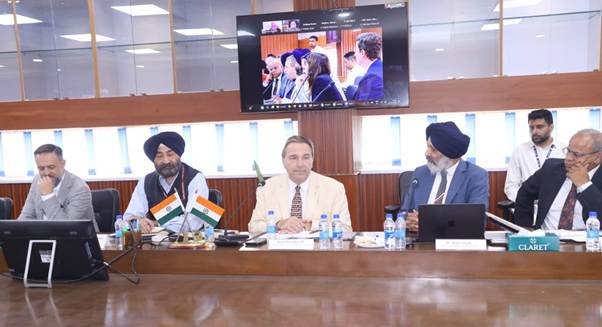
The National Institute of Food Technology Entrepreneurship and Management, Kundli (NIFTEM-K), under the Ministry of Food Processing Industries, organised an India–Canada roundtable on “Pulse Protein Innovation, Value Addition and Strategic Partnerships” on 13 October 2026. The conference brought together government representatives, academic institutions, industry associations and research organisations to strengthen cooperation in pulse processing, food technology and sustainable nutrition.
The discussions centred on developing value-added pulse-based products, improving protein ingredient processing and translating scientific research into commercially viable food innovations. The initiative also seeks to strengthen institutional and industry connections between India and Canada, building on the existing partnership between NIFTEM-K and the University of Saskatchewan (USask).
The event was attended by Ken Cheveldayoff, Minister of Advanced Education, Government of Saskatchewan, alongside representatives from the Saskatchewan government, USask, Pulse Canada, Saskatchewan Pulse Growers, Alberta Pulse Growers and several Indian research and industry organisations. Participants included ICAR–Indian Institute of Pulses Research, ICRISAT, IIT Delhi, the India Pulses and Grains Association, Good Food Institute India and other organisations working across nutrition, food technology and agricultural research.
Joint Centre of Excellence Planned to Strengthen Research Collaboration
Dr. Harinder Singh Oberoi, Director of NIFTEM-K, emphasised the need to convert the memorandum of understanding between NIFTEM-K and the University of Saskatchewan into a time-bound programme with measurable outcomes. He highlighted the progress made during the approximately seven months since the MoU was signed and outlined the objective of establishing a joint Centre of Excellence at NIFTEM-K within the next year.
The proposed centre is expected to bring together academic expertise, research infrastructure and industry participation to advance pulse protein technologies and product development. Partners are also looking to identify priority research areas and establish a practical action plan for the first two years of collaboration.
Potential areas include pulse protein extraction and processing, value addition, development of nutritious food products, joint research publications, PhD research, student and faculty exchanges, training programmes and collaborative research funding.
Addressing Challenges in Pulse Protein Processing
The roundtable highlighted several technical challenges that affect the development and commercial application of pulse proteins. These include variability in raw materials, energy consumption during processing, optimisation of processing conditions, and the need to preserve or improve the functional properties of protein ingredients.
Texture and product performance were also identified as important considerations in developing pulse-based ingredients suited to specific food applications. Addressing these challenges could help food manufacturers improve product consistency and expand the use of pulses in a wider range of processed foods.
Dr. Baljit Singh, Vice-President (Research) at the University of Saskatchewan, noted the progress made through the institutional partnership. USask has identified PhD students who will undertake part of their research at NIFTEM-K, supporting academic exchange and collaborative research.
A project titled “Sustainable Health Innovation in Fortification (Lentils) for SDG 2.2 (End All Forms of Malnutrition)” has also been submitted by USask in collaboration with NIFTEM-K and international partners for funding from the Government of Canada. If supported, the project could contribute to research on lentil fortification and nutrition-focused food innovation.
Impact on Food Processing, Hospitality and Tourism
The India–Canada partnership could create opportunities across the food processing and hospitality value chains, particularly as food businesses explore plant-based proteins, nutritious menu options and more diverse ingredient formats.
Food processing and ingredient development: Advances in pulse protein extraction and processing could support manufacturers developing protein-rich snacks, ready-to-eat meals, bakery products, beverages and other value-added foods. Improved ingredient functionality and consistency would be important for scaling production.
Hotels, restaurants and catering: Greater availability of functional pulse-based ingredients could help chefs and foodservice operators experiment with plant-forward menus, alternative protein formats and nutrition-oriented offerings. Commercial adoption will depend on product quality, cost, supply reliability and consumer acceptance.
Institutional catering and nutrition: Research into lentil fortification may offer longer-term opportunities for nutrition-focused food products, subject to successful research outcomes, funding and validation.
Culinary tourism and sustainable dining: Innovation in pulse-based foods could also support the development of contemporary interpretations of India’s pulse-rich culinary traditions. Hotels, restaurants and destination food experiences may benefit from products that combine local ingredients with modern processing and presentation techniques.
These are potential downstream opportunities rather than immediate outcomes of the roundtable. Their realisation will depend on research progress, product trials, commercial partnerships and market demand.
Industry Takeaway
The NIFTEM-K–University of Saskatchewan initiative signals a push to connect academic research with practical food industry requirements. The proposed Centre of Excellence, collaborative research programmes and industry engagement could help address technical barriers in pulse protein processing while supporting the development of value-added, nutrition-focused foods.
For food manufacturers, ingredient suppliers, hotels and foodservice operators, the key development to watch will be the conversion of research priorities into scalable technologies and market-ready products. Strong coordination between researchers and industry will be essential to turn the India–Canada partnership into tangible opportunities for food innovation and sustainable nutrition.