Sikkim’s Soreng Becomes India’s First Organic Fisheries Cluster Under PMMSY; Centre Launches Organic Fish Certification SOP for Northeast
₹3.75 Crore fisheries projects inaugurated in Sikkim; initiatives focus on organic aquaculture, cold-chain infrastructure, Rainbow Trout marketing and premium fish exports Key Highlights: Soreng district in Sikkim becomes India's first notified Organic Fisheries Cluster under the Pradhan
₹3.75 Crore fisheries projects inaugurated in Sikkim; initiatives focus on organic aquaculture, cold-chain infrastructure, Rainbow Trout marketing and premium fish exports
Key Highlights:
- Soreng district in Sikkim becomes India’s first notified Organic Fisheries Cluster under the Pradhan Mantri Matsya Sampada Yojana (PMMSY).
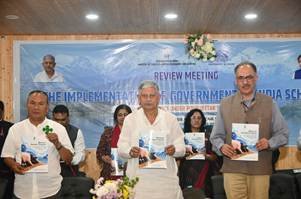
- Union Fisheries Minister Rajiv Ranjan Singh launches the Standard Operating Procedure (SOP) for Organic Certification of Fisheries in the Northeastern Region.
- Fisheries projects worth ₹375 lakh (₹3.75 crore) inaugurated under PMMSY.
- Infrastructure includes hatcheries, feed mills, cold storage facilities, Biofloc and Recirculatory Aquaculture Systems (RAS).
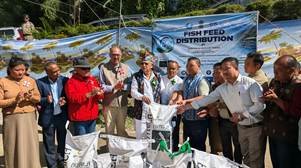
- Fish feed distributed to 15 farmers from two fisheries cooperative societies.
- Kisan Credit Cards and financial assistance distributed to support fish farmers.
- Sikkim signs an MoU with ITBP for institutional procurement of locally produced Rainbow Trout.
Soreng Emerges as India’s First Organic Fisheries Cluster
Sikkim has taken a significant step towards developing organic aquaculture and premium fish production, with Soreng district becoming India’s first Organic Fisheries Cluster under the Pradhan Mantri Matsya Sampada Yojana (PMMSY).
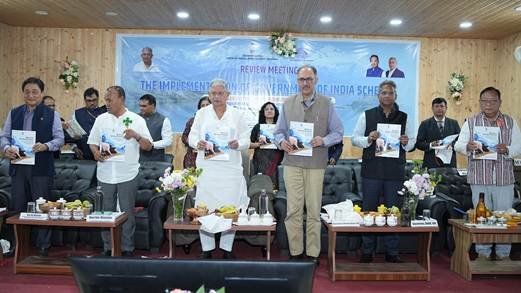
The development was highlighted during the November 2, 2026 visit of Union Minister for Fisheries, Animal Husbandry and Dairying, Shri Rajiv Ranjan Singh (Lalan Singh), to Mangan district, where he reviewed fisheries development initiatives and inaugurated projects worth ₹375 lakh (₹3.75 crore) under PMMSY.
A major announcement during the visit was the launch of the Standard Operating Procedure (SOP) for Organic Certification of Fisheries in the Northeastern Region. The framework is intended to establish structured organic production practices and improve traceability across the fisheries value chain, supporting access to premium domestic and international markets.
The programme was attended by Sikkim Fisheries Minister Shri Puran Kumar Gurung, Dr. Abhilaksh Likhi, Secretary, Department of Fisheries, Government of India, senior state government officials, representatives of NFDB and ICAR institutes, fish farmers and fisheries cooperative societies.
₹3.75 Crore Investment to Strengthen Fisheries Infrastructure
The fisheries projects inaugurated under PMMSY cover important infrastructure and technology requirements across the fish production and marketing chain.
The projects include:
- Fish hatcheries to strengthen seed production.
- Feed mills to improve fish feed availability.
- Cold storage facilities to support post-harvest management.
- Biofloc technology for intensive fish farming.
- Recirculatory Aquaculture Systems (RAS) for efficient water management and fish production.
These investments are expected to strengthen production capacity, improve post-harvest infrastructure and support the development of organised fisheries enterprises in Sikkim.
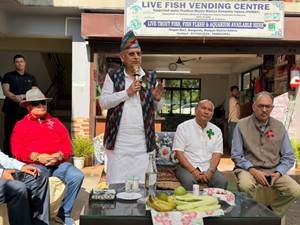
During the visit, the Minister also inspected the PMMSY-supported Live Fish Vending Centre and interacted with members of Fish Farmers’ Cooperative Societies to understand their operational and marketing challenges.
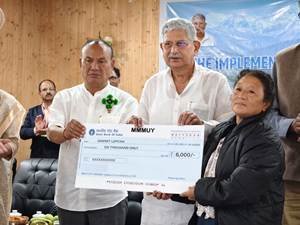
Fish feed was distributed to 15 farmers belonging to two fisheries cooperative societies. Kisan Credit Cards were also distributed to fish farmers to facilitate institutional credit access, while cheques were provided to five beneficiaries under the Mukhya Mantri Matsya Uthpadhan Yojana (MMMUY).
Stalls displaying fresh fish, ornamental fish, value-added fish products, dairy products, animal-based products and locally grown organic vegetables also showcased the region’s diverse livelihood and food production opportunities.
Organic Fish Farming to Focus on Certification and Premium Markets
Soreng’s Organic Fisheries Cluster is designed to build on Sikkim’s established organic farming ecosystem and extend sustainable production practices to aquaculture.
The cluster will focus on fish species such as Amur carp, Indian Major Carps (IMC) and Trout. Its production approach emphasises ecologically healthy fish farming without harmful chemicals, antibiotics and pesticides, in accordance with applicable organic production and certification requirements.
The newly launched certification SOP will provide a structured framework for organic fisheries production in the Northeastern Region. It is also expected to strengthen traceability, improve product credibility and support better market positioning.
Under PMMSY, 34 fisheries production and processing clusters have been notified across India, including organic fisheries clusters in Sikkim and Meghalaya. The cluster-based approach integrates production, processing, value addition and marketing within identified geographical areas.
For Sikkim, the initiative could create opportunities to develop differentiated organic fish products and connect local producers with premium buyers, organised retail networks and export markets.
Sikkim and ITBP Partnership to Strengthen Rainbow Trout Marketing
Another important development is Sikkim’s agreement with the Indo-Tibetan Border Police (ITBP) for institutional procurement of locally produced Rainbow Trout.
The arrangement aims to provide a more stable market for trout farmers while strengthening the value chain for this high-value coldwater fish.
The proposed procurement mechanism will focus on quality specifications, supply capacity, pricing, inspection procedures and supply schedules. Regular supplies to ITBP establishments could create a dependable institutional demand channel for local trout producers.
This initiative is particularly relevant for coldwater fisheries in Sikkim, where improved market access and organised procurement can support commercial production and farmer incomes.
Impact on Hospitality, Food Processing and Travel & Tourism
The development of India’s first Organic Fisheries Cluster in Soreng has implications for Sikkim’s hospitality, food service and tourism industries. The combination of organic fish production, improved cold-chain infrastructure and traceability could create new opportunities for local food businesses.
1. Hotels, Resorts and Restaurants
Improved availability of locally produced organic fish and Rainbow Trout could help hotels, resorts and restaurants incorporate more regional ingredients into their menus. This may support farm-to-table dining and locally sourced food experiences.
2. Organic and Premium Food Experiences
Certified organic fish products could provide opportunities for specialty restaurants, premium hospitality establishments and food retailers to develop differentiated menus and product offerings, subject to certification and market availability.
3. Culinary and Experiential Tourism
Sikkim’s organic identity, traditional food culture and coldwater fisheries could be integrated into culinary tourism experiences. Trout-based regional cuisine, local food festivals and farm-linked experiences could add diversity to the state’s tourism offerings.
4. Cold Chain and Food Supply Infrastructure
Investment in cold storage, hatcheries and modern aquaculture systems could improve fish handling, storage and distribution. Better post-harvest infrastructure would be important for supplying fresh fish to hotels, restaurants and organised food markets.
5. Food Processing and Entrepreneurship
The cluster-based approach could encourage small businesses involved in fish processing, packaging, ready-to-cook products and value-added seafood. Stronger farmer cooperatives and market linkages could also support local entrepreneurship.
6. Premium Market and Export Opportunities
Organic certification and traceability could help Sikkim’s fishery products access specialised domestic and international markets. For hospitality businesses, this could strengthen the availability and identity of regionally sourced premium ingredients.
Sikkim’s Organic Fisheries Model Opens New Market Opportunities
The launch of India’s first Organic Fisheries Cluster in Soreng, combined with the introduction of the organic certification SOP, marks an important development in the integration of sustainable aquaculture with organised markets.
With ₹3.75 crore in fisheries infrastructure projects, institutional procurement support for Rainbow Trout and greater emphasis on certification, traceability and value addition, Sikkim is seeking to strengthen its fisheries value chain.
For the hospitality and tourism industry, the long-term opportunity lies in connecting organic fish production with regional cuisine, hotel procurement, food processing and culinary tourism. These developments could help create stronger commercial links between fish farmers, food businesses and tourism enterprises across the Northeastern Region.