Government Releases New Pig Breeding Protocol to Boost Pork Production and Livelihoods in North-East India
Union Minister Rajiv Ranjan Singh launches standardised semen production and artificial insemination guidelines to accelerate genetic improvement and strengthen scientific pig farming Key Highlights Union Minister Rajiv Ranjan Singh releases the new pig semen production and artificial
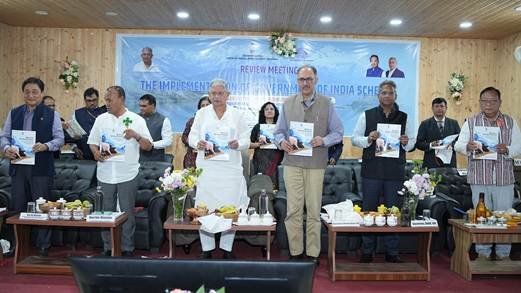
Union Minister Rajiv Ranjan Singh launches standardised semen production and artificial insemination guidelines to accelerate genetic improvement and strengthen scientific pig farming
Key Highlights
- Union Minister Rajiv Ranjan Singh releases the new pig semen production and artificial insemination protocol on November 2, 2026, during his Sikkim visit.
- North-Eastern Region accounts for nearly 45% of India’s pig population.
- India had a pig population of 9.06 million as per the 20th Livestock Census (2019).
- Indigenous and non-descript pigs constitute around 79% of the country’s pig population.
- Guidelines cover boar selection, semen collection, evaluation, processing, preservation, transportation, laboratory quality management and biosecurity.
- The initiative aims to improve reproductive efficiency, pork production and income opportunities for smallholder pig farmers.
New National Protocol to Strengthen Scientific Pig Breeding and Artificial Insemination
New Delhi, November 6, 2026: The Government of India has released a new standardised framework to promote scientific pig breeding, improve genetic quality and strengthen pig farming livelihoods, particularly across the North-Eastern Region (NER). Union Minister for Fisheries, Animal Husbandry and Dairying Shri Rajiv Ranjan Singh alias Lalan Singh released the publication titled “Minimum Standard Protocol for Semen Production and Standard Operating Procedures for Artificial Insemination using Liquid Semen in Pigs” on November 2, 2026, during his two-day visit to Sikkim.
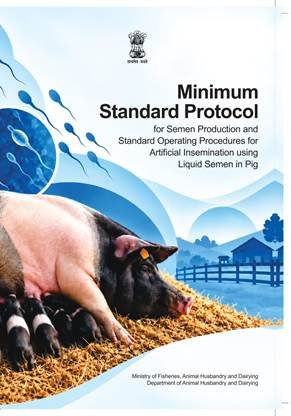
The publication provides guidelines for scientific semen production, quality assurance, biosecurity, semen preservation and transportation, along with standard operating procedures for artificial insemination in pigs. It also establishes a framework for setting up and operating pig semen production laboratories and delivering artificial insemination services across states.
The initiative is intended to expand access to improved breeding technologies, facilitate genetic improvement and enhance the productivity and profitability of pig farming enterprises.
North-East Accounts for Nearly 45% of India’s Pig Population
According to the 20th Livestock Census (2019), India has a pig population of 9.06 million, accounting for approximately 1.7% of the country’s total livestock population. Although pig farming is practised across different agro-climatic regions, the North-Eastern Region remains a major centre of pig production, contributing nearly 45% of India’s pig population.
The census data also indicates that indigenous and non-descript pigs account for around 79% of the total pig population. This highlights the potential for improving productivity through scientific breeding interventions and better access to quality germplasm.
The new protocol seeks to address this opportunity by strengthening breeding services and making improved genetic material more accessible to farmers, particularly smallholder pig rearers in the North-Eastern states.
Standardised Guidelines Cover the Pig Artificial Insemination Value Chain
The publication provides practical guidance for state departments, veterinarians, breeding centres and farmers to encourage wider adoption of artificial insemination and modern pig breeding practices.
Its framework covers the complete artificial insemination value chain, including:
- Breeding boar selection: Guidelines for selecting suitable breeding animals.
- Semen collection and evaluation: Standard procedures for collection and assessment of semen quality.
- Processing and preservation: Protocols for semen processing, storage and preservation.
- Transportation: Procedures to support the safe handling and movement of liquid semen.
- Laboratory quality management: Standards for maintaining quality in pig semen production facilities.
- Disease prevention and biosecurity: Measures to reduce disease risks and maintain hygiene across breeding operations.
- Artificial insemination: Standard operating procedures for delivering breeding services.
By establishing common procedures, the framework is expected to support more consistent semen production and artificial insemination services across different states.
Focus on Genetic Improvement and Farmer Livelihoods
The implementation of the protocol is expected to improve reproductive efficiency, accelerate genetic improvement and support the conservation and upgrading of indigenous pig germplasm prevalent in the North-East.
Greater availability of superior breeding material could help farmers improve herd productivity and strengthen the commercial potential of pig farming. The initiative is also expected to contribute to higher pork production, livelihood generation and sustainable development of the pig sector.
For smallholder farmers, access to organised breeding services and quality germplasm could reduce dependence on limited local breeding options and create opportunities to improve the productivity of their livestock enterprises.
Relevance for India’s Food and Hospitality Industry
The initiative also has implications for India’s meat and food-service value chain. Improved pig genetics and breeding efficiency could support more consistent pork production and strengthen the supply base for meat processors, retailers, restaurants, hotels and other food-service businesses.
The North-East, where pig farming has a significant presence, could particularly benefit from stronger links between livestock production, processing, cold-chain infrastructure and organised food markets. Over time, higher productivity and improved farm-level practices may create opportunities for regional pork products and food businesses, subject to market demand, processing capacity and food-safety standards.
Publication Available on DAHD Website
The publication, “Minimum Standard Protocol for Semen Production and Standard Operating Procedures for Artificial Insemination using Liquid Semen in Pigs”, is available in PDF format on the official website of the Department of Animal Husbandry and Dairying (DAHD), Government of India: https://www.dahd.gov.in/.