Mahila Kisan Diwas 2026 Recognises Women Farmers as Key Drivers of India’s Food and Rural Economy
National celebration in New Delhi honours women’s contributions to agriculture, livestock, sustainable farming and rural entrepreneurship, with a focus on improving access to technology, finance and markets Key Highlights National celebration: Mahila Kisan Diwas 2026 was held
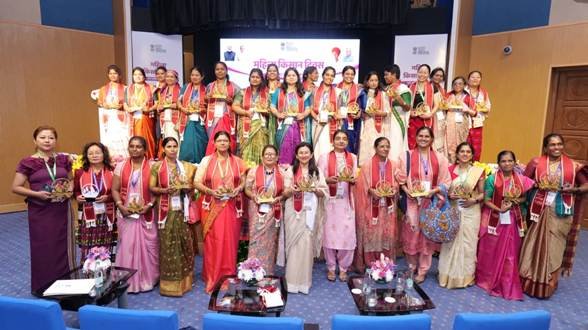
National celebration in New Delhi honours women’s contributions to agriculture, livestock, sustainable farming and rural entrepreneurship, with a focus on improving access to technology, finance and markets
Key Highlights
- National celebration: Mahila Kisan Diwas 2026 was held on October 15 at the Dr. B. R. Ambedkar International Centre, New Delhi.
- Theme: “Role of Women Farmers in Building Developed Agriculture and a Developed India.”
- Government focus: Strengthening women’s access to income support, institutional credit, technology, skills, mechanisation and agricultural marketing infrastructure.
- Women recognised: Outstanding women farmers were felicitated for their contributions to agriculture and allied sectors.
- New publication: The book Women Farmers of India: Journey from Challenges to Success was released, documenting success stories and innovations.
- Hospitality relevance: Women-led agricultural enterprises could create opportunities for local food sourcing, value-added products and rural tourism.
Mahila Kisan Diwas 2026 Highlights Women’s Role in India’s Agricultural Economy
The Department of Agriculture and Farmers’ Welfare (DA&FW), Ministry of Agriculture and Farmers’ Welfare, celebrated Mahila Kisan Diwas 2026 on October 15 at the Dr. B. R. Ambedkar International Centre in New Delhi, recognising the contribution of women farmers to agricultural development, food security and rural livelihoods.
The programme was chaired by Atish Chandra, Secretary, DA&FW, who highlighted women’s contributions across agriculture and allied sectors, including natural resource management and rural development. He also outlined the government’s focus on empowering women through direct income support, affordable institutional credit, technology transfer, skill development, farm mechanisation and improved access to agricultural marketing infrastructure.
Held under the theme “Role of Women Farmers in Building Developed Agriculture and a Developed India,” the event highlighted women’s participation in strengthening farm productivity, promoting sustainable practices and supporting rural entrepreneurship.
Women Farmers Recognised for Innovation and Leadership
Progressive women farmers, agricultural extension workers and government officials from various States and Union Territories participated in the national programme.
Outstanding women farmers were felicitated for their achievements in agriculture and allied activities, with recognition of their resilience, innovation, leadership and contributions to rural enterprise.
The event also saw the release of Women Farmers of India: Journey from Challenges to Success. The publication compiles stories of women farmers, showcasing their experiences, agricultural innovations, achievements and entrepreneurial journeys.
Women participants and extension functionaries also shared their experiences, discussing the challenges they have faced and the ways in which improved farming practices, knowledge-sharing and institutional support have helped strengthen their work.
From Farm Production to Post-Harvest Value Addition
Women contribute throughout the agricultural value chain, from crop cultivation and livestock management to seed conservation, natural resource management, post-harvest operations and value addition. Their traditional knowledge and adoption of innovative and climate-resilient practices also contribute to sustainable agricultural development.
Women agricultural officers and extension functionaries play an important role in connecting scientific research with farming communities. Through training, technology dissemination and guidance on government schemes, they help farmers access information and adopt improved agricultural practices.
Mahila Kisan Diwas 2026 also reaffirmed the importance of improving women’s access to technology, resources, capacity-building opportunities and institutional support, while encouraging greater participation in agricultural decision-making and leadership.
The observance is being held across States and Union Territories, Extension Education Institutes, State Agricultural Management and Extension Training Institutes (SAMETIs) and MANAGE, with particular emphasis on the participation of women farmers from tribal regions.
Impact on Hospitality, Food Processing and Tourism
1. Opportunities for women-led food businesses
Women’s participation in agriculture-based enterprises can support the production and marketing of regional foods, spices, millets, dairy products, pickles, preserves and other value-added products. Hotels, restaurants and foodservice operators could explore sourcing from women-led producer groups where product quality, supply volumes and commercial requirements align.
2. Local sourcing for hotels and restaurants
Women farmers’ contributions to crop cultivation, livestock and post-harvest activities are relevant to the supply of fresh produce, grains, dairy and other ingredients. Stronger access to markets and institutional support could help connect hospitality buyers with local agricultural producers.
3. Food processing and value addition
Better access to credit, skills, technology and marketing infrastructure could help women-led enterprises expand into processing, packaging and branded regional products. These businesses may find opportunities to supply retailers, food manufacturers, caterers and hospitality establishments.
4. Rural tourism and culinary experiences
Women-led farm enterprises and traditional food practices can contribute to rural tourism, farm visits, regional food trails and community-based culinary experiences. Such opportunities would depend on visitor infrastructure, tourism partnerships, product readiness and access to markets.
5. Sustainability and regional food heritage
Women’s work in seed conservation, biodiversity and natural resource management can help preserve traditional crops and regional food knowledge. Hospitality businesses may draw on these resources to develop seasonal menus and showcase local culinary heritage while building relationships with agricultural communities.
Industry Takeaway
Mahila Kisan Diwas 2026 places women’s contribution to agriculture, food production and rural enterprise at the centre of India’s agricultural development agenda. For hospitality and food processing businesses, the opportunity is to build practical partnerships with women farmers and women-led enterprises through local procurement, value-added products and rural tourism initiatives.
Converting this potential into sustained business opportunities will require dependable supply chains, quality assurance, market access, financing and continued investment in skills and technology.