India, Seychelles Step Up Fisheries and Blue Economy Cooperation with Focus on Tuna, Aquaculture and Marine Technology
Proposed fisheries MoU to support knowledge exchange, sustainable seafood value chains, mariculture and digital fisheries management across the Indian Ocean Key Highlights India and Seychelles discuss a dedicated bilateral MoU on fisheries and aquaculture with an advanced
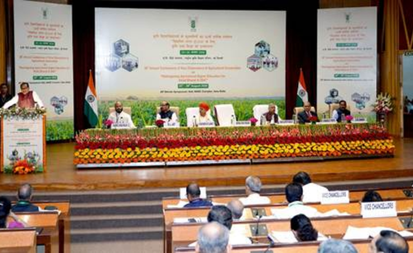
Proposed fisheries MoU to support knowledge exchange, sustainable seafood value chains, mariculture and digital fisheries management across the Indian Ocean
Key Highlights
- India and Seychelles discuss a dedicated bilateral MoU on fisheries and aquaculture with an advanced work plan.
- Cooperation areas include tuna fisheries, mariculture, hatcheries, stock assessment and post-harvest technology.
- Both sides explore AI-enabled fisheries management, data systems and monitoring, control and surveillance.
- Tuna processing, product diversification and sustainable fish-waste management identified as key value-chain opportunities.
- India highlights 19.7 million tonnes of fish production and USD 8.46 billion in seafood exports.
- Annual work plans, technical exchanges, laboratory access and joint pilot projects proposed to deepen cooperation.
India and Seychelles strengthen strategic fisheries partnership
New Delhi: India and Seychelles are looking to deepen cooperation in fisheries, aquaculture and the blue economy, with both countries exploring a dedicated bilateral framework covering technology transfer, scientific research, training and sustainable marine-resource management.
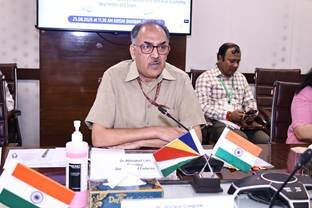
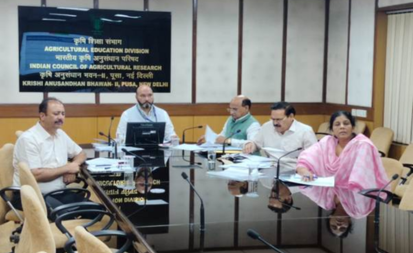
The Department of Fisheries, Ministry of Fisheries, Animal Husbandry and Dairying, hosted a high-level bilateral meeting with a Seychelles delegation in New Delhi on August 25.
The Seychelles delegation was led by Wallace Cosgrow, Minister of Fisheries, Agriculture and Blue Economy, while the Indian delegation was led by Dr Abhilaksh Likhi, Secretary, Department of Fisheries.
The discussions focused on strengthening the existing maritime partnership and developing a practical roadmap for sustainable fisheries and blue-economy development in the Indian Ocean region.
Tuna fisheries and aquaculture among priority areas
The two sides identified several areas for technical and institutional cooperation, including marine aquaculture (mariculture), modern hatcheries, tuna fisheries, fish-stock assessment and post-harvest engineering.
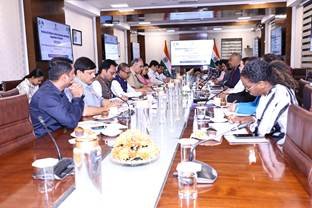
Marine conservation and sustainable harvesting practices were also discussed as key components of long-term fisheries development.
Both countries explored knowledge transfer through technical studies, fisheries extension programmes and structured institutional training.
Focus shifts towards value-added seafood
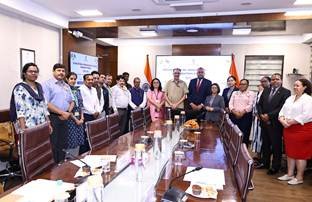
A significant part of the discussions centred on strengthening seafood value chains, particularly tuna processing and product diversification.
The countries also discussed sustainable management of fish waste, an area that can help improve resource efficiency while creating additional value from fisheries by-products.
For seafood businesses, greater cooperation in processing technology, product development and post-harvest handling could support the movement towards higher-value and more diversified seafood products.
AI and digital technology to transform fisheries management
India and Seychelles also discussed the use of emerging technologies to modernise fisheries.
Potential cooperation includes fisheries data systems, Monitoring, Control and Surveillance (MCS) infrastructure and the application of Artificial Intelligence (AI) in harvest management.
The emphasis on digital fisheries management could improve monitoring of marine resources, support sustainable harvesting and strengthen decision-making based on scientific data.
Seychelles seeks dedicated fisheries and aquaculture MoU
The Seychelles delegation expressed interest in accelerating implementation through a dedicated bilateral Memorandum of Understanding (MoU) covering fisheries and aquaculture, supported by an advanced work plan.
The proposed framework would institutionalise communication between government agencies, researchers and technical experts in both countries.
Both sides also discussed developing an annual work plan, aligning regulatory approaches, commercialising joint scientific research and providing reciprocal access to laboratories.
India highlights expanding seafood sector
During the meeting, India highlighted the scale of its fisheries and seafood industry, noting that national fish production has reached 19.7 million tonnes, while seafood exports are valued at USD 8.46 billion.
The Indian side also outlined initiatives focused on sustainable fisheries management, responsible harvesting and technology-driven infrastructure.
The countries agreed on the importance of mutual exposure visits, specialist technical exchanges and greater use of national Centres of Excellence to build institutional capabilities.
Impact on hospitality, food and tourism
The proposed India–Seychelles fisheries partnership could have significant implications for the seafood, hospitality and tourism sectors, particularly through stronger tuna value chains and sustainable marine-resource management.
For hotels, restaurants and resorts, particularly those operating in coastal and island destinations, improved fisheries infrastructure and post-harvest technology could support more reliable access to fresh and processed seafood.
The focus on tuna processing and product diversification could also create opportunities for restaurants, resorts and food businesses to develop new seafood offerings and strengthen locally sourced culinary experiences.
For Seychelles, where marine tourism and seafood are closely connected to the visitor economy, sustainable fisheries management can have a direct tourism dimension. Healthier marine ecosystems and responsible fishing practices support the broader appeal of coastal tourism, marine excursions, diving and other ocean-based experiences.
The proposed technology and knowledge exchanges could also help promote sustainable seafood sourcing and traceability, increasingly important for international hotels and tourism businesses seeking responsible procurement.
India’s growing seafood-processing capabilities, combined with Seychelles’ strategic location in the Indian Ocean, could ultimately create opportunities for greater seafood trade, culinary tourism and blue-economy collaboration.
The meeting therefore represents more than a fisheries partnership: it could contribute to a broader India–Seychelles ecosystem connecting marine conservation, seafood production, hospitality, coastal tourism and sustainable blue-economy development.