ICAR to Showcase Genome-Edited Rice, AI-Based Soil Science and Food Innovation at ESTIC 2026
India’s agricultural research council highlights crop genetics, climate-resilient farming, biofortification and food safety ahead of the October 27–29 conclave in New Delhi Key Highlights ESTIC 2026: Scheduled for October 27–29 at Bharat Mandapam, New Delhi, across 12
India’s agricultural research council highlights crop genetics, climate-resilient farming, biofortification and food safety ahead of the October 27–29 conclave in New Delhi
Key Highlights
- ESTIC 2026: Scheduled for October 27–29 at Bharat Mandapam, New Delhi, across 12 thematic areas.
- Innovation showcase: Thematic exhibition to feature 13 departmental stalls, 50 deep-tech startups and 10 departmental technologies.
- Crop science: ICAR highlighted genome-edited rice varieties, India’s first telomere-to-telomere reference genome of pigeonpea and biofortified crops.
- Horticulture: The council reported developing 117 horticultural crop varieties during the previous year.
- Food safety: Research highlights include a rapid on-site milk adulteration detection kit developed by ICAR–National Dairy Research Institute.
- Sustainable agriculture: Key areas include AI-based soil assessment, climate resilience, green ammonia research, fisheries, livestock health and agricultural mechanisation.
ICAR Puts Agri-Tech and Food Innovation in Focus Ahead of ESTIC 2026
The Indian Council of Agricultural Research (ICAR) has outlined its research and innovation priorities ahead of the Emerging Science, Technology and Innovation Conclave (ESTIC) 2026, highlighting technologies that could influence agricultural productivity, food quality, nutrition and sustainable farming.
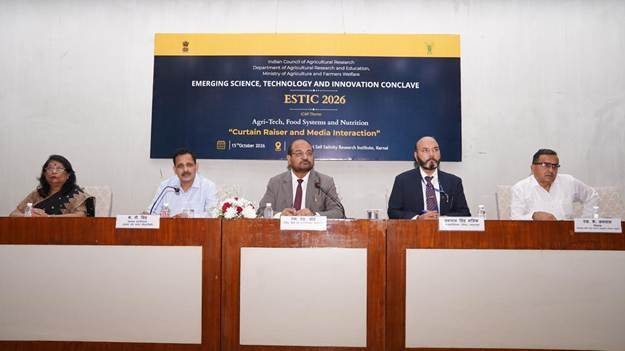
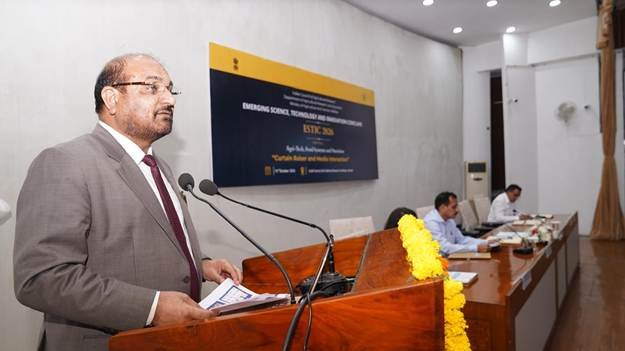
At a curtain-raiser and media interaction held on October 15 at ICAR–Central Soil Salinity Research Institute (CSSRI), Karnal, Haryana, Dr. M. L. Jat, Secretary of the Department of Agricultural Research and Education (DARE) and Director General of ICAR, detailed the council’s role in the conclave’s thematic area of “Agri-Tech, Food Systems and Nutrition.”
ESTIC 2026 will take place from October 27 to 29 at Bharat Mandapam, New Delhi. The event will bring together government departments, research institutions, startups and other stakeholders to present scientific advances and encourage collaboration between researchers and industry.
The exhibition is expected to feature 13 departmental stalls, 50 deep-tech startups and 10 departmental technologies, providing a platform to demonstrate research outcomes and their potential practical applications.
Genome Editing, Biofortification and Climate-Resilient Crops
ICAR identified crop genetics, genome editing, biofortification and climate-resilient agriculture among its research priorities. Featured achievements include two genome-edited rice varieties described in the release as the world’s first of their kind, as well as India’s first telomere-to-telomere reference genome of pigeonpea.
These developments could support further research into crop traits, productivity and resilience. The council also highlighted the development of 117 horticultural crop varieties during the previous year, alongside work on nutritional quality, crop diversification and advanced breeding technologies.
For the food industry, improvements in crop varieties and nutritional characteristics may create future opportunities for ingredient development, food processing and products designed around specific quality or nutrition requirements. Commercial applications will depend on further research, deployment, regulatory requirements and adoption across agricultural supply chains.
AI-Based Soil Intelligence and Sustainable Resource Management
ICAR also presented “Soil Intelligence: AI and Pedological Science,” an initiative highlighting the use of artificial intelligence and soil science for digital agriculture and soil-resource assessment.
The broader research programme covers soil health, water management, climate resilience and more efficient use of agricultural resources. Such approaches can help improve understanding of soil conditions and inform crop planning, although their benefits depend on reliable data, field validation and practical implementation.
The council also highlighted research into green ammonia, including a pathway involving hydrogen produced using solar energy. Demonstrations covering 10,000 acres across six states were cited during the interaction, with collaboration involving ICAR, the Ministry of New and Renewable Energy and other stakeholders.
Other research areas include integrated pest management, agricultural mechanisation and the development of machinery such as cotton-harvesting equipment to improve operational efficiency and address labour constraints.
Livestock Health, Fisheries and Food Safety Technologies
Animal health and food security are also part of ICAR’s research portfolio. The exhibition will highlight indigenous vaccine research, livestock genomics and the conservation of indigenous breeds, alongside work on lumpy skin disease and African swine fever.
The press release refers to research involving a cell-adapted Indian African swine fever virus and reports protective effects in a target animal population. The specific technical details and protection claims should be verified against ICAR’s official technical material before being presented as established outcomes.
In fisheries, ICAR is examining shrimp farming in saline areas to make productive use of underutilised land and water resources. Such work could support aquaculture development where environmental conditions, infrastructure and market access are suitable.
A further food-sector development is the rapid, on-site milk adulteration detection kit developed by ICAR–National Dairy Research Institute (NDRI). If validated and adopted at scale, rapid testing technologies could help dairy supply-chain participants identify potential quality problems earlier.
The SEHAT initiative—Science Excellence for Health through Agricultural Transformation—developed jointly by ICAR and the Indian Council of Medical Research (ICMR), also connects agriculture with human health. Its focus includes biofortified crops and integrated farming systems.
What ESTIC 2026 Could Mean for Hospitality and Food Processing
1. New possibilities for ingredient innovation
Advances in crop breeding, genome editing and biofortification could inform future development of food ingredients with improved agricultural or nutritional characteristics. For hotels, restaurants and food manufacturers, the longer-term relevance lies in ingredient quality, product development and nutrition-focused menus. These are potential opportunities rather than immediate commercial outcomes.
2. Stronger focus on food quality and safety
Technologies such as rapid milk adulteration detection could be relevant to dairy processors, institutional caterers, hotels and restaurants that rely on consistent ingredient quality. Wider adoption would depend on validation, availability, cost and integration into procurement and quality-control systems.
3. More resilient agricultural supply chains
Research into climate-resilient crops, soil health and water management may help address some of the production risks that affect food availability. Greater resilience could benefit foodservice operators by supporting more dependable sourcing over time, although results will vary by crop and region.
4. Opportunities in fisheries and aquaculture
Research into shrimp farming in saline areas could support aquaculture expansion where viable. Seafood processors, restaurants and hospitality buyers may benefit if these developments translate into reliable, quality-assured supplies.
5. Sustainability and resource efficiency
Research into green ammonia, soil intelligence and resource-efficient farming reflects the wider shift towards more sustainable food production. Hospitality companies seeking to improve supply-chain sustainability may find value in monitoring how these technologies progress from research and demonstration to commercial use.
Industry Takeaway
ICAR’s ESTIC 2026 showcase brings together several areas with long-term relevance for food and hospitality: crop innovation, nutrition, agricultural resilience, livestock health, aquaculture and food safety. For hotels, restaurants, caterers and food processors, the key developments to monitor are technologies that can improve ingredient quality, strengthen supply reliability and support more efficient food production.
The main question for the industry will be how quickly these research advances move into validated, scalable applications—and how effectively farmers, technology providers, processors and hospitality buyers connect around them.