CAZRI Moth Bean Varieties Withstand 35-Day Dry Spell During Kharif 2026
Climate-Resilient Moth Bean Varieties Show Strong Growth and Pod Development Under Prolonged Moisture Stress in Western Rajasthan New Delhi, September 13, 2026: Four moth bean varieties developed by the ICAR–Central Arid Zone Research Institute (CAZRI), Jodhpur,
Climate-Resilient Moth Bean Varieties Show Strong Growth and Pod Development Under Prolonged Moisture Stress in Western Rajasthan
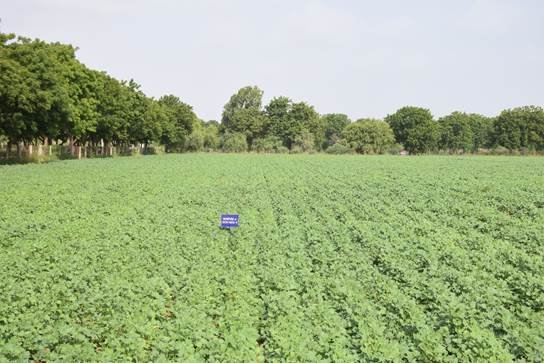
New Delhi, September 13, 2026: Four moth bean varieties developed by the ICAR–Central Arid Zone Research Institute (CAZRI), Jodhpur, have demonstrated significant resilience during the ongoing Kharif 2026 season, maintaining growth and reproductive development despite a prolonged dry spell of around 35 days in western Rajasthan.
The performance is particularly significant because the moisture stress coincided with critical crop stages including flowering, pod formation and reproductive development. The varieties—CAZRI Moth-4, CAZRI Moth-5, CAZRI Moth-6 and CAZRI Moth-7—were developed specifically for the harsh and unpredictable conditions of the arid region.
Moth bean is an important pulse crop in western Rajasthan, where it is cultivated across nearly 10 lakh hectares. However, productivity remains relatively low at around 350 kg per hectare, largely because of erratic rainfall, prolonged dry spells and limited soil moisture.
Key Highlights
- Four CAZRI varieties—Moth-4, Moth-5, Moth-6 and Moth-7—showed resilience during Kharif 2026.
- The crop experienced a 35-day dry spell from August 3 to September 7, 2026.
- The varieties maintained green growth and profuse pod development despite prolonged moisture stress.
- Moth bean is cultivated over nearly 10 lakh hectares in western Rajasthan.
- CAZRI varieties were developed through more than a decade of breeding and genetic improvement.
- Their developmental plasticity allows flowering at around 30 days after sowing and adjustment to available soil moisture.
- Seed production is underway across seven hectares at the CAZRI Research Farm.
- The 2026 Saathi Portal requirement for the four varieties stands at 23.32 quintals.
- Rajasthan State Seeds Corporation, National Seeds Corporation and selected private players are involved in seed multiplication.
- Wider adoption could strengthen pulse production and climate-resilient agriculture in Rajasthan.
CAZRI Varieties Show Resilience During Extended Dry Spell
The current season provided a significant field test for the newly developed varieties.
Between July 10 and September 2, 2026, cumulative pan evaporation was approximately 317 mm. Rainfall stopped after the significant rainfall event of August 3, resulting in an extended rainless period during crop growth and reproductive stages.
During the 35-day dry spell, cumulative pan evaporation reached approximately 180 mm. Surface soil moisture at the 0–10 cm depth fell from around 15–16% to 5–6%, while moisture at the 10–40 cm subsurface layer declined from approximately 23% to 16%.
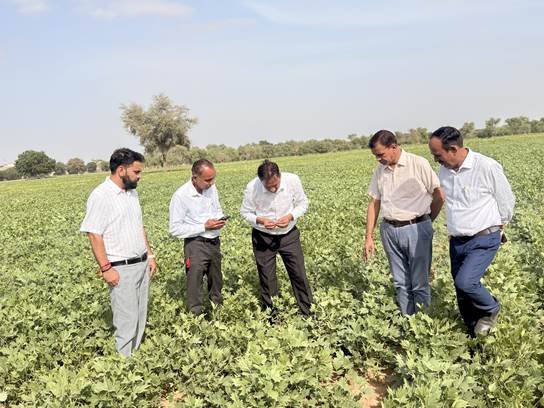
Despite these conditions, the CAZRI varieties continued to maintain vegetative growth and reproductive development.
At around 55 days after sowing, the crops reportedly remained green, showed good growth and produced profuse pods.
Crop Management Played a Critical Role
CAZRI’s field results also highlight that genetic resilience needs to be supported by appropriate crop management.
The crop was sown with the onset of the monsoon in July, using a plant geometry of 45 × 10 cm. Mechanical interculture was undertaken around 20 days after sowing to support moisture conservation, alongside mechanical and manual weed management.
Early canopy development also helped with soil binding and moisture retention around the rhizosphere.
The experimental fields were characterised by relatively poor fertility, with organic carbon of 0.13–0.18%, available nitrogen of 90–100 kg per hectare, phosphorus of 10–15 kg per hectare and potassium of 250–260 kg per hectare.
The field results therefore point towards the combined importance of climate-resilient genetics and moisture-conservation practices in rainfed arid agriculture.
Developmental Plasticity Offers an Adaptation Advantage
One of the key characteristics of the CAZRI varieties is their developmental plasticity.
The varieties begin flowering at approximately 30 days after sowing and can adjust their growth and maturity according to the availability of soil moisture.
This characteristic is particularly relevant to western Rajasthan, where rainfall can vary significantly in terms of its amount, timing and distribution.
The ability to move relatively quickly towards reproductive development while making efficient use of available soil moisture can help moth bean remain productive under uncertain rainfed conditions.
Seed Multiplication Underway
CAZRI is now working on expanding the availability of seed for these varieties.
Seed production is currently being undertaken over seven hectares at the CAZRI Research Farm. The Saathi Portal has indicated a requirement of 23.32 quintals of seed for 2026, compared with 63.2 quintals indented in 2025 for the four varieties.
According to the release, one quintal of breeder seed can potentially produce approximately 1,000–1,400 quintals of certified seed. If properly multiplied and marketed as certified seed, this could facilitate cultivation across approximately 10,000 hectares.
Even at 50% of this potential, wider adoption could cover around 25% of Rajasthan’s total moth bean area.
Seed multiplication is being undertaken by the Rajasthan State Seeds Corporation, National Seeds Corporation and selected private players.
Potential Boost for Rajasthan’s Pulse Economy
The development has implications beyond crop productivity. Moth bean is a traditional pulse crop of the Thar Desert and western Rajasthan, making improved varieties potentially relevant to the region’s wider agricultural and rural economy.
Greater availability of climate-resilient seed could help farmers manage production risks associated with erratic rainfall while supporting the broader objective of strengthening domestic pulse production.
Dr M. L. Jat, Secretary, Department of Agricultural Research and Education (DARE) and Director General, ICAR, described moth bean as a unique crop of the Thar Desert and said that climate-resilient CAZRI varieties could contribute to new income opportunities for farmers and greater self-reliance in pulses.
He also stressed that improved genetics must be accompanied by appropriate management practices, including timely sowing, optimum plant population, weed management and moisture-conservation measures.
Impact on Food, Hospitality and Travel & Tourism
For the food industry, climate-resilient pulse varieties can contribute to greater stability in the availability of locally produced ingredients. Moth bean is particularly relevant to Rajasthan’s regional food culture, where pulses and locally adapted crops form an important part of traditional cuisine.
For hotels and restaurants, stronger local pulse production could support regional sourcing and Rajasthan-focused culinary experiences, particularly as hospitality businesses increasingly highlight local ingredients and traditional food systems.
The development also has relevance for culinary and rural tourism. Rajasthan’s desert landscape, traditional cuisine, farming communities and indigenous food products form part of the state’s broader tourism identity. Strengthening the resilience of local agriculture can help sustain the food systems that underpin these experiences.
In the longer term, improved agricultural resilience in the Thar region could also support rural livelihoods and create opportunities around farm-linked experiences, local food products and destination-based culinary tourism.
Industry Takeaway
The performance of CAZRI Moth-4, Moth-5, Moth-6 and Moth-7 during Kharif 2026 highlights the role that crop breeding can play in adapting agriculture to increasingly uncertain rainfall conditions.
The 35-day dry spell provided a significant field-level test, with the varieties continuing growth and pod development during a critical stage of the crop cycle.
For Rajasthan’s wider food ecosystem, the combination of climate-resilient seed, improved farm management and expanded seed multiplication could strengthen the supply of locally adapted pulses while supporting farmers and the regional food economy.