World Tourism Day 2026: Shaping the Future of Travel
From digital innovation and smarter destinations to authentic experiences and sustainable growth, tourism is entering a new era of transformation and opportunity.
World Tourism Day 2026 offers an opportunity to reflect on how the tourism industry is evolving in a rapidly changing world. For this special feature, industry leaders and experts share their perspectives on the trends shaping travel today—from technology and AI to sustainability, local experiences, wellness and responsible destination development—and how these shifts are creating new possibilities for India’s tourism and hospitality landscape.
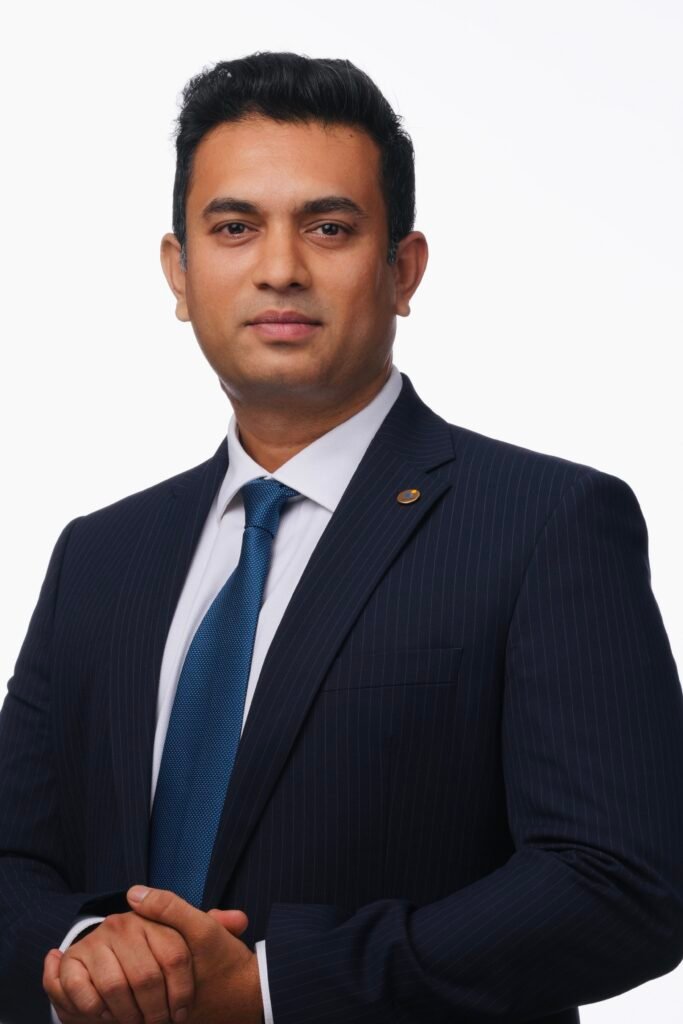
Rayan Aranha,
Vice President,
Brigade Hotel Ventures Limited.
“Technology is a means to enhance hospitality, not define it. Today’s traveller expects convenience, speed and personalization at every touchpoint, from discovering a destination to checking out after their stay. Digital tools and artificial intelligence give us the ability to better understand these evolving expectations and respond with greater efficiency and relevance. We must also keep in mind that hospitality will always remain a deeply human business. A warm welcome, thoughtful service and genuine care cannot be automated. The real opportunity therefore lies in using technology to take care of routine processes so that focus can be more on creating memorable guest experiences and meaningful connections. Technology should be used to help us become more responsive, more sustainable and more intuitive, while preserving the essence of hospitality that guests continue to value most. As the tourism industry evolves, the future will belong to organisations that strike the right balance between digital innovation and human-centric service.”
Simranjeet Singh,
Director,
CYK Hospitalities
World Tourism Day is usually a conversation about destinations. For the food and beverage industry, however, it should also be a conversation about where consumption is moving. Every time tourism changes how people travel, it changes how they eat, where they spend, how long they stay, and, ultimately, where brands should be present.
For F&B brands, this creates a very different expansion opportunity. The next growth market may not always be the city with the largest population or the most established retail ecosystem. It could be a destination seeing a new flow of travellers, an expressway becoming a preferred travel corridor, an airport becoming a consumption hub, or a Tier 2 city becoming a weekend destination. This is not speculative. Even as overall retail leasing activity across India’s major cities has been uneven this year, F&B and fashion occupiers have kept leasing volumes climbing in high-tourism corridors, and landlords are actively reshaping tenant mixes around food and experience because they extend dwell time and lift conversion across the rest of the property.
This is where tourism and leasing begin to intersect. A brand looking at expansion cannot look at a map and simply mark the next city. It has to understand the movement within that city, and increasingly, the movement between cities. Where are people arriving? Which corridors are they travelling on? At what airports are they stopping as destination points and not as transfer points? Where do they relax, and how can this be made financially viable for the brand?
This changes the role of leasing completely. Leasing is often treated as the process of finding a property, negotiating rent, and closing a deal. But for an expanding F&B brand, the property is actually one of the most important components of the business model. That reality is now showing up directly in deal structures: operators are increasingly asked to accept turnover-linked rent, phased escalations and co-investment in fit-outs rather than flat rent, which means a brand’s own commercial model — ticket size, table turns, delivery mix — now determines what a landlord is willing to offer, not the other way around.
Tourism makes this decision even more nuanced. A tourist destination may have extraordinary footfall, but footfall alone cannot justify a lease. A brand needs to understand whether that footfall translates into its particular consumption occasion. A premium café, a QSR, a family restaurant, a dessert brand and a destination dining concept may all look at the same market and arrive at completely different conclusions. That is why expansion cannot be built around the question, “Is this a high-footfall location?” The better question is, “Is this the right demand for this brand?”
This distinction becomes critical as Indian consumers increasingly travel for experiences rather than simply destinations. Food is becoming part of that experience, and the infrastructure around travel is evolving fast enough to create entirely new categories of F&B real estate. India’s expressway network is expanding rapidly, and highway QSR has become a distinct, purpose-built format in its own right — shorter dwell windows, drive-through-first layouts, menus engineered for a traveller with minutes rather than hours, not simply a familiar brand transplanted onto a highway stop. Airports are undergoing a parallel shift. Across the industry, airport dining is being reframed away from a pure concession category or a revenue-per-passenger calculation, and toward something closer to traveller wellbeing, emotional experience and airport identity — which is why some Indian airports now describe themselves as destinations rather than transit points, and why mission-led concepts are finding a place in that space alongside conventional chains. Meanwhile, rising digital penetration is pulling Tier 2 and Tier 3 cities into the growth conversation ahead of metro saturation, meaning the next wave of expansion is often
about reaching a brand’s existing customer in a city that simply hasn’t had the format yet, rather than discovering a new customer altogether.
For brands, this creates two very different expansion opportunities. One is to follow existing consumer demand into new markets. The other is to become part of the reason consumers visit a particular location. The second is where the relationship between F&B and tourism becomes particularly interesting. A strong restaurant can become an anchor for a destination. A well-positioned café can increase dwell time within a development. A food cluster can change the perception of a high street. A distinctive F&B concept can give travellers another reason to visit a neighbourhood. In such cases, the brand is no longer simply responding to footfall. It is contributing to the creation of that footfall.
This is also changing what landlords and developers should expect from F&B brands. The conversation cannot remain limited to rent, area, and frontage. The larger conversation is about what role a brand can play within a destination. Will it complement the existing tenant mix? Will it bring a new consumer segment? Will it encourage longer visits? Does its operating model suit the property? Can the concept become a destination in itself? For brands, the questions are equally important. A property may have excellent visibility but poor access. A destination may have strong tourist traffic but weak local demand. A highway location may look attractive but lack the format built to serve it. A mall may offer the right catchment but the wrong commercial structure.
This is why brand expansion is rarely about finding a property first. It is about understanding the brand first. The brand’s target audience, price point, format, operational requirements, consumption occasion, and growth ambition should determine the kind of location it enters. Leasing should then translate that strategy into a commercially viable property decision. This is also why format itself is becoming a lever brands use deliberately rather than a constraint they work around — flagship stores for visibility in destination malls and airports, paired with smaller high-street, delivery-linked or shop-in-shop formats to preserve expansion momentum where occupancy costs are climbing fastest.
This is even more important as the brands begin moving out of their native markets. A strategy that works in Delhi does not have to be repeated in Jaipur. A café that performs in a business district may require a different format in a tourist market. A QSR entering a highway ecosystem may need to rethink its footprint, service model, and operating hours. Even menu philosophy is shifting with the traveller: plant-forward, wellness-led menu design is increasingly showing up at transit points that were once built purely around indulgence, because the industry has recognised that “tourist menu” no longer means the same thing it did a few years ago.
Expansion is therefore not about taking the same box and placing it in another city. It is about taking the same brand proposition and adapting its physical presence to a new consumption environment. That is where I believe the next phase of F&B expansion will be defined. Not by the number of stores a brand can open, but by how intelligently it can read where demand is moving. Tourism gives us an important lens for that.
As new destinations emerge, travel patterns change and previously overlooked markets become consumption hubs, the opportunity for F&B brands will increasingly lie outside conventional expansion maps. The question for brands will no longer simply be, “Where should we open next?” It will be, “Where is the consumer going next, what will they consume when they get there, and what kind of presence does our brand need to have?” That is where tourism becomes more than a driver of footfall. It becomes a signal for expansion. And for an industry where location can determine the difference between a promising concept and a profitable business, knowing where people are going may become just as important as knowing what they are eating.
Sohail Mirchandani,
Co-founder & Chief Operating Officer,
EkoStay,
“World Tourism Day this year is about how digital tools and AI can redesign travel, and for us that is not a theme, it is how we run the business every single day. But the bigger story in India right now is a simple one. Indians are travelling within the country at a scale we have never seen, and the supply of good places to stay has not kept pace. As per NITI Aayog and the Ministry of Tourism’s June 2026 report on unlocking growth in tourism and hospitality, India recorded 2.9 billion domestic tourist visits in 2024, well past the pre pandemic peak of 2.3 billion, while a typical hotel project still takes 36 to 48 months to go from approval to opening. The same report puts branded hotel inventory at under 8 percent of the country’s total lodging rooms. That gap is where professionally managed homestays and villas come in.
A well run private home can be brought to market in months, not years, and it gives a family or a group the space, privacy and flexibility that a hotel room simply cannot. For us, technology is what makes that scale possible without losing the personal touch. Every check in, every meal, every maintenance call runs on a backend built so the guest never has to think about it. As India travels more, the brands that win will be the ones that treat reliability as the real luxury, and the homestay sector, with the policy support it is finally starting to get, is ready to carry a much bigger share of that demand.”
Vijay Prabhu,
Founder,
Little Earth Group
Tourism today stands at an important inflection point. It is no longer defined simply by the number of people travelling, but by the value that travel creates for destinations, communities, businesses and the traveller. India has tremendous potential in this space, with its diversity of culture, heritage, cuisine, landscapes and increasingly sophisticated hospitality ecosystem.
The traveller is also evolving. There is a growing preference for experiences that feel authentic, locally rooted and meaningful, rather than simply checking destinations off a list. This presents a significant opportunity for the Indian tourism and hospitality industry to build destinations and experiences that encourage longer stays, deeper engagement and greater local participation.
The next phase of tourism growth must therefore be about creating stronger tourism ecosystems, where hospitality, local enterprises, culture, food, entertainment and communities come together to create a distinctive sense of place. Responsible development will be equally important, ensuring that the economic benefits of tourism are shared while the character and resources of destinations are protected.
At Little Earth Group, we see this as an opportunity to rethink how destinations are experienced and how hospitality can contribute to the larger tourism economy. India has the scale and diversity to become one of the world’s most compelling tourism markets; the focus now should be on building experiences and infrastructure that can sustain that growth over the long term.
World Tourism Day is ultimately a reminder that tourism is not just an industry of movement. It is an industry of connection, opportunity and destination building.
Gaurav Gupta,
Co-founder,
Saltstayz
World Tourism Day is a good moment to ask a simple question: how many of India’s actual destinations does most of our hospitality infrastructure really serve? For years, quality stays have clustered around a handful of metros, while some of the country’s richest travel experiences — spiritual, heritage, adventure and nature — have remained underserved. We believe the next phase of Indian hospitality has to go beyond the traditional hotel markets and move closer to the destinations and experiences travellers are actually seeking.
Whether it’s Rishikesh for the traveller chasing the Ganga and the rush of a river rapid, Ujjain and Indore for the spiritual and heritage circuit of Madhya Pradesh, or Gurgaon as a gateway to the lesser-known experiences spread across the Aravalis, we want our network to put a dependable stay closer to where the journey actually leads. Our hotels in Gurgaon, for instance, are not only designed for corporate and social travellers, but also for people looking to discover the trails, heritage sites, lakes, villages and other hidden gems that sit within and around the Aravalis, often just a short drive away.
We also think about the same traveller differently through the week. A corporate guest in Delhi or Indore on a Tuesday can just as easily be a weekend leisure traveller in Rishikesh or Ujjain by Saturday, and our properties are built to serve both occasions without compromise. As this year’s global theme reminds us, technology has a real role to play here too — from how a traveller discovers a destination to how seamlessly they can book and experience their stay.
For us, that isn’t a separate innovation story. It is the infrastructure that can support India’s next wave of tourism — connecting business and leisure, metros and lesser-known destinations, convenience and discovery, through one dependable network.
Anirudh Lakhotia,
Director,
Ivory Destinations (The Golden Tusk and The Chamomile Estate)
This World Tourism Day, we’re reminded that Corbett doesn’t just draw travellers for a safari drive, it asks something more of us: to protect the wilderness we’re inviting people into. At The Golden Tusk, every experience we design, from our villas to the conversations we have with guests, carries that responsibility. We’ve seen firsthand how a well-informed traveller becomes a quiet advocate for the forest long after they’ve left, and that’s the real dividend of tourism done right. Every destination needs more people who leave caring about what they saw. Tourism here isn’t separate from conservation.
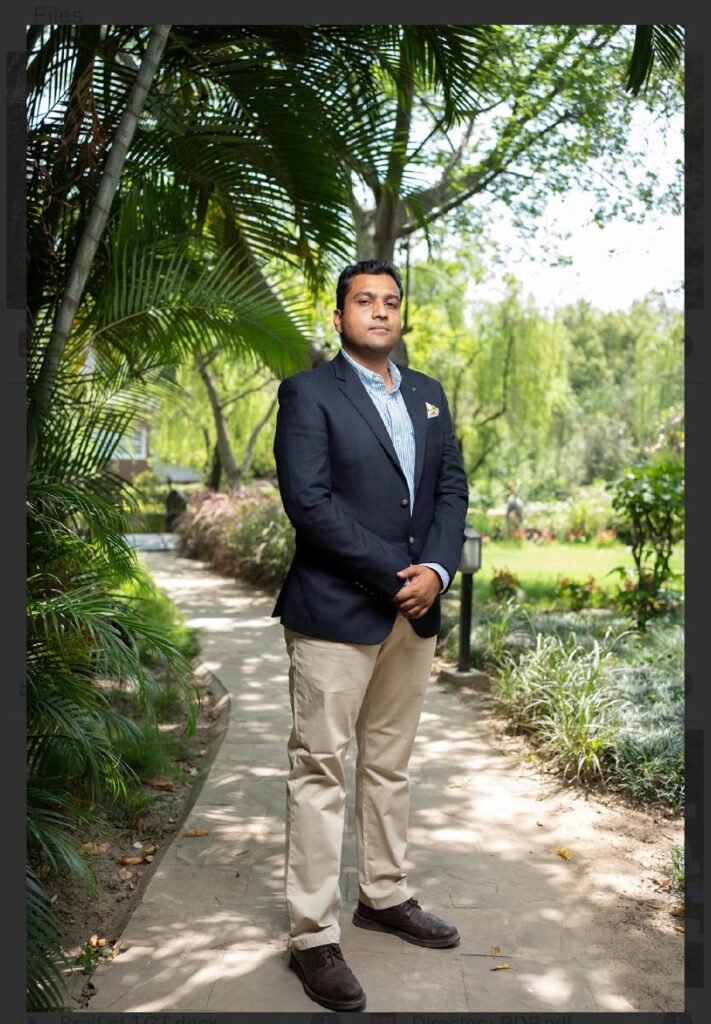

Sana Naseem,
General Manager,
Planet Hollywood Thane
“Luxury in travel is increasingly being defined by the quality and authenticity of the experience rather than simply by the grandeur of a destination. Travellers today are looking to discover the character of a place through its food, culture, people and the way a destination makes them feel. This is where the idea of ‘local is the new luxury’ becomes especially relevant. As Thane continues to evolve as a vibrant urban destination, there is an opportunity to create experiences that combine contemporary luxury with a strong sense of place. At Planet Hollywood Thane, we see this as an important part of the future of hospitality, creating stays and experiences that offer comfort and sophistication while allowing guests to connect with the destination in a more meaningful way.”
Abhishek Bhattacharya
Sales,
WelcomHeritage Hotels
On World Tourism Day, we are reminded that every property in our portfolio carries a living story—from historic forts and havelis that anchored communities, to boutique retreats, nature lodges, and wildlife sanctuaries dedicated to preserving fragile ecosystems. At WelcomHeritage, our role across our collection of heritage, nature, and wildlife retreats goes beyond hospitality; it is one of active stewardship.
In a country as culturally and naturally rich as India, responsible tourism is the catalyst that breathes new life into historic structures, creates sustainable livelihoods, and protects vital natural habitats. Across all our properties, we remain committed to ensuring these spaces remain vibrant and cared for—delivering authentic experiences for today’s travelers while safeguarding India’s heritage and environment for generations to come.