Shivraj Singh Chouhan Promotes Integrated Farming Model to Raise Bihar Farmers’ Incomes
‘Three-Bigha’ integrated farming model can generate up to ₹2 lakh annual family income; Centre and Bihar to focus on natural farming, branding and market access Key Highlights Integrated farming can reduce income risks for small and marginal
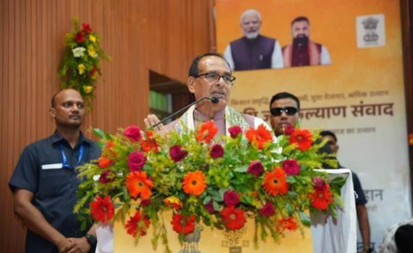
‘Three-Bigha’ integrated farming model can generate up to ₹2 lakh annual family income; Centre and Bihar to focus on natural farming, branding and market access
Key Highlights
- Integrated farming can reduce income risks for small and marginal farmers.
- ICAR’s 2–3 bigha model combines crops, fisheries, poultry, ducks, vegetables, fruits and fodder.
- The model can generate up to ₹2 lakh annual family income, according to the government.
- Farmers encouraged to test natural farming on a small portion of land before scaling up.
- Centre and states to work together on branding and marketing organic and natural farm products.
- Union Agriculture Minister seeks stronger farmer–government dialogue and field-level implementation.
Union Agriculture and Farmers’ Welfare and Rural Development Minister Shivraj Singh Chouhan has highlighted integrated farming as a potential strategy for reducing income risks and improving the earnings of small farmers during the “Krishi Jan Kalyan Samvad” in Patna.
Addressing farmers, agricultural experts and rural representatives, Chouhan said farmers remain central to India’s development and that practical farming models suited to small landholdings need to be promoted.
‘Three-Bigha’ model creates multiple income streams
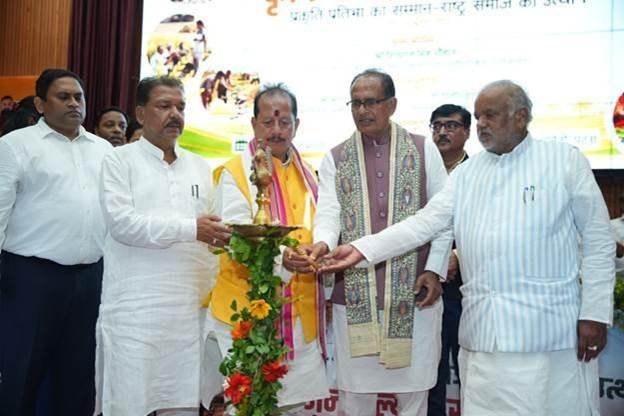
A key example highlighted by the Minister was an integrated farming model demonstrated at the ICAR Eastern Campus.
Under the model, farmers with around 2–3 bighas of land can divide their farmland among multiple crops after the paddy season, including:
- Wheat
- Gram
- Mustard
- Maize
- Vegetables
- Fruit trees
- Fodder
The model also integrates fish farming, poultry, duck rearing and other allied activities.
The objective is to create several sources of income rather than depending on a single crop. According to Chouhan, families adopting such integrated systems can potentially earn up to ₹2 lakh annually.
The approach could be particularly relevant for smallholders because income from different crops and allied activities can be spread across the year, reducing exposure to crop-specific risks.
Natural farming gets renewed push
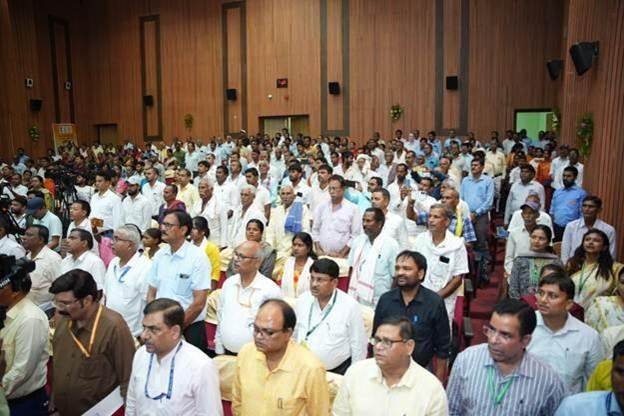
Chouhan also encouraged Bihar farmers to explore natural and advanced farming techniques, while cautioning against making an immediate full-scale transition.
He suggested that farmers first experiment with natural farming on a limited portion of their holdings and assess the results before expanding adoption.
The Minister stressed the importance of maintaining soil health and reducing excessive dependence on chemical fertilisers.
He also called for greater emphasis on organic and balanced farming practices.
Branding and marketing to support better prices
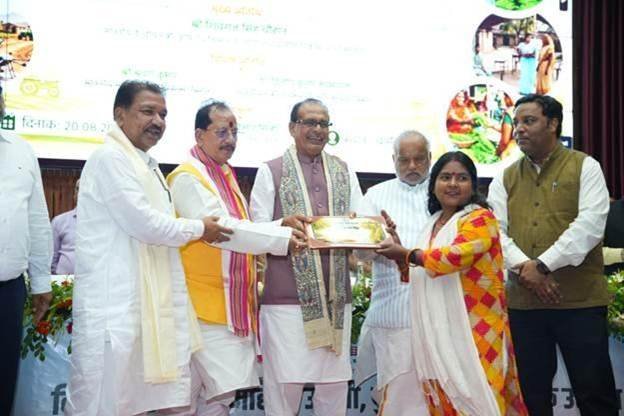
Production alone, Chouhan said, is not sufficient to improve farm incomes.
The Centre and State Governments will work together to strengthen the marketing and branding of organic and natural farming products, with the objective of giving farmers’ products greater recognition and helping them secure better prices.
For Bihar, this could create opportunities to build stronger identities for region-specific agricultural and food products and connect farmers with wider consumer and institutional markets.
Greater focus on small-farm economics
The Patna interaction highlighted a broader shift towards farming models that combine agriculture with allied activities.
Instead of relying exclusively on a single crop, integrated farming allows farmers to combine crop cultivation, livestock, poultry, fisheries, horticulture and fodder production according to local resources.
This approach can potentially:
- Diversify household income
- Reduce dependence on a single crop
- Improve utilisation of land and water
- Create year-round income opportunities
- Strengthen household food security
- Increase the value generated from small landholdings
Minister calls for stronger farmer-government dialogue
During the programme, Chouhan interacted directly with farmers, listened to their concerns and sought their suggestions on agricultural policies and implementation.
He said effective understanding of farming conditions requires regular engagement with farmers and visits to rural areas.
The Minister also interacted with progressive farmers including Ramjeet Sharma, Ramkumar Vinay, Sushila Devi and Sudhanshu, and said their experiences and suggestions would be considered in future policy and implementation.
The Union Minister said he plans to return to Bihar to review initiatives related to soil improvement and farmers’ livelihoods, with Centre-State cooperation expected to play a role in improving agricultural incomes.
Hospitality, Food & Tourism Impact
Food supply: Integrated farming can create more diversified local supply chains for cereals, pulses, vegetables, fruits, poultry and fish—important inputs for the hospitality and food-service sectors.
Farm-to-table opportunities: Bihar’s integrated farming and natural farming initiatives could support farm-to-table programmes, local sourcing and regional cuisine experiences for hotels and restaurants.
Agri-tourism: Demonstration farms combining crops, fisheries, poultry and horticulture could become potential attractions for rural and experiential tourism.
Organic and natural products: Government-backed branding could improve the visibility of Bihar’s natural and organic products among premium food buyers and hospitality businesses.
Rural livelihoods: Diversified farm incomes can strengthen village economies and create conditions for community-based tourism and rural entrepreneurship.
Bottom Line
The Patna dialogue reinforces the government’s growing focus on income diversification rather than crop production alone. The three-bigha integrated farming model, combined with natural farming, branding and improved market access, could provide a practical framework for strengthening small-farm economics while creating new opportunities across Bihar’s food, hospitality and rural tourism ecosystem.