MANAGE Hyderabad Recognised as Centre of Excellence for Agricultural Skills Development by MSDE
Three-year recognition to strengthen agricultural skilling, agri-business entrepreneurship and workforce development; initiative expected to expand training opportunities across India's agriculture value chain Hyderabad, November 4, 2026: The National Institute of Agricultural Extension Management (MANAGE), Hyderabad, has
Three-year recognition to strengthen agricultural skilling, agri-business entrepreneurship and workforce development; initiative expected to expand training opportunities across India’s agriculture value chain
Hyderabad, November 4, 2026: The National Institute of Agricultural Extension Management (MANAGE), Hyderabad, has been recognised as a Centre of Excellence-Skills (CoE-Skills) in the Agriculture Sector by the Ministry of Skill Development and Entrepreneurship (MSDE), Government of India. The recognition is expected to strengthen the institute’s role in agricultural skill development, entrepreneurship promotion and capacity building across the country’s agriculture sector.
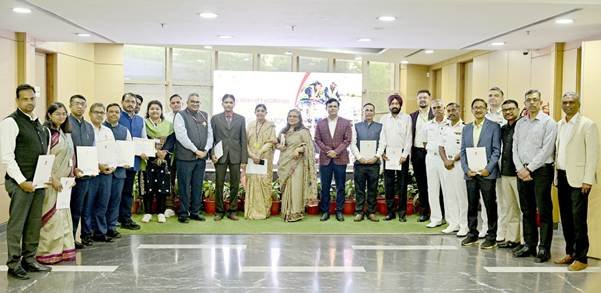
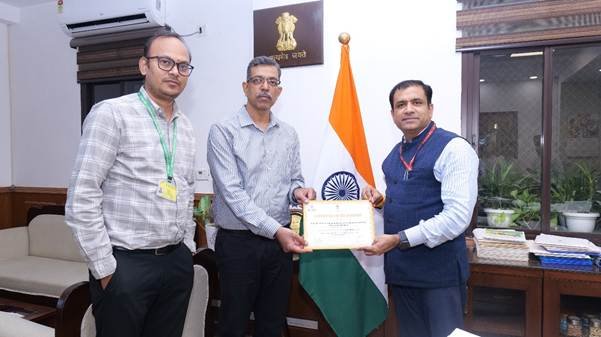
The Certificate of Recognition was formally presented to MANAGE by Smt. Debashree Mukherjee, Secretary, MSDE, at a ceremony held at Kaushal Bhawan, New Delhi, on November 2, 2026. The recognition will remain valid for three years.
Operating under the Ministry of Agriculture and Farmers Welfare, MANAGE is an autonomous institution established in 1987 to strengthen India’s agricultural extension system through training, consultancy, research and policy support.
With its new Centre of Excellence status, the institute will have an opportunity to expand its engagement in structured agricultural skilling programmes and develop a workforce equipped with relevant technical, managerial and entrepreneurial capabilities.
Focus on Agri-Business Management and Entrepreneurship
MANAGE has been actively contributing to agricultural capacity building through professional education and specialised training programmes. Its academic offerings include:
- Post Graduate Diploma in Agri-warehousing Management (PGDAWM): Focused on developing professional capabilities in agricultural warehousing and related management.
- Post Graduate Diploma in Agricultural Extension Management (PGDAEM): Designed to strengthen agricultural extension management capabilities.
- Post-Graduate Diploma in Management (Agri-Business Management): A two-year regular programme focusing on management and business development in the agricultural sector.
The institute also conducts training programmes and knowledge-sharing initiatives for agricultural extension professionals, while supporting innovative approaches to agricultural entrepreneurship.
The Centre of Excellence recognition is expected to provide a platform for diversifying these activities towards wider skill development initiatives, in alignment with the Government of India’s national skilling objectives.
Shri Sanjay Kumar Agarwal, IAS, Director General, MANAGE and Joint Secretary (Extension), described the recognition as an important milestone for the institute. He noted that it brings additional responsibility to strengthen programme execution standards and expand MANAGE’s contribution to the country’s skill development mission.
The initiative was developed under his leadership, with contributions from Dr. K. C. Gummagolmath, Dr. Veenita Kumari and Dr. Shalendra.
Key Highlights
- Institutional recognition: MANAGE Hyderabad recognised as a Centre of Excellence-Skills in the Agriculture Sector by MSDE.
- Three-year validity: Recognition formally conferred on November 2, 2026, at Kaushal Bhawan, New Delhi.
- Agricultural workforce development: Focus on strengthening technical, managerial and entrepreneurial skills.
- Agri-business education: Existing programmes cover agricultural extension management, agri-warehousing and agri-business management.
- Entrepreneurship promotion: Greater institutional focus on developing agricultural entrepreneurs and skilled professionals.
- National skilling mission: Recognition aligns MANAGE’s activities with India’s broader workforce development objectives.
Impact on Hospitality, Food Processing and Travel & Tourism
1. Strengthening farm-to-hotel supply chains
A more skilled agricultural workforce can contribute to better farm management, post-harvest handling, storage and agricultural marketing. These improvements are relevant to hotels, restaurants, caterers and institutional foodservice businesses that depend on consistent supplies of quality agricultural produce.
2. Opportunities in food processing and agri-value addition
Specialised training in agri-business management and warehousing can support better management of agricultural commodities, reduce post-harvest inefficiencies and strengthen linkages between farmers and food processing companies. This could benefit the wider food manufacturing and hospitality procurement ecosystem.
3. Professionalisation of food supply networks
Improved agricultural extension and entrepreneurial capabilities can help develop stronger connections between producers, distributors, processors and hospitality businesses. Better organised supply chains could support regional sourcing and the use of locally produced ingredients.
4. Rural tourism and agri-tourism development
Agricultural entrepreneurship and professional management skills can also support farm-based enterprises, rural experiences and agri-tourism initiatives. With appropriate business development and tourism linkages, agricultural destinations could create additional opportunities for visitors while generating income for rural communities.
5. Demand for specialised hospitality skills
The development of agricultural and food supply chain professionals can indirectly support hospitality operations, particularly in areas such as food procurement, inventory management, storage and sustainable kitchen operations.
Industry Takeaway
MANAGE’s recognition as a Centre of Excellence-Skills reflects the growing importance of professional education and entrepreneurship in strengthening India’s agricultural ecosystem.
For the hospitality, food processing and tourism industries, the development of a skilled agricultural workforce has implications beyond farming. Better-trained professionals in agricultural management, warehousing, post-harvest operations and entrepreneurship can contribute to more efficient food supply chains, improved regional sourcing and stronger farm-to-market connections.
As India continues to develop its agricultural value chains, closer integration between agriculture, food processing, hospitality and tourism could create opportunities for businesses across these interconnected sectors.