India’s Extreme Poverty Rate Falls to 2.6%; Agriculture and Rural Development Schemes Drive Poverty Reduction
Shivraj Singh Chouhan highlights agricultural growth of 4.45%, rural infrastructure development and ICAR research returns at joint ministerial workshop; government targets improved farmer incomes and stronger global market presence for Indian agricultural products Key Highlights: Nearly 50
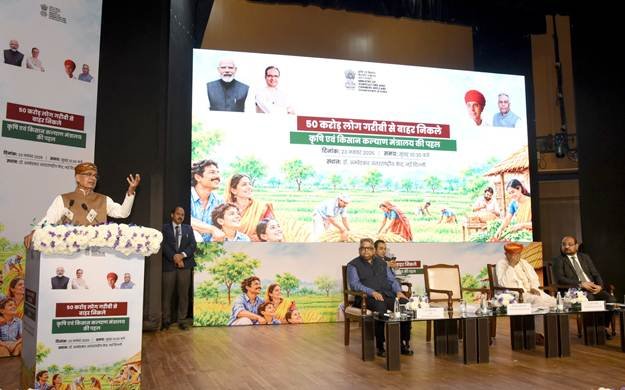
Shivraj Singh Chouhan highlights agricultural growth of 4.45%, rural infrastructure development and ICAR research returns at joint ministerial workshop; government targets improved farmer incomes and stronger global market presence for Indian agricultural products
Key Highlights:
- Nearly 50 crore people have moved out of poverty in India, according to the World Bank report cited at the workshop.
- Extreme poverty has declined from 27.1% to 2.6%.
- India’s decadal agricultural growth rate has reached a historic 4.45%.
- ICAR research and agricultural education generated economic returns of ₹13.85 for every ₹1 invested, while animal husbandry research generated ₹20.81.
- More than 10 crore women have been connected with Self-Help Groups (SHGs), with 3.76 crore becoming Lakhpati Didis.
- PMAY-Gramin has facilitated the construction of 3.99 crore permanent houses.
- The government aims to prevent vulnerable households from slipping back into poverty and improve the living standards of those who remain below the poverty line.
Agriculture and Rural Development Take Centre Stage in India’s Poverty Reduction Strategy
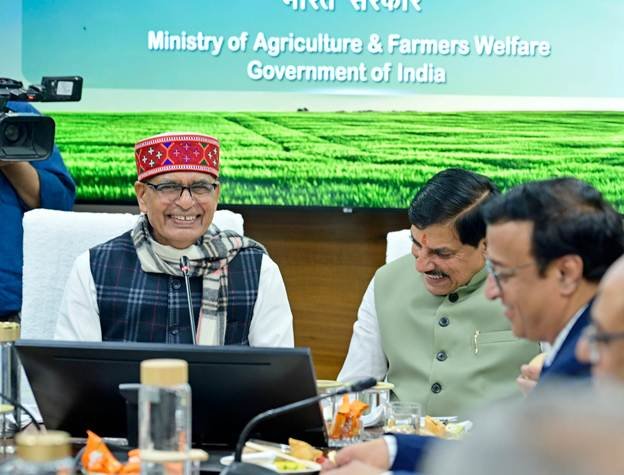
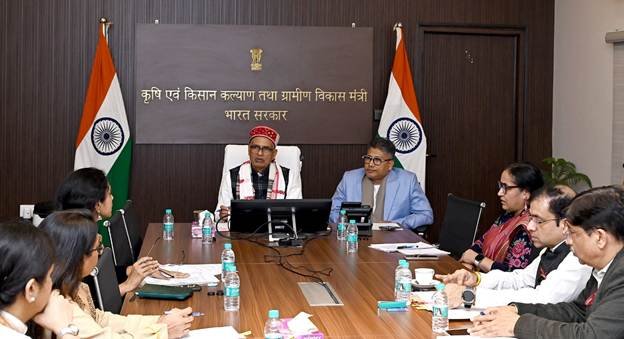
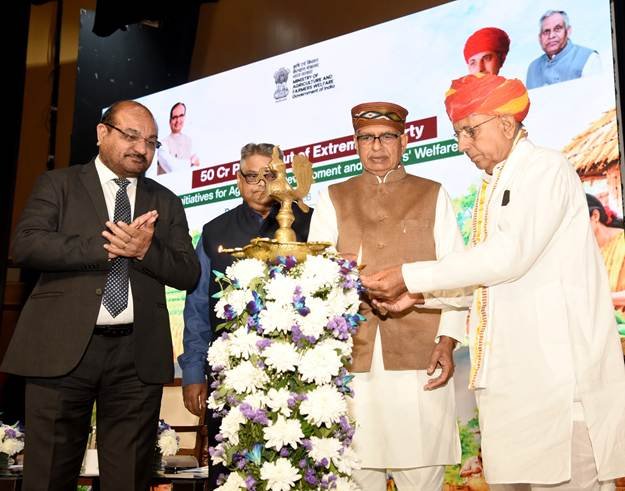
India’s agricultural growth and rural development programmes have been highlighted as key contributors to the country’s poverty reduction efforts at a joint workshop organised by the Ministries of Agriculture and Farmers Welfare and Rural Development in New Delhi on November 23, 2026.
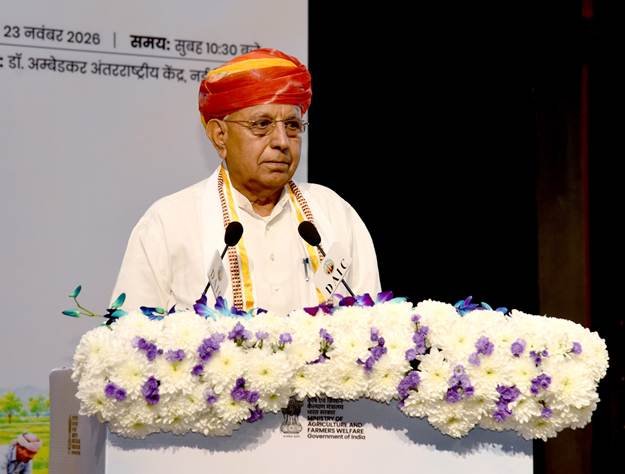
The workshop, chaired by Union Minister for Agriculture and Farmers Welfare and Rural Development Shivraj Singh Chouhan at the Ambedkar International Centre, focused on assessing the contribution of agriculture, allied sectors, scientific research and rural development schemes to poverty alleviation and identifying strategies for the next phase of development.
According to the figures presented at the workshop, nearly 50 crore people have moved out of poverty, while India’s extreme poverty rate has declined from 27.1% to 2.6%.
The meeting was attended by Union Minister of State for Agriculture and Farmers Welfare Bhagirath Choudhary and Union Minister of State for Rural Development Kamlesh Paswan. Senior officials from the Department of Agriculture and Farmers Welfare, Indian Council of Agricultural Research (ICAR), Department of Rural Development and Department of Land Resources also participated.
Chouhan said the government’s next priority is to ensure that families who have moved above the poverty line do not fall back into poverty, while accelerating efforts to improve the living conditions of the remaining vulnerable population.
Agricultural Growth Reaches Historic 4.45%
Highlighting developments in the agriculture sector over the past 12 years, Chouhan stated that India’s decadal agricultural growth rate has reached 4.45%, surpassing the growth levels recorded during the Green Revolution period.
The workshop highlighted several initiatives and achievements contributing to agricultural development and farmers’ income growth, including:
- PM-KISAN: More than ₹4.66 lakh crore in direct financial assistance.
- Foodgrain production: A record 376.56 million tonnes.
- Horticulture production: 386.91 million tonnes.
- Farmer Producer Organisations: Formation of 10,000 FPOs.
- Agricultural credit: Affordable institutional loans for farmers.
- Digital agriculture: Initiatives such as AgriStack to improve agricultural services and access.
These developments were presented as part of the government’s efforts to strengthen agricultural productivity, rural incomes and the broader rural economy.
ICAR Research Generates Significant Economic Returns
The workshop also highlighted the contribution of agricultural research, scientific innovation and technology to improving productivity and farmers’ incomes.
According to a presentation by the Department of Agricultural Research and Education (DARE) and ICAR, every ₹1 invested in agricultural research and education generated an economic return of ₹13.85. Animal husbandry research generated returns of ₹20.81 for every ₹1 invested.
Other achievements highlighted included:
- Release of 3,436 new crop varieties since 2014, of which 93% are climate-resilient.
- Development of biofortified crop varieties.
- Fish production reaching 19.78 million tonnes.
- Introduction of more than 500 agricultural implements.
- Annual digital outreach to 5 crore farmers through Krishi Vigyan Kendras (KVKs).
These interventions were highlighted as important contributors to agricultural modernisation and rural economic development.
Rural Housing, Women’s Livelihoods and Infrastructure Strengthen Villages
The workshop also reviewed the impact of rural development and land resource management schemes on village economies and household incomes.
According to the presentations:
- Deendayal Antyodaya Yojana – National Rural Livelihoods Mission: More than 10 crore women have been connected with Self-Help Groups, with 3.76 crore becoming Lakhpati Didis.
- Pradhan Mantri Awas Yojana-Gramin: 3.99 crore permanent houses have been constructed.
- Pradhan Mantri Gram Sadak Yojana: Development of 79.9 lakh kilometres of all-weather rural roads.
- Viksit Bharat – G RAM G: Rural families are covered under a 125-day employment guarantee.
- Watershed Development Component of PMKSY: Water conservation and land reclamation works have covered 3.4 crore hectares, benefiting 61.15 lakh farmers.
The watershed development initiatives have also contributed to improved irrigation, milk production and agricultural incomes, with average annual farmer income increasing by up to 70% in the areas highlighted during the presentation.
Government Targets Stronger Agricultural Exports and Global Market Presence
During the concluding session, Chouhan invited suggestions from officials and employees for improving existing agricultural schemes, budget allocations and the introduction of new initiatives to increase farmers’ incomes.
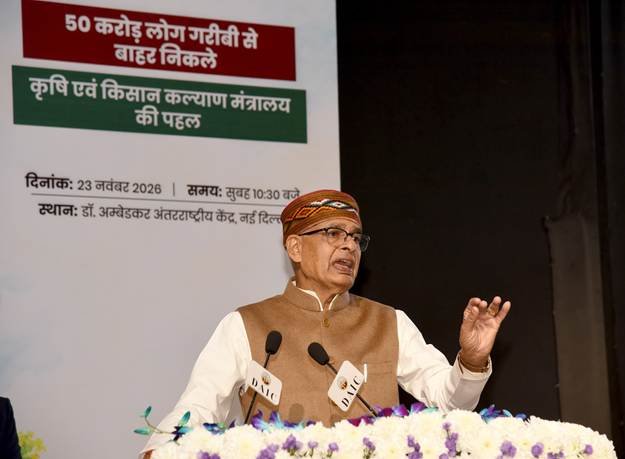
He also stressed the importance of taking government achievements and welfare initiatives directly to farmers and the public rather than limiting information to official communications.
Referring to India’s Free Trade Agreements (FTAs), the Minister emphasised the need to strengthen the global market presence of Indian agricultural products.
The government also aims to achieve its development milestones for 2029, 2030-31 and the broader vision of Viksit Bharat @2047.
Impact on Hospitality, Food Processing and Travel & Tourism
The developments highlighted at the workshop have implications beyond agriculture, particularly for India’s food processing, hospitality, beverage and rural tourism industries.
1. Food Processing and Restaurant Supply Chains
Higher agricultural productivity and improved farmer incomes can strengthen the supply of raw materials for food processing companies, hotels, restaurants and institutional catering businesses. Greater agricultural research and climate-resilient crop varieties can also support more reliable sourcing.
2. Dairy and Beverage Industry
The economic returns from animal husbandry research and improvements in rural livelihoods can support the dairy value chain. This creates opportunities for dairy processing, milk-based beverages, packaged foods and hospitality businesses that depend on dairy products.
3. Rural Tourism and Homestays
Improved rural roads, permanent housing and women’s participation in income-generating activities can create favourable conditions for rural tourism. Agritourism, village stays, farm-based experiences and local culinary tourism could benefit from stronger rural economies and infrastructure.
4. Women-led Hospitality Entrepreneurship
The expansion of Self-Help Groups and the growth of Lakhpati Didis can support women-led businesses in food processing, catering, traditional food production, handicrafts and homestay operations.
5. Agricultural Exports and Food Trade
The government’s focus on FTAs and global market expansion could create opportunities for Indian food products, processed agricultural goods, dairy products and traditional beverages to reach international markets.
Industry Takeaway: The workshop reinforces the connection between agricultural development and the wider hospitality ecosystem. Stronger rural incomes, better infrastructure, scientific farming and women-led enterprises can create opportunities across food supply chains, rural accommodation, culinary tourism and agricultural exports. However, translating these gains into hospitality-sector growth will also require investment in processing facilities, cold-chain infrastructure, market linkages, tourism facilities and hospitality skills.