India’s Fisheries Sector Targets 19.8 Million Tonnes of Fish Production; 34 Clusters to Strengthen Value Chain and Seafood Exports
Fisheries Secretary Dr. Abhilasha Likhi highlights technology adoption, modern infrastructure and entrepreneurship opportunities during interaction with students in Nagpur Key Highlights India’s total fish production is projected to reach 19.8 million tonnes in 2024-25, with inland fisheries
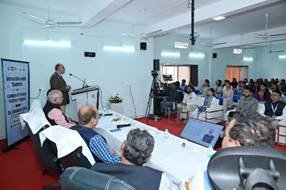
Fisheries Secretary Dr. Abhilasha Likhi highlights technology adoption, modern infrastructure and entrepreneurship opportunities during interaction with students in Nagpur
Key Highlights
- India’s total fish production is projected to reach 19.8 million tonnes in 2024-25, with inland fisheries and aquaculture accounting for 15.3 million tonnes.
- Seafood exports are estimated to reach a record 19.32 lakh metric tonnes worth ₹73,890.46 crore in 2025-26.
- The Government has notified 34 specialised fisheries and aquaculture clusters to strengthen production, processing, marketing and exports.
- Advanced technologies such as biofloc, recirculatory aquaculture systems, cage culture, AI, IoT and drone-based applications are being promoted.
- The Fisheries Technology Complex in Nagpur is being developed under the Fisheries and Aquaculture Infrastructure Development Fund at a project cost of ₹19.69 crore.
India’s Fisheries Sector Sees New Opportunities in Aquaculture, Technology and Entrepreneurship
India’s fisheries and aquaculture sector is expanding its focus on technology-driven production, integrated value chains and entrepreneurship, with the Government promoting cluster-based development and modern infrastructure. These priorities were highlighted by Dr. Abhilasha Likhi, Secretary, Department of Fisheries, during her visit to the College of Animal and Fishery Sciences in Nagpur, Maharashtra, on 27 November 2026.
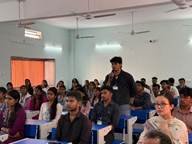
Interacting with students, Dr. Likhi discussed emerging opportunities in fisheries, aquaculture, entrepreneurship and the water economy, while outlining government initiatives aimed at improving productivity, value addition and market access.
Fish Production and Seafood Exports Register Strong Growth
According to the presentation, India’s total fish production is projected to reach 19.8 million tonnes in 2024-25, making the country the world’s second-largest aquaculture producer and accounting for around 8% of global fish production. Inland fisheries and aquaculture production are projected at 15.3 million tonnes during the same period.
India’s seafood exports are also expected to reach a record high in 2025-26, with estimated exports of 19.32 lakh metric tonnes valued at ₹73,890.46 crore (US$8.45 billion). The fisheries sector supports the livelihoods of more than 30 million fishermen and fish farmers.
34 Fisheries Clusters to Strengthen Integrated Value Chains
Dr. Likhi emphasised that cluster-based development can help improve production scale, productivity and coordination across the fisheries value chain. The Government has notified 34 specialised fisheries and aquaculture clusters across the country to provide end-to-end support.
The clusters cover a wide range of species and activities, including tuna, shrimp, pearl spot, murrel, pangasius, tilapia, trout, seaweed, ornamental fisheries, reservoir fisheries, coldwater fisheries, cage culture, organic fisheries and river-based fisheries.
The approach aims to address gaps across pre-production, production and post-production activities while strengthening technology adoption, market linkages and value addition. Institutional funding through agencies such as NABARD, alongside participation from private entrepreneurs and other stakeholders, is expected to support cluster development.
Technology Adoption to Modernise Aquaculture
The Fisheries Secretary highlighted the role of technology in making fisheries and aquaculture more productive, modern and commercially sustainable. Technologies supported under the Pradhan Mantri Matsya Sampada Yojana (PMMSY) include:
- Recirculatory aquaculture systems
- Biofloc fish and shrimp farming
- Reservoir and marine cage culture
- Raceway and pen culture
- Advanced hatcheries and fish seed production systems
She also underlined the growing role of artificial intelligence, the Internet of Things (IoT), machine learning and drone-based applications in water-quality monitoring, fish-health management, feeding practices, disease surveillance and operational efficiency.
Government Schemes to Encourage Fisheries Entrepreneurship
Initiatives such as the Pradhan Mantri Matsya Sampada Yojana and Pradhan Mantri Matsya Kisan Samriddhi Yojana are creating opportunities for startups, young entrepreneurs, Fish Farmer Producer Organisations, cooperatives and self-help groups.
Dr. Likhi stressed the importance of improving access to institutional credit, financial assistance, capacity building and digital market platforms, including the Open Network for Digital Commerce (ONDC).
She also highlighted the National Fisheries Digital Platform as an important mechanism for formalising the sector and helping fish farmers access credit, insurance and government scheme benefits.
Modern Infrastructure and Value Addition in Focus
Strengthening fisheries infrastructure is another priority for improving the sector’s overall value chain. The proposed development areas include smart and integrated fishing harbours, modern fish landing centres, wholesale and retail fish markets, cold storage facilities, transportation and logistics networks, and processing units.
The Secretary also identified seaweed cultivation, ornamental fisheries, pearl farming and other marine aquaculture activities as emerging opportunities for livelihood generation and entrepreneurship, particularly among youth and women.
Improved post-harvest management, processing and value addition were highlighted as essential to increasing fishermen’s and fish farmers’ incomes and strengthening India’s position in global seafood markets.
Nagpur Fisheries Technology Complex Being Developed at ₹19.69 Crore
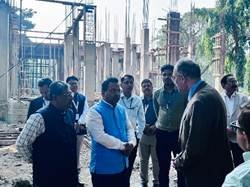
During the visit, Dr. Likhi toured the College’s fish seed unit, hatchery, exhibition and museum. She also visited the Fisheries Technology Complex, envisioned as an integrated centre for inland fisheries.
The facility is being developed under the Fisheries and Aquaculture Infrastructure Development Fund at a project cost of ₹19.69 crore. It is intended to bring research, training, diagnostics and demonstration services together under one campus.
Students Encouraged to Explore Emerging Career Opportunities
The interaction also connected fisheries science students from colleges and universities across India, Krishi Vigyan Kendras, ICAR institutes and State and Union Territory fisheries departments through video conferencing.
Dr. Likhi encouraged students to look beyond conventional employment and explore opportunities in aquaculture, technology, processing and entrepreneurship. Students highlighted the need for an information-sharing platform to improve access to internships and employment opportunities. They also expressed interest in government schemes supporting self-employment and business development in fisheries.
Hospitality and Seafood Industry Implications
The expansion of fisheries clusters, aquaculture technology and seafood processing infrastructure has relevance for India’s hospitality and food-service industries. Higher production, improved cold-chain facilities and better post-harvest management can strengthen the supply chain for hotels, restaurants, caterers and seafood processors.
The focus on value-added products and export-oriented processing also creates opportunities for ready-to-cook and processed seafood businesses. Meanwhile, activities such as seaweed cultivation, ornamental fisheries and pearl farming could support new livelihood and enterprise opportunities in coastal and aquatic economies.
For the hospitality sector, the development of a more organised and technology-enabled fisheries value chain could improve seafood sourcing, traceability, product quality and access to diverse fish and aquaculture products.