Rishikesh-Karnprayag Rail Project Achieves Major Breakthrough in 6.59-km Tunnel 14, Boosting Uttarakhand Tourism Connectivity
Tunnel excavation connects Sumerpur and Marora sections in Rudraprayag; project expected to improve rail access for pilgrims and tourists travelling to Uttarakhand’s key destinations Key Highlights Indian Railways has achieved a major breakthrough in the construction of
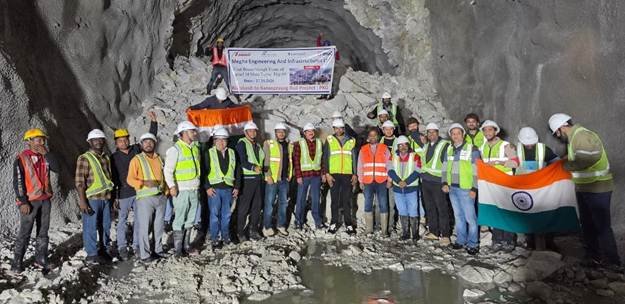
Tunnel excavation connects Sumerpur and Marora sections in Rudraprayag; project expected to improve rail access for pilgrims and tourists travelling to Uttarakhand’s key destinations
Key Highlights
- Indian Railways has achieved a major breakthrough in the construction of 6.59-km-long Tunnel 14 under the Rishikesh-Karnprayag Rail Project.
- The breakthrough connects two excavation sections: 4.7 km from Portal 1 at Sumerpur and 1.79 km from Portal 2 at Marora.
- Specialised excavation, slope stabilisation, controlled blasting and ventilation systems were deployed to address challenging geological and settlement conditions.
- The rail project aims to improve connectivity to Uttarakhand’s hill regions and make travel easier for pilgrims and tourists.
- Improved rail access is expected to support regional development and tourism activity along the Rishikesh-Karnprayag corridor.
Rishikesh-Karnprayag Rail Project Makes Progress with Tunnel 14 Breakthrough
The Rishikesh-Karnprayag Rail Project in Uttarakhand has achieved a significant construction milestone with the completion of excavation connectivity in Tunnel 14, measuring 6.59 kilometres, in Rudraprayag district. Indian Railways announced the breakthrough on November 27, 2026, marking the connection of the two sections excavated from opposite ends of the tunnel.
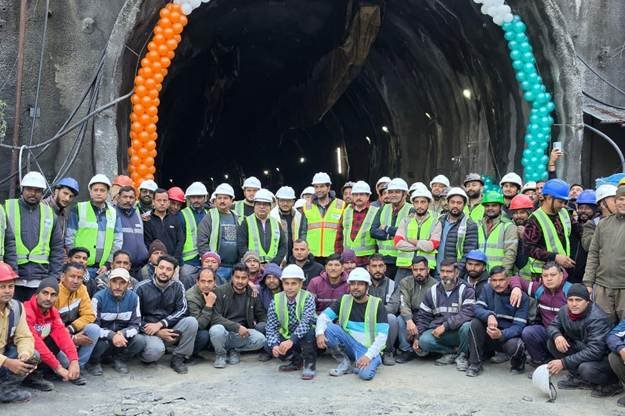
The breakthrough links the 4.7-kilometre section excavated from Portal 1 on the Sumerpur side with the 1.79-kilometre section from Portal 2 on the Marora side. The achievement represents an important step forward in the development of rail infrastructure in the state’s challenging Himalayan terrain.
Specialised Engineering Used for Difficult Tunnel Conditions
Construction of Tunnel 14 involved complex geological and engineering challenges, particularly around populated areas and unstable slopes.
At Portal 1 (T14P1), engineers excavated a 110-metre section of the three-track tunnel through loose soil beneath a populated area. The section was covered by a 20–30-metre layer of soil and rock.
To ensure safe excavation, specialised pre-excavation measures and multi-drifting techniques were used. This method involves excavating several smaller horizontal passages before connecting them to form the larger tunnel, allowing the structure to be supported during construction.
At Portal 2 (T14P2), slope stabilisation measures included:
- Micropiles measuring 30–35 metres in depth.
- Rock bolts measuring 15–20 metres in length.
- Consolidation grouting to strengthen the surrounding ground.
These measures enabled the main tunnel excavation to begin in March 2024. Earlier, issues relating to land subsidence and land and house acquisition at Marora had been addressed.
Controlled Blasting and Ventilation for Construction Safety
Mechanical excavation was carried out for approximately 100 metres at Portal 2. To minimise risks to nearby settlements, controlled blasting near both tunnel portals was restricted to designated times during daylight hours.
A specialised ventilation system was also installed along the 4.7-kilometre excavation route from Portal 1. The system helps maintain fresh-air circulation inside the tunnel and control internal temperatures during construction.
Rail Connectivity to Support Pilgrimage and Tourism in Uttarakhand
The Rishikesh-Karnprayag Rail Project is an important infrastructure initiative aimed at improving rail connectivity to the hill regions of Uttarakhand. Once operational, the project is expected to make journeys to key destinations more accessible for pilgrims and tourists.
Better rail connectivity could support travel along the Rishikesh-Karnprayag corridor, improve access to pilgrimage destinations and encourage tourism-related economic activity in the region.
Impact on Hospitality, Hotels and Tourism Businesses
The progress of the Rishikesh-Karnprayag Rail Project is significant for Uttarakhand’s hospitality and tourism ecosystem. Improved rail access can make destinations in the hill region more convenient to reach, potentially supporting higher visitor movement for religious tourism, leisure travel and nature-based experiences.
For hotels, resorts, homestays, restaurants, tour operators and local transport providers, better connectivity could create opportunities to serve a wider visitor base. Easier access may also encourage longer travel itineraries linking Rishikesh with destinations across the Garhwal region.
The project could generate wider opportunities for local businesses, particularly in accommodation, food services, guided tours and pilgrimage-related services. However, the scale of these benefits will depend on the project’s completion, operational connectivity and the development of supporting tourism infrastructure.
The Tunnel 14 breakthrough marks a major step in the construction of the Rishikesh-Karnprayag Rail Project, bringing Uttarakhand closer to improved rail access and stronger connectivity for its pilgrimage and tourism destinations.