Punjab Farmers Promote Stubble-Free Farming for Six Years; Shivraj Singh Chouhan Calls for Soil Health Protection and Higher Farm Incomes
Union Agriculture Minister visits Booh Havelian village in Tarn Taran to review sustainable farming practices; highlights crop diversification, integrated farming, agricultural machinery quality and MSP procurement Key Highlights: Booh Havelian village in Punjab has practised farming without
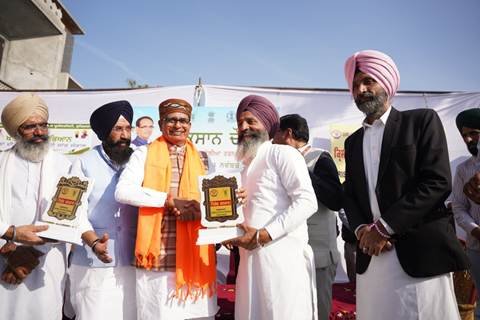
Union Agriculture Minister visits Booh Havelian village in Tarn Taran to review sustainable farming practices; highlights crop diversification, integrated farming, agricultural machinery quality and MSP procurement
Key Highlights:
- Booh Havelian village in Punjab has practised farming without stubble burning for the past six years.
- Farmers have adopted Happy Seeder and direct-seeding techniques to manage crop residue.
- Centre has allocated approximately ₹286 crore to Punjab this year under the Crop Residue Management (CRM) programme.
- Union Agriculture Minister Shivraj Singh Chouhan urges Punjab to implement the Pradhan Mantri Fasal Bima Yojana.
- Minister promotes integrated farming through animal husbandry, fisheries and poultry to increase farmers’ income.
- Centre assures procurement of paddy and wheat at Minimum Support Price (MSP), along with 100% MSP procurement of tur, masoor, urad and cotton.
Punjab Village Demonstrates Sustainable Farming Through Six Years of Stubble Management
Punjab’s Booh Havelian village in Tarn Taran district has emerged as an example of sustainable agricultural practices, with farmers avoiding stubble burning for six consecutive years. Union Minister for Agriculture and Farmers Welfare and Rural Development Shivraj Singh Chouhan highlighted the village’s efforts during a visit on November 24, 2026, where he participated in a Kisan Chaupal and interacted directly with farmers.
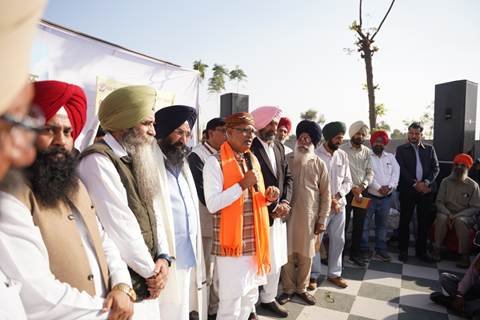
The visit focused on improving soil health, reducing agricultural input costs, promoting sustainable crop residue management and increasing farmers’ incomes.
Congratulating farmers and local Panchayats, Chouhan appreciated their adoption of Happy Seeder machines and direct-seeding techniques to manage crop residue without burning it.
He also emphasised the importance of protecting soil fertility, noting that excessive use of chemical fertilisers, pesticides and stubble burning can adversely affect soil health, beneficial insects and earthworms.
Recalling Punjab’s contribution to India’s Green Revolution, the Minister said the state’s farmers had played a significant role in strengthening the country’s food security. He urged them to lead the next phase of agricultural development through sustainable farming practices.
Centre Allocates ₹286 Crore for Crop Residue Management in Punjab
During discussions at the Kisan Chaupal, farmers raised concerns regarding crop residue management, subsidised agricultural machinery and the availability of baler machines.
Progressive farmers Sukhwinder Singh of Kirtowal, Jatinder Singh of Munda Pind and former Sarpanch Gurnam Singh shared their experiences and suggestions.
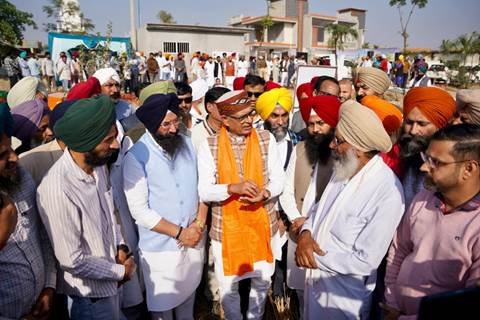
Responding to concerns about the quality of subsidised agricultural machinery, Chouhan stated that the Central Government is providing approximately ₹286 crore to Punjab this year under the Crop Residue Management (CRM) programme.
He clarified that while the Centre provides financial assistance, the state government is responsible for machinery procurement and quality checks.
The Minister stressed that farmers must receive reliable equipment, supported by adequate repair and maintenance facilities to minimise disruptions during agricultural operations.
He also assured farmers that their suggestions regarding stubble management and machinery would be discussed further through a detailed meeting in Delhi.
Integrated Farming Promoted to Increase Farmers’ Income
Highlighting the need to make agriculture more profitable, Chouhan called for greater adoption of integrated farming systems.
He encouraged farmers to diversify beyond traditional crop cultivation by incorporating:
- Animal husbandry
- Fisheries and aquaculture
- Poultry farming
- Crop diversification
- Improved agricultural productivity and cost management
The Minister said combining agriculture with allied activities could provide additional income opportunities and reduce farmers’ dependence on a single source of earnings.
He also expressed concern over the non-implementation of the Pradhan Mantri Fasal Bima Yojana (PMFBY) in Punjab. Referring to crop losses caused by floods and other natural disasters, he said the scheme’s implementation was important to provide financial protection to farmers.
Centre Assures MSP Procurement of Agricultural Produce
Speaking to the media after the Kisan Chaupal, Chouhan reiterated the Central Government’s commitment to procuring paddy and wheat at the Minimum Support Price.
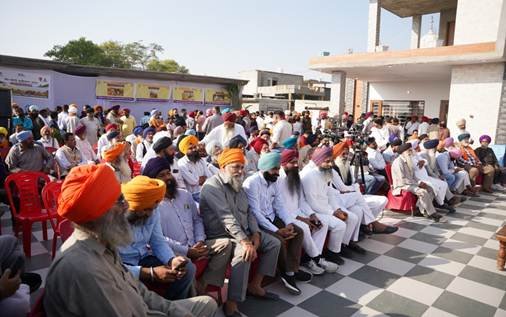
He also stated that the government guarantees 100% MSP procurement of tur, masoor, urad and cotton.
The Minister reaffirmed the government’s commitment to supporting farmers through procurement policies and agricultural welfare initiatives.
Impact on Food Processing, Hospitality and Travel & Tourism
The developments highlighted during the Punjab visit have implications for India’s food supply chain, agri-business, rural entrepreneurship and tourism sectors.
1. Sustainable Food Supply Chains
Stubble-free farming and improved soil health can support long-term agricultural productivity. For food processing companies, hotels, restaurants and institutional catering businesses, sustainable agricultural practices are important for maintaining reliable raw material supplies.
2. Opportunities for Dairy and Poultry Businesses
The Minister’s emphasis on integrated farming, particularly animal husbandry and poultry, creates opportunities for dairy processing, meat processing, poultry products and organised food distribution businesses.
3. Fisheries and Aquaculture Growth
Promoting fisheries as an additional source of farm income can strengthen seafood production and create opportunities for fish processing, cold-chain infrastructure, seafood distribution and hospitality businesses serving regional seafood cuisines.
4. Rural and Agri-Tourism Opportunities
Villages adopting sustainable agricultural practices can develop opportunities around farm tourism, educational visits, rural experiences and agritourism. Booh Havelian’s six-year record of avoiding stubble burning could also serve as a model for showcasing sustainable farming practices.
5. Agricultural Machinery and Rural Entrepreneurship
Investment in crop residue management machinery can encourage agricultural service enterprises, equipment rental businesses, maintenance facilities and rural entrepreneurship.
Hospitality Industry Perspective
The shift towards sustainable farming and integrated agriculture has the potential to strengthen the connection between farm production and hospitality businesses. Improved soil health, diversified agricultural activities and stronger dairy, poultry and fisheries value chains can support food sourcing for hotels, restaurants and food processors.
For rural tourism, villages practising sustainable agriculture can become potential destinations for agritourism and experiential travel. However, realising these opportunities will require better rural infrastructure, market linkages, visitor facilities and local entrepreneurship.