Indian Railways Steps Up Catering Oversight with Real-Time Kitchen Monitoring and Stronger Passenger Feedback
Railway Board Chairman reviews IRCTC War Room; directs wider camera surveillance, automated Rail Madad complaints and tougher action against catering deficiencies Key Highlights Railway Board Chairman Satish Kumar reviews the IRCTC War Room and catering monitoring systems. Rail
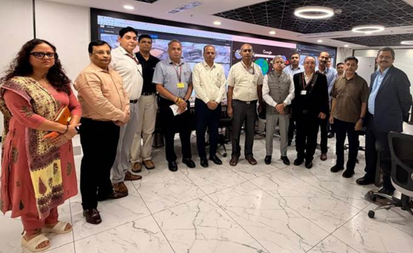
Railway Board Chairman reviews IRCTC War Room; directs wider camera surveillance, automated Rail Madad complaints and tougher action against catering deficiencies
Key Highlights
- Railway Board Chairman Satish Kumar reviews the IRCTC War Room and catering monitoring systems.
- Rail Madad interface to be further automated for easier passenger complaints and feedback.
- Railway kitchens to receive expanded camera-based real-time surveillance.
- Additional cameras planned for raw-material storage areas, including PTZ cameras.
- Third-party inspection agencies to be monitored more closely, with ineffective agencies facing action.
- AI-based alerts for rodents, cockroaches and other deficiencies to trigger corrective and deterrent action.
- Special review ordered for roti and paratha preparation to improve consistency and quality.
Railway Board pushes technology-led monitoring of train catering
New Delhi: Indian Railways is strengthening its oversight of catering services with greater use of real-time kitchen surveillance, passenger feedback systems, third-party inspections and artificial intelligence-based monitoring.
Railway Board Chairman and CEO Satish Kumar reviewed the functioning of the IRCTC War Room at the IRCTC office, focusing on ways to make catering quality monitoring more responsive, technology-driven and outcome-oriented.
The review comes as Indian Railways seeks to improve food quality, hygiene and passenger confidence across its extensive onboard and station catering network.
Rail Madad feedback system to become more responsive
During the review, Satish Kumar directed officials to further automate the Rail Madad interface, enabling passengers to communicate with the relevant system more easily through a simplified, single-click process.
Greater attention has also been directed towards monitoring Rail Madad complaints.
Where necessary, officials will directly interact with passengers to better understand complaints and ensure that concerns relating to catering services are resolved effectively.
The approach is intended to move passenger feedback beyond complaint registration towards faster resolution and measurable service improvement.
Railway kitchens to get wider camera surveillance
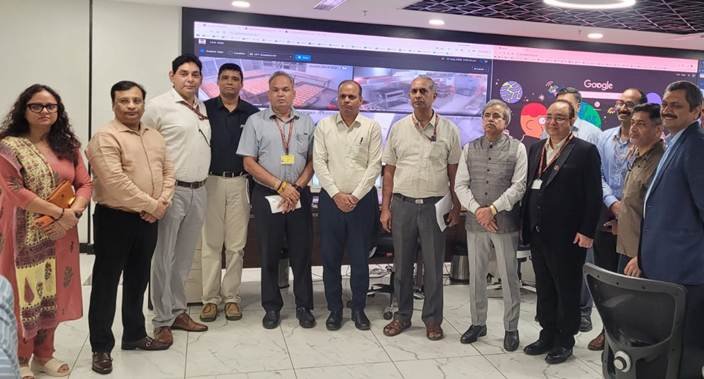
Real-time monitoring of catering kitchens emerged as a key focus of the review.
At present, four camera feeds are available for monitoring kitchen operations. The Railway Board has directed that surveillance be expanded, including installation of additional cameras in raw-material storage areas.
A PTZ (Pan-Tilt-Zoom) camera will also be provided to enable wider surveillance of kitchen operations.
The camera system is being used not only for monitoring but also for assessing the physical condition and functioning of kitchens. Where poor conditions are identified, notices and corrective action are to be initiated.
During the review, the kitchen at Anantapur in South Central Railway was identified as requiring improvement based on inspection findings and video monitoring.
Roti and paratha preparation under special scrutiny
The Railway Board has also ordered a comprehensive review of the preparation of roti and paratha, identifying the process as an area requiring closer attention.
Officials have been asked to examine the complete preparation process to identify operational gaps and ensure consistent standards in the quality of these commonly served railway catering items.
For passengers, improvements in preparation processes can directly influence perceptions of food quality, hygiene and consistency.
Third-party inspections face tighter accountability
The review also examined the performance of third-party agencies responsible for inspecting railway catering facilities.
While third-party inspection mechanisms are already operational at several locations, the Railway Board stressed that inspections must be effective, meaningful and outcome-oriented.
Inspecting agencies will be required to systematically record deficiencies identified during inspections as well as their performance, allowing their work to be continuously evaluated.
Agencies found to be consistently ineffective may face appropriate action, including delisting where warranted.
AI alerts to trigger action against hygiene violations
Indian Railways is also examining the use of Artificial Intelligence-based monitoring and detection systems for catering facilities.
The Railway Board directed that AI-generated alerts relating to issues such as rodents, cockroaches and other deficiencies should not end with detection.
Such alerts should be followed by warning letters and deterrent action, ensuring that technology-based detection results in actual corrective measures.
Impact on hospitality and foodservice
The measures have direct relevance for the wider hospitality and foodservice industry, particularly in areas of kitchen hygiene, food safety, inspection and customer feedback.
The expansion of real-time camera surveillance could strengthen accountability in large-scale institutional kitchens, where maintaining consistent hygiene across multiple operations is a major challenge.
For railway catering operators, the focus on raw-material storage, preparation processes and pest detection highlights the growing importance of end-to-end kitchen monitoring, rather than relying solely on periodic inspections.
Passenger feedback becomes a quality-control tool
The proposed strengthening of Rail Madad could also make passenger feedback a more powerful operational tool.
For foodservice businesses, real-time customer feedback can help identify recurring problems involving food quality, hygiene, portion consistency, service and preparation, allowing operators to address issues before they become widespread.
Technology-driven food safety
The combination of CCTV surveillance, AI-based alerts, third-party inspections and passenger feedback signals a more technology-led approach to managing large-scale catering operations.
For India’s hospitality sector, the railway catering model could provide a broader example of how digital monitoring can complement traditional food safety inspections and create greater accountability across high-volume foodservice operations.
The Railway Board’s review ultimately places the emphasis on a simple objective: detect deficiencies quickly, act on them promptly and use passenger feedback to continuously improve catering quality and hygiene across the Indian Railways network.