India Targets 75 Million Tonnes of Maize Production as Hyderabad Hosts First International Maize Conference 2026
Focus on higher crop productivity, improved seed systems and sustainable value chains to strengthen food security, animal feed, ethanol production and farmer profitability India has set an ambitious target of increasing maize production from the current
Focus on higher crop productivity, improved seed systems and sustainable value chains to strengthen food security, animal feed, ethanol production and farmer profitability
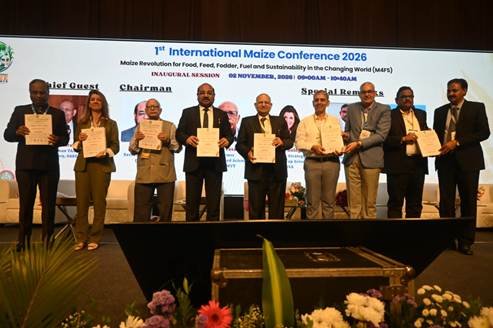
India has set an ambitious target of increasing maize production from the current 55 million tonnes to 75 million tonnes over the next decade, with a strong emphasis on improved crop productivity, innovative breeding technologies and farmer-centric agricultural research. The roadmap was highlighted at the 1st International Maize Conference 2026, which commenced in Hyderabad on November 2, bringing together agricultural scientists, policymakers, research institutions and industry stakeholders from India and abroad.
Held under the theme “Maize Revolution for Food, Feed, Fodder, Fuel and Sustainability in the Changing World” (M4FS), the three-day conference, scheduled from November 2–4, focuses on strengthening maize research, improving agricultural productivity and developing sustainable value chains.
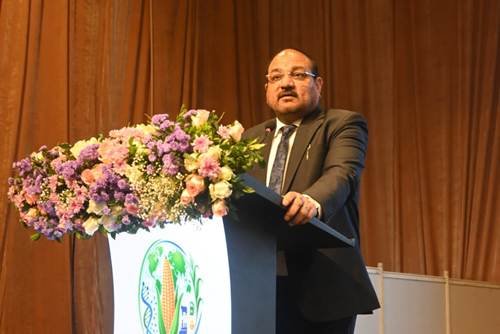
Addressing the conference, Dr. M. L. Jat, Secretary, Department of Agricultural Research and Education (DARE) and Director General, Indian Council of Agricultural Research (ICAR), highlighted India’s progress in maize production, which has reached approximately 55 million tonnes, supported by significant productivity improvements over the past decade.
He called for a further 1.5-fold increase in productivity through technological innovation, improved crop management, efficient resource utilisation and stronger seed systems.
Dr. Jat also emphasised expanding the traditional 4F approach—Food, Feed, Fodder and Fuel—to a 5F framework by placing Farmers at its centre. He stressed that agricultural research must translate into higher farm incomes and improved livelihoods while ensuring maize expansion does not compromise the cultivation of essential crops such as oilseeds and pulses.
Key Highlights of International Maize Conference 2026
- 75 million tonne production target: India aims to increase maize production from approximately 55 million tonnes to 75 million tonnes over the next decade.
- Higher productivity: A 1.5-fold improvement in productivity is being targeted through better crop management and technological interventions.
- 329 maize hybrids developed: ICAR highlighted the development of 329 maize hybrids over the past five years.
- Stronger seed systems: Emphasis on affordable, quality seeds and increased public-sector hybrid seed production.
- Improved crop resilience: Research priorities include higher yields, nutritional quality and resistance to biotic and abiotic stresses.
- Maize for ethanol: Greater collaboration between research institutions and industry to strengthen maize’s potential as an ethanol feedstock.
- Food and feed safety: Improved maize value chains, germplasm conservation and aflatoxin management to ensure product quality and safety.
Focus on Research, Innovation and Value Chain Development
Dr. D. K. Yadav, Deputy Director General (Crop Science), ICAR, described maize as an important crop for food, nutritional and energy security. He called for strengthening the All India Coordinated Research Project on Maize (AICRP on Maize), with greater investment in advanced breeding, mechanisation, input-use efficiency and capacity development.
He also highlighted the importance of collaboration between agricultural universities, research institutions and private industry to unlock maize’s potential in the ethanol sector.
Eminent maize scientist and World Food Laureate associated with CIMMYT, Padma Shri Dr. S. Vasal, advocated simple and cost-effective breeding approaches to accelerate the development of improved maize varieties suited to farmers’ requirements.
Padma Bhushan Dr. R. S. Paroda, former Secretary, DARE and Director General, ICAR, called for aligning research priorities with the changing requirements of agriculture and allied sectors. He stressed advanced breeding techniques, systematic germplasm conservation, stronger maize value chains and effective aflatoxin management to improve maize safety and quality.
The conference also witnessed the release of scientific publications and the presentation of awards recognising contributions to maize research and development.
Impact on Hospitality, Food Processing and Travel & Tourism
1. Food processing and restaurant supply chains
Higher maize production and improved quality could strengthen the availability of maize-based ingredients for food processing, including corn flour, starch, breakfast cereals, snacks and other packaged food products. This could create opportunities for food manufacturers, institutional kitchens, restaurants and hospitality procurement networks.
2. Animal feed and poultry industry
Maize is an important ingredient in animal and poultry feed. Improved production and more efficient supply chains could support the poultry, dairy and livestock sectors, indirectly benefiting hotels, restaurants and foodservice businesses that depend on these industries for meat, eggs and dairy products.
3. Ethanol and sustainable energy
The growing focus on maize as an ethanol feedstock could strengthen agricultural-industrial linkages and contribute to the development of alternative fuel supply chains. For the hospitality sector, this also highlights the wider importance of sustainable energy sourcing and resource efficiency.
4. Agricultural tourism and destination development
Hyderabad’s hosting of an international agricultural conference brings together scientists, industry representatives, policymakers and international delegates. Such knowledge-driven events contribute to business travel, hotel occupancy, conference hospitality, local transportation and destination visibility.
5. Opportunities for food and beverage innovation
The development of improved maize varieties and value-added products could encourage innovation in food and beverage manufacturing, particularly in cereals, snacks, bakery ingredients and plant-based food applications.
Industry Takeaway
India’s ambition to reach 75 million tonnes of maize production goes beyond agricultural growth. It has implications for food processing, animal feed, ethanol, commodity supply chains and the broader food economy.
For the hospitality and foodservice industry, improvements in maize availability, quality and value addition could strengthen ingredient sourcing and support new product opportunities. The success of this roadmap, however, will depend on translating research and production gains into efficient procurement, processing, storage and distribution networks.