ICAR 97th AGM Sets New Roadmap for Farmer-Centric, Export-Oriented Agriculture
Demand-driven research, integrated farming and stronger industry partnerships to drive farm incomes, climate resilience and global market access Key Highlights ICAR calls for research aligned with farmers, markets and consumer needs 386 new crop varieties released, including 94%
Demand-driven research, integrated farming and stronger industry partnerships to drive farm incomes, climate resilience and global market access
Key Highlights
- ICAR calls for research aligned with farmers, markets and consumer needs
- 386 new crop varieties released, including 94% climate-resilient and 29% biofortified varieties
- Foodgrain production increased by around 19 million tonnes
- ICAR filed around 805 IP applications and strengthened technology commercialisation across 36 institutions
- Focus on integrated farming, value addition, processing, packaging and exports
- Indigenous African Swine Fever vaccine highlighted as a major scientific breakthrough
The 97th Annual General Meeting of the Indian Council of Agricultural Research (ICAR) Society has laid out a roadmap for a more farmer-centric, technology-driven and market-oriented agricultural sector, with greater emphasis on farm incomes, climate resilience, value addition and exports.
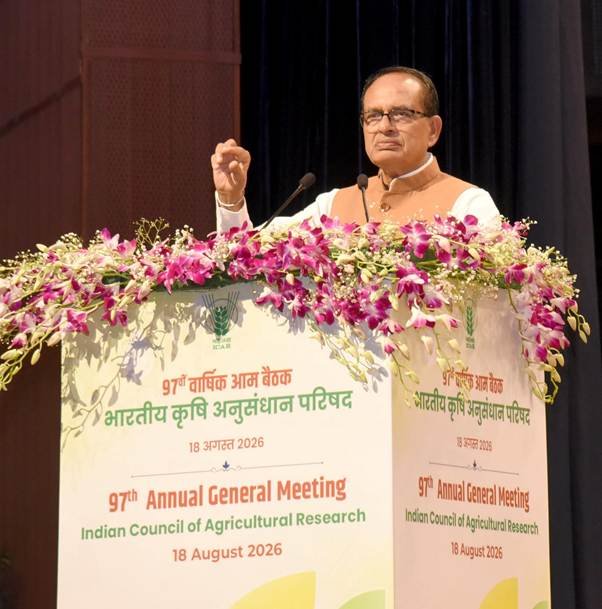
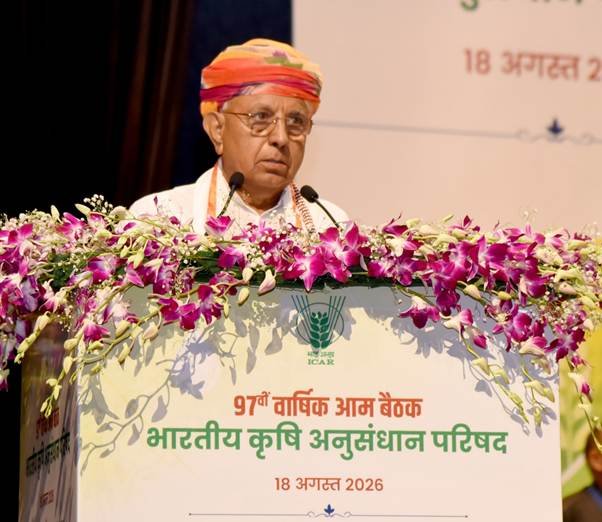
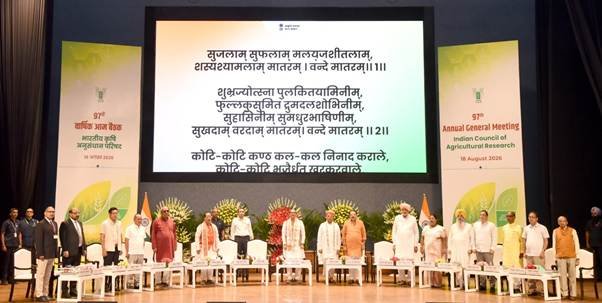
The meeting, held at the National Agricultural Science Complex in New Delhi under the chairmanship of Union Agriculture and Farmers’ Welfare Minister Shivraj Singh Chouhan, stressed that agricultural research must move beyond laboratories and deliver measurable outcomes for farmers.
ICAR pushes demand-driven agricultural research
Shivraj Singh Chouhan said India’s agricultural transformation must go beyond increasing production and build a stronger connection “from farm to global market.”
He called for a demand-driven research ecosystem that responds to the requirements of farmers, consumers and markets. According to the Minister, the effectiveness of agricultural research should ultimately be measured by how quickly and effectively innovations reach farmers and solve practical problems.
The Minister also highlighted integrated farming systems as an important route to diversify incomes, particularly for small and marginal farmers. Better access to quality seeds and planting material, balanced fertiliser use, soil health management and sustainable farming practices were identified as key priorities.
From farm research to global markets
Export competitiveness emerged as another major focus of the AGM.
Chouhan stressed that agricultural exports will increasingly depend on quality, nutrition, processing, packaging, shelf life and compliance with international standards.
He also called for stronger partnerships between ICAR and industry to accelerate the commercialisation and adoption of technologies developed through agricultural research.
The objective is to shorten the gap between scientific innovation and its practical application in farms, food processing units and markets.
386 new crop varieties released
Presenting ICAR’s achievements, DARE Secretary and ICAR Director General Dr M.L. Jat said the organisation had accelerated science-led agricultural transformation during the past year.
Among the key achievements:
- 386 new crop varieties released
- 94% of the new varieties are climate-resilient
- 29% are biofortified varieties
- Foodgrain production increased by around 19 million tonnes
- Around 805 intellectual property applications filed
- Technology commercialisation strengthened across 36 ICAR institutions
- National Gender Platform for Agri-Food Systems now connects more than 9,000 establishments
The developments in genomics, genome editing, livestock health, fisheries, soil health and natural farming were also highlighted.
The indigenous African Swine Fever vaccine was identified as an important breakthrough for pig health and the livelihoods of farmers.
Agriculture, livestock and fisheries to be integrated
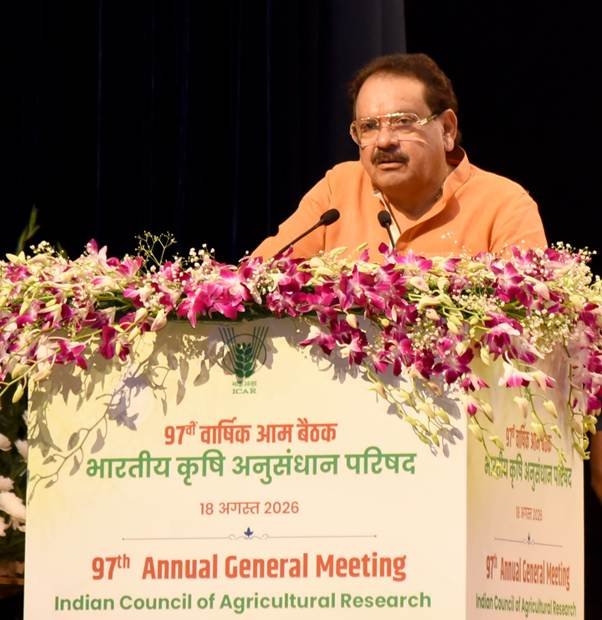
Union Minister of State for Fisheries, Animal Husbandry and Dairying S.P. Singh Baghel called for greater integration between agriculture and allied sectors such as livestock, dairy, fisheries and poultry.
The approach is aimed at creating multiple income streams for farmers while strengthening the wider rural economy.
Union Minister of State for Agriculture Bhagirath Choudhary meanwhile stressed the importance of achieving greater self-reliance in pulses, oilseeds, seeds, livestock and value-added agricultural products.
He also called for stronger Farmer Producer Organisations (FPOs) and market linkages, alongside climate-resilient agriculture and sustainable resource management.
Stronger agriculture value chains could benefit hospitality and food businesses
The emphasis on processing, packaging, shelf life, nutrition and global standards has implications beyond the farm sector.
For the food and hospitality industry, stronger agricultural value chains could support greater availability of quality domestic produce, processed ingredients and specialty food products. Improved post-harvest technologies and better market linkages can also help reduce supply-chain inefficiencies and create opportunities for restaurants, hotels, food manufacturers and exporters to source differentiated Indian products.
The push towards global market standards could further strengthen India’s positioning in agri-food exports, potentially expanding the availability and international visibility of Indian ingredients and regional food products.
Women and technology remain central to rural transformation
ICAR’s National Gender Platform for Agri-Food Systems, with more than 9,000 establishments, reflects the growing focus on women’s participation in agriculture.
At the same time, the Council’s increasing focus on technology transfer, intellectual property and commercialisation indicates a shift towards making agricultural research more economically relevant.
The AGM also considered the ICAR Annual Report 2025–26, annual accounts and proposed amendments to the Rules and Bye-laws of the ICAR Society.
Hospitality, Food & Tourism Impact
For hospitality and food businesses: The stronger focus on crop quality, processing, packaging and shelf life could improve sourcing opportunities for hotels, restaurants and food manufacturers.
For food exports: Greater emphasis on international standards and industry partnerships could strengthen India’s agri-food export ecosystem.
For rural tourism: Integrated farming, value-added agriculture and stronger farmer incomes can support farm-based tourism, culinary experiences and regional food tourism.
For sustainable hospitality: Climate-resilient varieties, improved soil health and resource-efficient agriculture could contribute to more resilient and sustainable food supply chains.
Bottom line: The 97th ICAR AGM signals a shift from research for production to research for income, markets and measurable impact, with technology, value addition and farmer-industry linkages positioned as key pillars of India’s next phase of agricultural growth.