Agriculture, Rural Development Drive Gains Momentum as Centre Announces Major Support for Rajasthan and Bihar
From farm incomes and crop insurance to pucca houses, Farmer IDs and women-led enterprises, a series of August initiatives underline the Centre’s focus on rural livelihoods, technology and market access Key Highlights ₹340.59 crore approved for Rajasthan
From farm incomes and crop insurance to pucca houses, Farmer IDs and women-led enterprises, a series of August initiatives underline the Centre’s focus on rural livelihoods, technology and market access
Key Highlights
- ₹340.59 crore approved for Rajasthan under agricultural development and PM-RKVY initiatives.
- Rajasthan gets approval for 2,89,355 PMAY-G houses with a project outlay of ₹3,473 crore.
- Bihar receives approval for 11,18,937 pucca houses with ₹13,427 crore allocation.
- Bihar to implement Pradhan Mantri Fasal Bima Yojana for protection against crop losses.
- Bihar has created 53.83 lakh Farmer IDs.
- Government targets six crore Lakhpati Didis, with She-Marts proposed to improve market access.
- ICAR’s 97th AGM calls for demand-driven research, integrated farming and stronger industry linkages.
- Kharif crop area as of August 14 stood at 1,016.57 lakh hectares, down 20.95 lakh hectares from the corresponding period of 2025.
India’s agriculture and rural development agenda has seen a series of significant announcements in August, with the Union government placing greater emphasis on farmer incomes, rural housing, crop-risk protection, digital farmer identification, women-led enterprises, integrated farming and agricultural exports.
Union Agriculture and Farmers’ Welfare and Rural Development Minister Shivraj Singh Chouhan has repeatedly stressed that the next phase of agricultural growth must move beyond production to include processing, branding, market access and integration with global value chains.
Rajasthan Gets ₹340.59 Crore for Agriculture
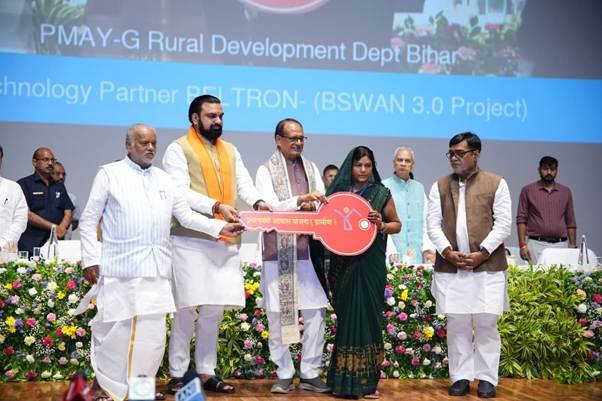
The Centre has approved ₹340.59 crore for Rajasthan under the Pradhan Mantri Rashtriya Krishi Vikas Yojana (PM-RKVY) and Krishonnati Yojana.
Of the allocation, ₹216.12 crore is under RKVY and ₹124.47 crore under the Krishonnati Yojana. The approval followed a review of the state’s expenditure and implementation progress.
The move comes alongside a wider rural development package for Rajasthan. The Centre has also approved 2,89,355 pucca houses under PMAY-G, involving ₹3,473 crore.
The government said 29.13 lakh new beneficiaries had been surveyed and that additional eligible households would be considered after physical verification.
Eligibility provisions for PMAY-G have also been widened, including allowing certain two-wheeler owners, women earning up to ₹15,000 a month and small farmers within specified landholding limits to qualify for housing assistance.
Bihar Gets Housing and Crop Insurance Push
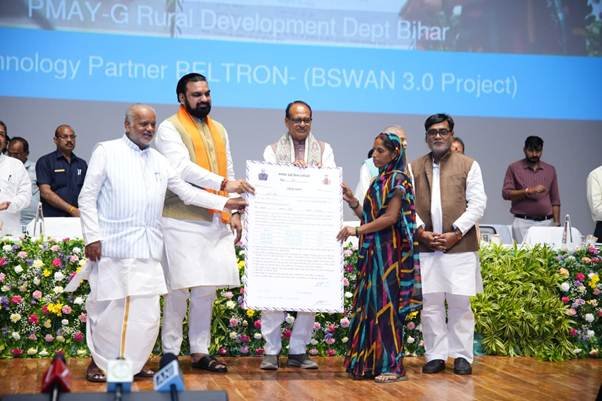
Bihar has received approval for 11,18,937 pucca houses, backed by an allocation of ₹13,427 crore.
According to the government, 24.30 lakh houses have been approved for Bihar over the past two years, involving expenditure of ₹29,164 crore.
The state is also set to implement the Pradhan Mantri Fasal Bima Yojana, providing farmers protection against crop losses arising from floods, drought, excessive rainfall and other natural calamities.
This is particularly relevant for Bihar, where agriculture remains closely linked to rural household livelihoods.
The state has additionally created 53.83 lakh Farmer IDs, which the Centre said would facilitate more transparent and efficient delivery of agricultural schemes.
Integrated Farming Emerging as an Income Strategy
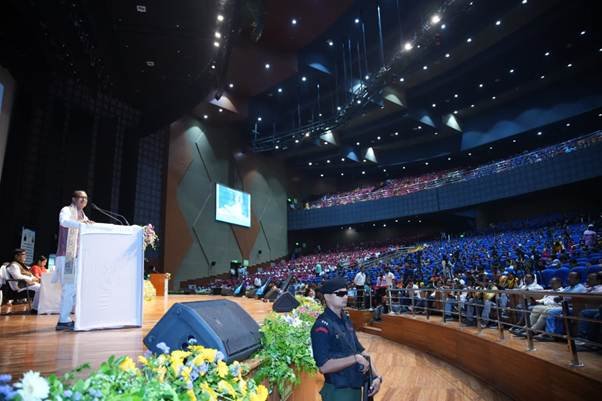
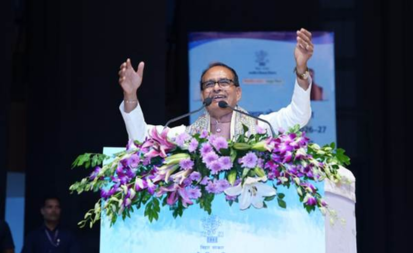
At the Krishi Jan Kalyan Samvad in Patna, Chouhan highlighted integrated farming as a potential solution for small and marginal farmers.
An ICAR demonstration model based on 2–3 bighas combines crops such as wheat, gram, mustard and maize with activities including fish farming, poultry, duck rearing, vegetables, fruit trees and fodder production.
The government said such diversification can create multiple income streams and, in some cases, help families generate annual income of up to ₹2 lakh.
The approach is significant because it seeks to reduce farmers’ dependence on a single crop and spread income generation across different agricultural and allied activities.
Natural Farming, Branding and Global Markets
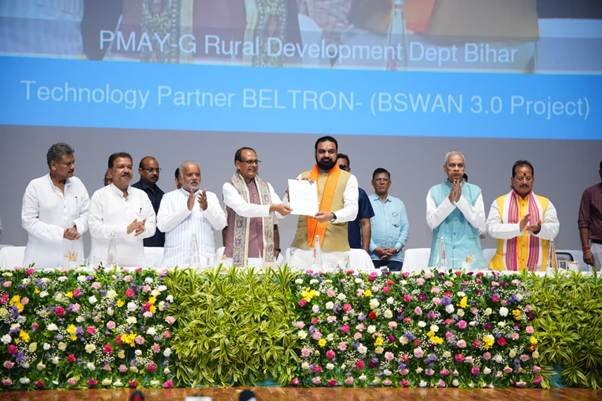
The Centre is also pushing natural and organic farming while encouraging farmers to test alternative practices on smaller portions of land before expanding them.
Chouhan has called for greater cooperation between the Centre and states in branding, packaging and marketing agricultural products, particularly products linked to natural, organic and chemical-free farming.
At the 97th Annual General Meeting of ICAR, he further called for a demand-driven research ecosystem that places farmers, consumers and markets at the centre.
The emphasis is increasingly shifting from simply developing new technologies to ensuring that innovations reach farmers quickly and contribute measurable economic benefits.
ICAR Pushes Farm-to-Market Research
ICAR reported that 386 new crop varieties were released during the past year, including climate-resilient and biofortified varieties.
The organisation also reported around 805 intellectual property applications, while technology commercialisation was strengthened across 36 institutions.
The Agriculture Minister called for stronger ICAR-industry partnerships to accelerate the transfer of technologies from laboratories to farms.
He also stressed that agricultural competitiveness will increasingly depend on quality, nutrition, processing, packaging, shelf life and compliance with international standards.
Six Crore Lakhpati Didis Target
Women-led rural enterprises remain another major component of the government’s rural development strategy.
The government said the target of creating three crore Lakhpati Didis has been achieved, with a new goal of reaching six crore.
She-Marts and branding initiatives are being promoted to give Self-Help Groups and rural women better access to consumers and markets.
The objective is to move women-led rural enterprises beyond production by improving their capabilities in product development, packaging, branding and marketing.
In Rajasthan, Chouhan announced that the Lakhpati Didi target would be increased to 32 lakh women, while Bihar is also being encouraged to expand women-led enterprises and market linkages.
Kharif Sowing Shows Mixed Trend
The latest Kharif sowing data also presents a mixed picture.
As of August 14, 2026, total Kharif crop coverage stood at 1,016.57 lakh hectares, compared with 1,037.52 lakh hectares during the corresponding period in 2025 — a decline of 20.95 lakh hectares.
| Crop | Area Sown 2026 (lakh ha) | Change vs 2025 |
|---|---|---|
| Rice | 379.07 | -14.37 |
| Pulses | 108.14 | -0.35 |
| Shri Anna & Coarse Cereals | 172.96 | -4.17 |
| Oilseeds | 184.46 | -0.89 |
| Sugarcane | 58.31 | -0.31 |
| Jute & Mesta | 6.34 | +0.11 |
| Cotton | 107.30 | -0.96 |
| Total | 1,016.57 | -20.95 |
Rice accounts for the largest decline, with sowing down 14.37 lakh hectares from the corresponding period last year. Coarse cereals have declined by 4.17 lakh hectares, while oilseed coverage is down 0.89 lakh hectares.
At the same time, some crops and states have recorded higher coverage. For example, pulse acreage increased in Uttar Pradesh, while higher coarse-cereal coverage was reported in Rajasthan, Chhattisgarh and Madhya Pradesh.
Agriculture Policy Moves Towards an Integrated Value Chain
Taken together, the August announcements indicate a broader policy direction: agricultural development is increasingly being viewed as a complete value chain rather than simply a crop-production exercise.
The focus now extends from seeds, fertilisers and cultivation to integrated farming, digital farmer identification, insurance, processing, packaging, branding, exports and direct market access.
For rural households, the parallel emphasis on PMAY-G, women’s enterprises, rural roads, water management and livelihoods also reflects an attempt to connect agricultural growth with wider rural development.
Hospitality, Travel and Tourism Impact
The developments have an indirect but potentially important impact on hospitality and tourism:
- Higher rural incomes can support domestic leisure travel, local dining and experiential tourism.
- Farm-to-market initiatives can strengthen farm-to-table supply chains for hotels and restaurants.
- Food processing and branding may create more regional specialty products for hospitality businesses.
- Natural and organic farming can support agritourism, wellness tourism and sustainable hospitality offerings.
- Improved rural roads and housing can strengthen connectivity and visitor infrastructure in emerging tourism destinations.
- Women-led rural enterprises could expand the supply of handicrafts, regional foods and locally made products used by hotels and tourism businesses.
- Stronger agricultural exports and quality standards can also improve India’s positioning as a source of distinctive food products for international hospitality markets.
Bottom line: The government’s recent agriculture and rural-development measures point towards a model centred on higher farm incomes, diversified livelihoods and stronger connections between farms, processing, markets and consumers. For hospitality and tourism, this could translate into a richer ecosystem of regional foods, rural experiences, sustainable products and community-led enterprises.