National Workshop in Gujarat to Promote Deep-Sea Fishing, Technology and Seafood Export Opportunities
Department of Fisheries to bring fishers, cooperatives, industry and financial institutions together to strengthen access to technology, finance, skills and global markets Key Highlights: National workshop on deep-sea fishing to be held in Gandhinagar, Gujarat, on September
Department of Fisheries to bring fishers, cooperatives, industry and financial institutions together to strengthen access to technology, finance, skills and global markets
Key Highlights:
- National workshop on deep-sea fishing to be held in Gandhinagar, Gujarat, on September 17, 2026.
- Focus on technology, vessel modernisation, skill development, institutional finance and market linkages.
- Discussions to cover high-value marine resources, including tuna and tuna-like species.
- Post-harvest management, traceability, value addition and export compliance to feature prominently.
- 9,650 Access Passes issued so far for fishing operations in India’s EEZ.
- India exported seafood worth around ₹73,890 crore in FY 2025-26.
- Workshop will bring together fishers, women fishers, cooperatives, financial institutions, exporters and technical organisations.
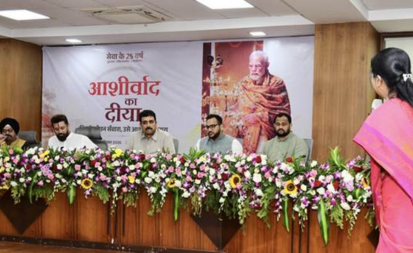
Gandhinagar, September 16, 2026: The Department of Fisheries, Government of India, is organising a National Workshop on Promotion of Deep-Sea Fishing and Interaction with Access Pass and Letter of Authorization (LoA) Holders in Gandhinagar, Gujarat, on September 17.
The workshop is aimed at encouraging Indian fishers to explore high-value marine fisheries resources and expand deep-sea fishing activities, while providing a platform to discuss challenges faced by fishers and identify solutions for strengthening the sector.
Union Minister for Fisheries, Animal Husbandry & Dairying and Panchayati Raj Rajiv Ranjan Singh, Gujarat Chief Minister Bhupendrabhai Patel and Minister of State Prof. S. P. Singh Baghel are scheduled to participate in the event.
Fishers, including women fishers, along with representatives of the Department of Fisheries, coastal States and Union Territories, ICAR, CIFNET, NABARD, NCEL, NCDC, SEAI, MPEDA, EIC and other fisheries stakeholders are expected to participate.
Deep-Sea Fishing Value Chain in Focus
The workshop will examine the deep-sea fishing value chain from resource assessment and vessel modernisation to skills, financing, processing, value addition and export markets.
Technical sessions will focus on:
- High-value fisheries resources in India’s EEZ and High Seas
- Modern fishing technologies and global best practices
- Vessel modernisation
- Training and capacity building for fishers and crew
- Institutional finance and cooperative-led investment
- Post-harvest management and processing
- Traceability and value addition
- Export compliance and international market access
Each session will include expert presentations, perspectives from fishers and industry representatives, followed by stakeholder discussions.
The Department said the deliberations are expected to help identify practical solutions to challenges faced by fishers and improve access to technology, skills, finance and markets.
Focus on Fisheries Cooperatives and Digitisation
The Department of Fisheries has also placed emphasis on strengthening Fisheries Farmer Producer Organisations (FFPOs) and fisheries cooperatives, alongside the digitisation of the fisheries sector.
These institutions can play a role in enabling collective investment, improving access to technology and finance and connecting fishers with processing and market opportunities.
India’s Marine Fisheries Potential
India has a coastline of approximately 11,099 km and an Exclusive Economic Zone (EEZ) of around 24 lakh sq. km. The marine fisheries potential within the country’s EEZ is estimated at 58.6 lakh metric tonnes, supporting the livelihoods of approximately 50 lakh fishers.
The marine fisheries sector contributes to food security, nutrition, employment, income generation and export earnings. India exported seafood valued at approximately ₹73,890 crore during FY 2025-26, according to the Ministry.
However, much of India’s fishing activity remains concentrated within 40–50 nautical miles of the coast, while deeper waters and areas beyond national jurisdiction offer opportunities to harvest high-value species such as tuna and tuna-like resources.
9,650 Access Passes Issued for EEZ Fishing
The Government has introduced the Sustainable Harnessing of Fisheries in the Exclusive Economic Zone (EEZ) Rules, 2025 and High Seas Guidelines, 2025 to provide an enabling framework for sustainable marine fisheries.
The Access Pass, issued digitally through the ReALCRaft portal, is designed to facilitate fishing operations in India’s EEZ between 12 and 200 nautical miles while supporting sustainable utilisation of marine resources.
The pass is required for mechanised fishing vessels and large motorised boats exceeding 24 metres in length. Traditional non-motorised and small artisanal craft are exempted under the framework.
According to the Department, 9,650 Access Passes have been issued so far based on applications received through coastal States and Union Territories.
The initiative is intended to enable traditional fishers, fisheries cooperatives and FFPOs to expand operations, access deeper-water resources and potentially develop additional income streams through processing and seafood exports.
Impact on Hospitality, Food and Tourism
The expansion of India’s deep-sea fishing and seafood-processing ecosystem has direct relevance for the hospitality, food service and tourism industries.
Greater access to high-value marine species such as tuna can strengthen the supply of premium seafood for hotels, restaurants, resorts, cruise operators and catering businesses, particularly in coastal tourism destinations.
The workshop’s focus on cold-chain infrastructure, processing, traceability, value addition and export compliance is also significant for hospitality businesses seeking reliable and quality-assured seafood supplies.
For coastal tourism, stronger fisheries infrastructure and local seafood value chains can support culinary tourism and destination dining, allowing hotels and restaurants to showcase regional marine produce and local fishing traditions.
The growth of seafood processing and exports can additionally create opportunities for coastal communities through employment and entrepreneurship, strengthening the economic link between fisheries, food processing, hospitality and coastal tourism.