India Achieves First OPU-IVF Birth in Badri Cattle, Boosting Indigenous Breed Conservation
Advanced embryo technology enables faster multiplication of elite Badri germplasm and opens new possibilities for genetic improvement of Uttarakhand’s indigenous cattle New Delhi, September 12, 2026: A healthy Badri female calf has been successfully born through
Advanced embryo technology enables faster multiplication of elite Badri germplasm and opens new possibilities for genetic improvement of Uttarakhand’s indigenous cattle
New Delhi, September 12, 2026: A healthy Badri female calf has been successfully born through Ovum Pick-Up and In Vitro Fertilization (OPU-IVF) technology, marking a significant development in the conservation and genetic improvement of Uttarakhand’s indigenous Badri cattle breed.
The calf was born on September 11, 2026, at the Academic Dairy Farm following the transfer of a Badri embryo into a Sahiwal recipient cow. Badri cattle are an important indigenous genetic resource of Uttarakhand and are recognised as the state animal of Uttarakhand.
The achievement is the result of collaboration between ICAR–National Dairy Research Institute (ICAR-NDRI), Karnal, and G. B. Pant University of Agriculture and Technology, Pantnagar, with financial support from the Uttarakhand Biotechnology Council, Haldi.
Key Highlights
- Healthy Badri female calf born through OPU-IVF technology on September 11, 2026.
- Badri embryo transferred into a Sahiwal recipient cow.
- Technology can accelerate multiplication of genetically superior female Badri cattle.
- OPU-IVF programme established through ICAR-NDRI and G. B. Pant University collaboration.
- Research programme initiated in 2023.
- Another recipient cow is expected to deliver a Badri calf within 5–7 days.
- Researchers have also generated cloned Badri embryos as part of ongoing work.
- Future embryo transfers will involve Sahiwal, crossbred and Badri recipient cows.
- Technology could support long-term conservation, genetic improvement and sustainable utilisation of the indigenous breed.
Advanced Reproductive Technology for Badri Cattle
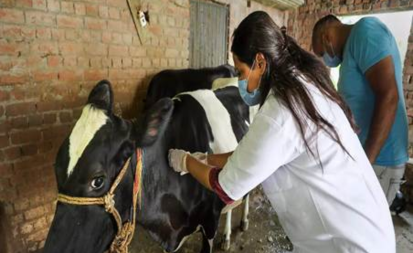
Under the OPU-IVF programme, oocytes were collected from selected genetically valuable Badri donor cows using ultrasound-guided ovum pick-up.
The collected oocytes were matured and fertilised in vitro using semen from a genetically superior Badri bull obtained through the Uttarakhand Livestock Development Board.
The resulting embryos were cultured under controlled laboratory conditions before being transferred into synchronised recipient cows. One Badri embryo was transferred into a Sahiwal cow, which subsequently gave birth to the healthy female calf.
The technology allows multiple embryos to be generated from genetically superior female animals, potentially increasing the rate at which elite germplasm can be multiplied compared with conventional reproductive methods.
Three-Year Research Programme Builds Indigenous Breed Technology
The research programme began in 2023 under the initiative of the then Vice-Chancellor of G. B. Pant University, Dr M. S. Chauhan.
Since then, scientific teams from the university and ICAR-NDRI have worked to establish OPU-IVF, embryo production and embryo transfer protocols specifically for Badri cattle.
The successful birth represents an important step in establishing a technology-based programme for the conservation and improvement of Badri cattle in Uttarakhand.
Cloning Research Also Underway
The collaborative programme is also investigating the use of cloning technology for elite and high-producing Badri cows.
Researchers have successfully generated cloned Badri embryos through multiple stages of the ongoing research. In the next phase, OPU-IVF- and cloning-derived embryos are planned to be transferred into suitable Sahiwal, crossbred and Badri recipient cows.
These technologies could accelerate the multiplication of superior animals while helping preserve valuable genetic material from the indigenous breed.
Strengthening Uttarakhand’s Indigenous Livestock Resource
The Badri breed represents an important component of Uttarakhand’s indigenous livestock resources. Integrating its genetic potential with advanced reproductive biotechnology could help develop more structured programmes for breed conservation, genetic improvement and wider dissemination of elite germplasm.
The approach could be particularly relevant for sustainable livestock development in Himalayan regions, where indigenous breeds can form an important part of local agricultural and rural economies.
Impact on Food, Hospitality & Travel and Tourism
Local Food Systems
Improved conservation and multiplication of indigenous cattle genetics can strengthen Uttarakhand’s long-term livestock resource base, supporting dairy production and local food systems.
Farm-to-Table & Regional Cuisine
Indigenous livestock breeds can contribute to the identity of regional food systems. Greater awareness and conservation of Badri cattle could support farm-to-table narratives and locally rooted culinary experiences in Uttarakhand.
Agri & Rural Tourism
The use of advanced biotechnology alongside traditional livestock systems creates opportunities for agri-tourism and educational farm experiences, particularly around indigenous breeds, dairy farming and Himalayan agriculture.
Culinary Tourism
Uttarakhand’s indigenous agricultural and livestock resources can become part of broader destination storytelling around regional cuisine, traditional farming and sustainable food production.
Sustainable Livestock Development
For the hospitality sector, stronger local livestock systems can potentially contribute to more resilient regional sourcing while supporting rural livelihoods connected to agriculture and dairy.
Industry Takeaway
The successful OPU-IVF birth marks an important intersection of indigenous livestock conservation and advanced biotechnology. For Uttarakhand, the technology could provide a pathway to multiply elite Badri cattle more rapidly while preserving valuable genetic resources.
For the wider food and tourism ecosystem, the development strengthens the potential for indigenous-breed conservation, sustainable dairy systems, regional food identity and agri-tourism—linking scientific innovation with the preservation of local agricultural heritage.