India Steps Up Lumpy Skin Disease Control as 36.18 Crore Cattle Vaccinated
DAHD Strengthens Vaccination, Surveillance and Biosecurity Measures; 3,461 Active LSD Cases Reported The Department of Animal Husbandry and Dairying (DAHD) has intensified nationwide measures to prevent, monitor and control Lumpy Skin Disease (LSD) among cattle and
DAHD Strengthens Vaccination, Surveillance and Biosecurity Measures; 3,461 Active LSD Cases Reported
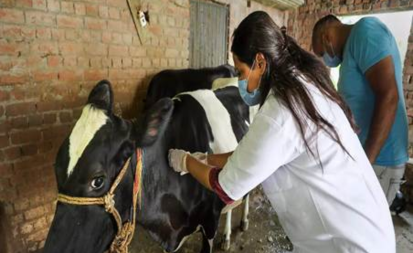
The Department of Animal Husbandry and Dairying (DAHD) has intensified nationwide measures to prevent, monitor and control Lumpy Skin Disease (LSD) among cattle and buffaloes, with more than 36.18 crore cattle vaccinated or re-vaccinated against the disease so far.
The department said the LSD situation in India is presently under control, with infection severity and mortality declining substantially. There are currently 3,461 active cases, primarily involving young and unvaccinated animals and animals with co-morbidities.
Key Highlights
- 36.18 crore+ cattle vaccinated/re-vaccinated against Lumpy Skin Disease.
- 3,461 active cases currently reported across the country.
- Sporadic cases have been reported since July 2026, particularly in Uttar Pradesh, Rajasthan, Himachal Pradesh, Haryana, Punjab and Uttarakhand.
- States have been advised to undertake ring vaccination, movement control, animal isolation and vector control.
- DAHD conducted national reviews with States/UTs on 27 August and 7 September 2026.
- A Central Expert Team was deputed to Uttar Pradesh in August to assess the situation and provide technical guidance.
- Diagnostic capacity has been strengthened with support from ICAR-NIHSAD, Bhopal, RDDLs and the Central Disease Diagnostic Laboratory.
- The disease is reported to have low severity, with affected animals generally recovering within a week.
DAHD Intensifies Lumpy Skin Disease Surveillance
The Department of Animal Husbandry and Dairying is coordinating with States and Union Territories to strengthen surveillance and ensure timely vaccination and disease-control measures following reports of sporadic cases of Lumpy Skin Disease.
During recent reviews, States and UTs were advised to give particular attention to heifers and young cattle through timely vaccination. Authorities have also been directed to implement ring vaccination around affected areas, control animal movement and isolate infected animals.
Additional measures include vector control, disinfection, sanitation, stray-animal management, treatment of affected animals and quarantine of newly introduced animals.
The Centre has also stressed timely and transparent reporting of disease incidents through official channels.
Sporadic Cases Reported Across Several States
Lumpy Skin Disease is a viral disease affecting cattle and buffaloes. It is caused by the Capripox virus and is mainly transmitted through arthropod vectors.
The disease is characterised by symptoms including fever and skin nodules and is generally associated with low mortality.
India first reported LSD in West Bengal and Odisha in September 2019.
Since July 2026, sporadic cases have been reported mainly in Uttar Pradesh, Rajasthan, Himachal Pradesh, Haryana, Punjab and Uttarakhand, along with a few other states. According to DAHD, cases have been particularly observed among young animals and calves.
The department said the disease has shown very low severity, with affected animals generally recovering within a week.
Central Expert Team Assesses Uttar Pradesh Situation
To strengthen the response, DAHD deputed a Central Expert Team to Uttar Pradesh in August 2026.
The team assessed the disease situation on the ground, reviewed measures being implemented by the state and provided technical guidance on preparedness and response.
At the national level, DAHD held review meetings with States and UTs on 27 August and 7 September 2026 to assess developments and strengthen disease-control preparedness.
Vaccination and Laboratory Capacity Strengthened
Vaccination remains a key component of the government’s strategy to contain LSD.
More than 36.18 crore cattle have been vaccinated or re-vaccinated so far. Vaccination and other disease-control measures are continuing in affected areas, while preventive vaccination measures are also being undertaken in non-affected States and UTs.
DAHD has also strengthened diagnostic and testing capacity through technical support from ICAR-NIHSAD, Bhopal, along with a network comprising Regional Disease Diagnostic Laboratories (RDDLs) and the Central Disease Diagnostic Laboratory (CDDL).
The department is additionally providing financial assistance to States and UTs for vaccination, training, awareness programmes, veterinary laboratory infrastructure and capacity building of veterinary personnel.
Current LSD Situation Under Control
According to DAHD, the country’s LSD situation is currently under control, with a significant reduction in the severity of infections and mortality.
The department said the 3,461 active cases currently recorded are mainly among young and unvaccinated animals and animals with co-morbidities.
Authorities continue to monitor the situation and provide States and UTs with technical guidance, vaccination assistance, diagnostic support and financial resources for disease containment.
Impact on Dairy, Food, Hospitality and Rural Tourism
Although LSD primarily concerns animal health, its control has wider implications for India’s dairy, food and hospitality ecosystem.
For the dairy and food sector, effective disease control is important for maintaining healthy cattle populations and protecting the stability of milk-producing livestock. This can indirectly support the availability and continuity of dairy supplies used by hotels, restaurants, cafés, bakeries and food manufacturers.
For rural economies, cattle and dairy farming are closely linked with livelihoods and local food systems. Containing outbreaks can help reduce potential disruption to livestock-dependent communities.
For hospitality and rural tourism, maintaining healthy livestock populations can support the sustainability of farm-based tourism, rural experiences and destinations where dairy and cattle-related activities form part of the visitor economy.
The emphasis on vaccination, biosecurity, quarantine and surveillance also highlights the importance of animal-health preparedness for India’s broader agricultural and food supply chains.
The Road Ahead
With more than 36.18 crore cattle vaccinated or re-vaccinated and the current disease situation reported to be under control, DAHD is continuing preventive and containment measures across States and UTs.
The combination of mass vaccination, surveillance, laboratory capacity, movement control, biosecurity and technical assistance will remain central to preventing further spread of Lumpy Skin Disease and protecting India’s livestock and dairy ecosystem.