Madhya Pradesh Procures 5.33 Lakh Tonnes of Summer Moong Under MSP Support
Centre approves 5.39 lakh tonnes for 2026 season; NAFED and NCCF-led procurement gives registered farmers access to assured MSP marketKey Highlights5.33 lakh tonnes of summer Moong procured in Madhya Pradesh during the 2026 season.Centre approved
Centre approves 5.39 lakh tonnes for 2026 season; NAFED and NCCF-led procurement gives registered farmers access to assured MSP market
Key Highlights
- 5.33 lakh tonnes of summer Moong procured in Madhya Pradesh during the 2026 season.
- Centre approved total procurement of 5,39,072 metric tonnes, including an additional 84,492 tonnes.
- Procurement was conducted mainly through NAFED and NCCF, with emphasis on timely farmer payments and transparency.
- MP’s summer Moong procurement increased from 3.93 lakh tonnes in 2025 to 5.33 lakh tonnes in 2026.
- Centre reviews implementation of RWBCIS and WINDS under the crop insurance framework.
- Government recommends combining technology-based yield assessment with Crop Cutting Experiments for better ground verification.
Record summer Moong procurement in Madhya Pradesh
New Delhi: Madhya Pradesh procured 5.33 lakh tonnes of summer Moong during the 2026 season, benefiting farmers through procurement at the Minimum Support Price (MSP), according to the Ministry of Agriculture and Farmers Welfare.
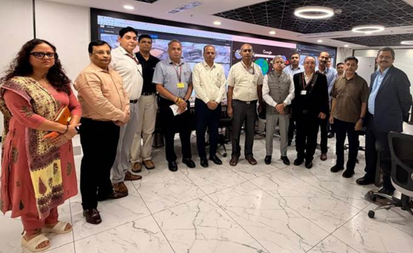
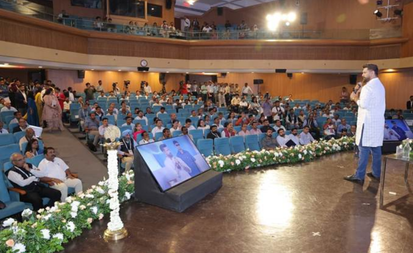
Union Agriculture and Farmers Welfare and Rural Development Minister Shivraj Singh Chouhan reviewed the procurement operations and crop insurance implementation in Madhya Pradesh during a virtual meeting with the state’s Agriculture and Horticulture Ministers at Krishi Bhawan, New Delhi.
The Centre had initially approved procurement of 4,54,580 metric tonnes of summer Moong for Madhya Pradesh following a request from the state government. An additional 84,492 metric tonnes was subsequently approved, taking the total approved quantity to 5,39,072 metric tonnes.
The additional approval did not impose any financial burden on the state government.
Procurement rises sharply from 2025
The 2026 procurement represents a substantial increase over the previous summer season.
In summer 2025, Madhya Pradesh had an approved procurement quantity of 4,19,692 metric tonnes and procured 3,93,123.79 metric tonnes.
In comparison, the state procured 5.33 lakh tonnes in summer 2026, remaining within the Centre-approved limit.
The government said the procurement enabled willing and registered farmers to sell their available produce and receive the MSP, providing direct financial support and strengthening confidence in the agricultural market.
NAFED, NCCF drive procurement
Procurement operations were carried out primarily through the National Agricultural Cooperative Marketing Federation of India (NAFED) and the National Cooperative Consumers’ Federation of India (NCCF).
The procurement system focused on timely payments to farmers and transparency in operations.
The higher procurement volume is also expected to support the rural economy by ensuring a structured market for summer Moong and improving farmers’ access to assured procurement.
Centre reviews crop insurance implementation
The meeting also examined implementation of the Restructured Weather Based Crop Insurance Scheme (RWBCIS) in Madhya Pradesh under the broader Pradhan Mantri Fasal Bima Yojana framework.
The Madhya Pradesh government had sought finalisation of the term sheet required for implementing the scheme. The Centre said the necessary steps had been taken and the term sheet provided to the state government, with an appeal for early implementation.
WINDS rollout remains pending
Implementation of the Weather Information Network and Data System (WINDS) in Madhya Pradesh was also reviewed.
According to the government, the concerned Central department has repeatedly communicated with the state regarding implementation, but the system has yet to be operationalised in Madhya Pradesh.
Officials highlighted the importance of WINDS for effective implementation of weather-based crop insurance and called for its rollout at the earliest.
Technology and field data to strengthen yield assessment
The meeting also discussed technology-based yield assessment under the crop insurance framework.
Madhya Pradesh is already using technology-based yield assessment for major crops. The Centre suggested bringing back Crop Cutting Experiments (CCEs) to provide ground-level verification and help recalibrate technology-based models.
A blended assessment system combining technology-generated estimates with field-level data was recommended to improve the reliability of crop yield assessments.
Chouhan said the Centre and Madhya Pradesh government would work together to strengthen procurement, payment mechanisms and crop insurance systems.
He stressed that timely procurement, assured MSP and effective crop insurance are important to improving farmers’ incomes and confidence in agricultural markets.
Impact on food, hospitality and tourism
The increase in summer Moong procurement has relevance for the foodservice and hospitality sector, where pulses are a key ingredient across hotel, restaurant and institutional menus.
Higher procurement through MSP can provide greater income visibility for farmers and support the availability of pulses within organised supply chains. For hotels, restaurants, caterers and food processors, a stronger farm-to-market system can contribute to more predictable sourcing and procurement planning.
Moong is widely used in Indian cuisine, hotel breakfast offerings, snacks, dals and health-focused menus. Its availability is therefore relevant to both traditional foodservice and the growing demand for nutritious and plant-based food options.
From a rural tourism perspective, stronger agricultural incomes can support local consumption and small businesses in farming communities. Over time, better agricultural market infrastructure and farmer incomes can also contribute indirectly to rural tourism, agri-tourism and local food experiences.
The crop insurance measures are equally relevant because greater protection against weather-related losses can improve resilience across agricultural supply chains. For the hospitality sector, a more resilient farm economy can help reduce disruptions in the availability of key food ingredients and support more stable regional food supply networks.