Modified UDAN Takes Off with 21 State MoUs, Opening New Opportunities for Regional Tourism and Hospitality
Challenge Mode Portal to Help States Develop Airstrips and Helipads; Next Phase Targets 120 New Destinations and 4 Crore Additional Passengers Over 10 Years Posted On: 22 September 2026 | PIB Delhi India’s regional aviation network is
Challenge Mode Portal to Help States Develop Airstrips and Helipads; Next Phase Targets 120 New Destinations and 4 Crore Additional Passengers Over 10 Years
Posted On: 22 September 2026 | PIB Delhi
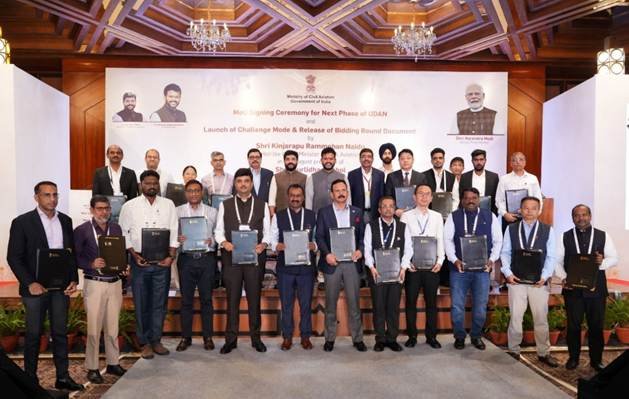
India’s regional aviation network is set for another expansion with the launch of the next phase of the UDAN (Ude Desh ka Aam Nagrik) Scheme, as the Ministry of Civil Aviation signed 21 MoUs with States and Union Territories to accelerate aerodrome development and regional air connectivity.
Civil Aviation Minister Ram Mohan Naidu launched the Challenge Mode Portal for Aerodrome Development and released the scheme document for the next round of UDAN route bidding at an event in New Delhi. The initiative shifts the next phase of UDAN from policy consultations towards implementation, with a focus on developing aviation infrastructure and connecting underserved and unserved regions.
Key Highlights
- 21 MoUs signed between the Ministry of Civil Aviation, States/UTs and Airports Authority of India (AAI).
- Challenge Mode Portal launched for States/UTs to nominate airstrips and helipads for development.
- Modified UDAN targets 120 new destinations over the next 10 years.
- Scheme aims to facilitate 4 crore additional passengers during the period.
- Existing UDAN network has operationalised 687 routes and 95 aerodromes.
- More than 3.66 lakh flights have carried around 1.71 crore passengers under UDAN since its launch.
- Upcoming route bidding will allow airlines to competitively bid for identified regional routes.
- The programme is designed to improve connectivity while supporting tourism, trade, employment and regional economic activity.
Challenge Mode Opens a New Route to Aerodrome Development
A major feature of the next phase is the introduction of the Challenge Mode framework, through which State Governments and UT Administrations can proactively nominate airstrips and helipads for development.
The approach gives states a greater role in identifying locations where new or upgraded aviation infrastructure could address regional connectivity requirements. AAI will work with the Centre and participating States/UTs to develop and operationalise these aviation assets.
The Ministry has also introduced a transparent route-bidding process under which airlines will bid for identified UDAN routes. The framework is intended to support competitive selection of routes and operators while extending scheduled air services to regions that remain underserved or unserved.
Regional Aviation Gains Momentum
According to the Ministry, UDAN has so far operationalised 687 routes and 95 aerodromes, supporting more than 3.66 lakh flights and around 1.71 crore passengers.
The government highlighted airports such as Tezu in Arunachal Pradesh and Purnea in Bihar as examples of regional airports that can contribute to economic activity by improving access to areas that previously had limited air connectivity.
The next phase builds on the roadmap discussed at the UDAN workshop held in July 2026. Modified UDAN is structured around four stated pillars: passenger affordability, operational sustainability, a transparent Challenge Mode framework and promotion of indigenous manufacturing.
What It Means for Hospitality, Travel & Tourism
The expansion of regional aviation could have a direct bearing on India’s destination tourism and hospitality ecosystem. New air links can reduce travel time to emerging tourism markets and make smaller cities and remote destinations more accessible to domestic and international travellers through connecting hubs.
For hotels and resorts, improved regional connectivity can expand the potential catchment area beyond established metropolitan markets. Destinations receiving new or upgraded air services could see greater opportunities for leisure travel, weekend tourism, MICE movements, weddings, pilgrimage travel and business tourism.
The proposed addition of 120 destinations is particularly relevant for India’s developing tourism circuits. Better air access can also support destination operators, restaurants, local transport providers, tour companies and experience-led businesses by increasing visitor flows.
For airlines and the hospitality industry, however, the eventual impact will depend on the actual routes operationalised, flight frequency, airport readiness, passenger demand and the sustainability of operations.
Industry Takeaway
The next phase of UDAN marks a shift from expanding subsidised regional routes to a broader Centre–State–industry framework for developing aviation infrastructure and connectivity. For India’s hospitality and tourism sector, the key opportunity lies in how these new aviation links translate into commercially viable tourism circuits and stronger access to emerging destinations.
For hospitality and travel businesses, the development of new regional airports and routes will be an important infrastructure trend to track as India expands its domestic tourism footprint.