ICAR-IIAB Inaugurates New Agricultural Research Facilities in Ranchi; ₹119 Crore Guest House Project Announced
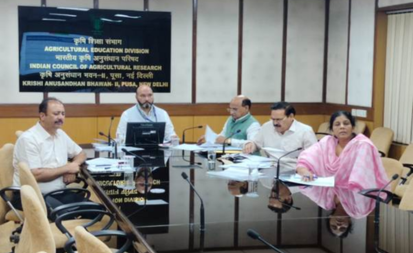
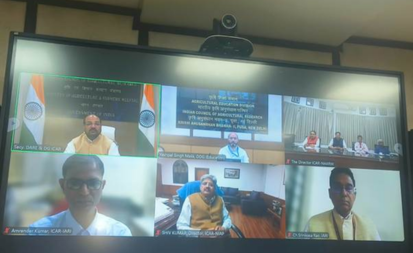
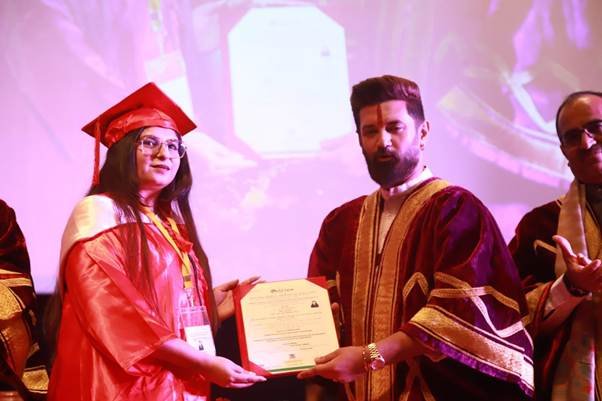
Union Agriculture Minister Shivraj Singh Chouhan inaugurates new facilities at ICAR-IIAB through video conferencing as the institute hosts a Pre-Rabi Kisan Goshti for around 1,500 farmers from four Jharkhand districts. Key Highlights ICAR-IIAB organises a Pre-Rabi Kisan
Union Agriculture Minister Shivraj Singh Chouhan inaugurates new facilities at ICAR-IIAB through video conferencing as the institute hosts a Pre-Rabi Kisan Goshti for around 1,500 farmers from four Jharkhand districts.
Key Highlights
- ICAR-IIAB organises a Pre-Rabi Kisan Goshti-cum-Agricultural Input Distribution Programme for approximately 1,500 farmers.
- Union Agriculture Minister Shivraj Singh Chouhan inaugurates four facilities through video conferencing.
- Foundation stone laid for a new guest house project worth ₹119 crore.
- Farmers receive improved seeds, Nano Urea, Nano DAP, mineral mixtures and other agricultural and livestock inputs.
- Discussions focus on integrated farming, soil health, crop diversification, natural farming and livestock productivity.
- Officials emphasise technology transfer, Farmer Producer Organisations (FPOs), value addition and farmer-oriented research.
ICAR-IIAB Expands Agricultural Research Infrastructure in Jharkhand
Ranchi, October 8, 2026: The ICAR–Indian Institute of Agricultural Biotechnology (ICAR-IIAB), Garhkhatanga, Ranchi, has inaugurated new institutional and research facilities while bringing together around 1,500 farmers for a pre-Rabi agricultural outreach programme aimed at promoting scientific and sustainable farming practices in Jharkhand.
The programme, organised under the Scheduled Caste Sub-Plan (SCSP) and Tribal Sub-Plan (TSP), brought farmers from Ranchi, Khunti, Gumla and Ramgarh districts into direct interaction with agricultural scientists, government officials and policymakers.
Union Minister of Agriculture and Farmers’ Welfare Shivraj Singh Chouhan inaugurated the following facilities through video conferencing:
- Admin-cum-School Building
- Birsa Munda Multipurpose Hall
- Jaipal Singh Munda Sports Complex
- NEXTGEN Breeding Facility
The Minister also laid the foundation for a new guest house project at ICAR-IIAB, with an announced project cost of ₹119 crore.
The infrastructure development is intended to strengthen the institute’s institutional and research capabilities. The NEXTGEN Breeding Facility is particularly relevant to crop research and the development of improved agricultural technologies.
Shivraj Singh Chouhan Calls for Scientific and Location-Specific Farming
Addressing the programme, Chouhan highlighted the importance of improved seeds, integrated farming, balanced nutrient management and agricultural technologies suited to Jharkhand’s local conditions.
He said traditional agricultural knowledge remains valuable but must be complemented by scientific research and technology-driven practices to address emerging farming challenges.
The Minister urged scientists to take technologies from laboratories to farmers’ fields and emphasised timely access to improved seeds and greater farmer awareness ahead of the Rabi season.
He also called for stronger safeguards against counterfeit seeds, adulterated or fake fertilisers and substandard pesticides, alongside effective implementation of farmer welfare schemes.
Chouhan further urged scientists to undertake a nationwide Khet Bachao Abhiyan in the coming days, highlighting the need to protect agricultural resources and improve farming practices.
Focus on Crop Diversification, Soil Health and Livestock
Union Minister of State for Agriculture and Farmers’ Welfare Bhagirath Choudhary stressed the role of farmers in food security and national development. He called for wider adoption of modern agricultural technologies, soil testing, balanced fertiliser use, value addition and stronger Farmer Producer Organisations and Krishi Vigyan Kendras.
He also encouraged farmers to experiment with natural farming on a portion of their cultivated land and reiterated the importance of protecting them from substandard agricultural inputs.
Dr. M. L. Jat, Secretary, Department of Agricultural Research and Education (DARE) and Director General of ICAR, highlighted eastern India’s potential for agricultural transformation.
He called for wider adoption of Rice-Fallow Intensification, location-specific crop and variety selection, improved livestock productivity and research addressing challenges such as acidic soils and phosphorus deficiency. He also highlighted the role of natural and organic farming in agricultural development.
Dr. D. K. Yadav, Deputy Director General (Crop Science), ICAR, emphasised the need to align research with farmers’ requirements and ensure that technologies reach the last mile.
Farmers Receive Seeds, Fertilisers and Livestock Inputs
A major component of the event was the distribution of agricultural and livestock inputs to participating farmers.
Items distributed included:
- Nano Urea and Nano DAP
- Mineral mixtures for livestock
- Improved seed varieties
- Wheat, pea and mustard seeds
- Vegetable seed kits
- High-yielding tomato and brinjal seed varieties
- A milk can cooler
The programme also included technical sessions on FPOs, dairy farming, ethno-veterinary medicines, fruit crop production, Integrated Pest Management for Rabi crops, crop diversification, Integrated Farming Systems, organic and natural farming, livestock feeding management and lac cultivation.
Farmers interacted with scientists and technical experts to receive practical guidance on improved agricultural and livestock management.
An exhibition showcased crop varieties, livestock and dairy technologies, agricultural research achievements, government schemes and farmer-oriented innovations developed by ICAR institutes and government agencies in Jharkhand.
Integrated Farming and Dairy Technology Take Centre Stage
During a visit to the institute, Bhagirath Choudhary and senior ICAR officials inspected the Dairy Farm, Crop Research and Training Centre, NEXTGEN Breeding Facility and Integrated Farming System (IFS) Unit.
At the dairy facility, officials were briefed on embryo transfer technology for livestock genetic improvement. At the IFS Unit, they reviewed integrated farming practices, agricultural waste recycling and resource-efficient approaches while interacting with farmers.
The visit highlighted the potential of combining crop cultivation, livestock rearing and efficient resource use to diversify farm income and improve agricultural resilience.
Impact on Food Processing, Hospitality and Tourism
Although the programme primarily targets farmers and agricultural research, its focus on productivity, dairy development, crop diversification and value addition has potential implications for the wider food and hospitality ecosystem.
1. Improved sourcing for hotels and restaurants: Better crop varieties and scientific farm practices could support the availability of agricultural produce for hotels, restaurants, catering businesses and institutional kitchens in Jharkhand. Actual benefits will depend on adoption rates, production volumes and market linkages.
2. Opportunities for food processing: Greater emphasis on crop diversification, fruit production and improved agricultural technologies could support local processing enterprises working with vegetables, fruits and other farm produce.
3. Dairy supply-chain development: Improved livestock productivity and dairy management may contribute to stronger milk supply chains, creating potential benefits for hotels, cafés, bakeries, restaurants and other food service businesses.
4. FPOs and local procurement: Stronger Farmer Producer Organisations and value-addition initiatives could help connect small farmers with organised buyers, including food processors and hospitality procurement networks.
5. Rural and agricultural tourism: Demonstration farms, agricultural research facilities and integrated farming models may offer opportunities for educational visits and rural tourism initiatives if suitable visitor access and tourism programmes are developed.
These are potential downstream effects rather than outcomes directly announced under the programme. The release does not specify hospitality-sector investments, tourism projects or quantified targets for agricultural production and processing.
Strengthening the Lab-to-Land Approach
The Pre-Rabi Kisan Goshti reaffirmed ICAR-IIAB’s focus on connecting agricultural research with farmers’ needs through infrastructure development, scientific guidance, demonstrations and input distribution.
With around 1,500 farmers participating, the programme brought together research institutions, government representatives and farming communities around crop productivity, livestock management and sustainable agricultural practices.
For Jharkhand’s broader food economy, effective adoption of these technologies and stronger links between farmers, FPOs, processors and buyers could help improve agricultural value chains and create opportunities for rural enterprises.