India and Ghana Sign Five-Year Agricultural MoU to Boost Tomato Production, Food Processing and Cold-Chain Infrastructure
ICAR and Ghana’s CSIR-Crops Research Institute will collaborate on agricultural research, high-yielding tomato varieties, tuber processing and post-harvest management, creating opportunities for value addition and food supply-chain development. Key Highlights India’s Indian Council of Agricultural Research (ICAR)
ICAR and Ghana’s CSIR-Crops Research Institute will collaborate on agricultural research, high-yielding tomato varieties, tuber processing and post-harvest management, creating opportunities for value addition and food supply-chain development.
Key Highlights
- India’s Indian Council of Agricultural Research (ICAR) signs a five-year MoU with Ghana’s Crops Research Institute (CSIR-CRI).
- Initial cooperation will focus on vegetable crop research, particularly tomato production and development.
- The partnership will promote processing and value addition for cassava, yam and other tuber crops.
- Technical cooperation will cover cold storage, refrigerated transportation, sorting, grading and processing.
- The agreement provides for scientific exchanges, collaborative research, capacity building and commercialisation of agricultural technologies.
- The initiative strengthens India–Africa agricultural cooperation and could offer lessons for food processing, cold-chain logistics and hospitality supply chains.
India and Ghana Strengthen Agricultural Research and Food Processing Cooperation
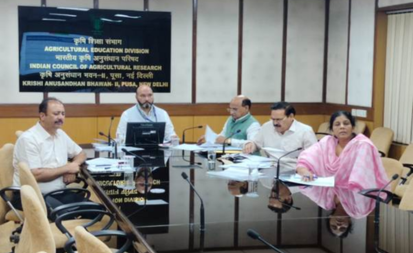
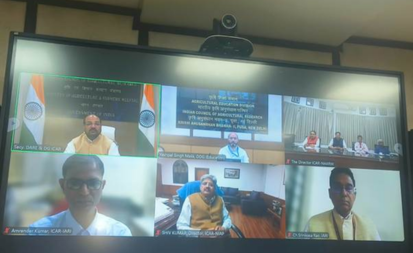
New Delhi, October 7, 2026: India and Ghana have signed a five-year Memorandum of Understanding (MoU) to strengthen cooperation in agricultural research, education, technology transfer and commercialisation, with an initial focus on tomato production, tuber crop processing and post-harvest infrastructure.
The agreement was signed between the Indian Council of Agricultural Research (ICAR), New Delhi, and Ghana’s Crops Research Institute (CSIR-CRI), Accra. The signing ceremony was attended by India’s External Affairs Minister Dr. S. Jaishankar and Ghana’s Minister for Foreign Affairs, Samuel Okudzeto Ablakwa.
The partnership aims to connect agricultural research with practical applications, helping scale up suitable technologies, improve crop production and strengthen agricultural value chains. Arima Farms Ltd., Ghana, has been recognised as the commercial partner to CSIR-CRI for specific research and commercialisation activities under the framework.
The agreement also supports India’s broader South-South cooperation and engagement with African countries in agricultural science and technology.
Tomato Research and High-Yielding Varieties to Lead First Phase
The first phase of cooperation will focus on vegetable crop research, particularly tomato research and development.
Under the agreement, ICAR will support the scaling up of proven agricultural technologies and the introduction of suitable high-yielding tomato lines and varieties to help strengthen domestic tomato production in Ghana.
The initiative seeks to connect scientific research with agricultural production, potentially supporting productivity improvements and more reliable supplies of fresh produce.
For food businesses, tomatoes are an important ingredient in sauces, prepared foods, restaurant kitchens and processed food products. Improvements in production and post-harvest handling could help reduce supply-chain disruptions, although the agreement does not specify production targets or timelines for commercial rollout.
Cassava and Yam Processing to Strengthen Value Addition
Beyond vegetable research, the partnership will cover processing and value addition for cassava, yam and other tuber crops.
The collaboration is intended to strengthen agricultural value chains by improving the application of processing technologies and supporting the commercial use of agricultural research.
Value addition can help diversify the uses of agricultural produce, create opportunities for processed food products and potentially increase the economic value retained within producing regions.
For food manufacturers, such developments could support the exploration of new ingredients and processed products. For hospitality businesses, improved availability of processed tuber products could eventually expand sourcing options for restaurants and food service operators.
Cold Storage and Refrigerated Transport in Focus
A major component of the MoU is post-harvest management, including technical assistance and capacity building in:
- Cold storage infrastructure.
- Refrigerated transportation.
- Produce sorting and grading.
- Agricultural processing technologies.
- Post-harvest loss reduction.
These interventions are intended to address losses between harvesting and consumption while improving the handling of agricultural produce.
Cold-chain infrastructure is particularly relevant for perishable commodities such as tomatoes and other vegetables, whose quality can deteriorate during storage and transportation if handling conditions are inadequate.
For the wider food industry, better post-harvest systems can help improve product quality, storage management and supply-chain efficiency. However, the agreement does not announce specific investments, infrastructure capacity or quantified targets for reducing losses.
Research Exchanges and Joint Implementation Mechanism
The MoU provides for exchanges of scientists and technologists, germplasm and breeding materials, scientific information, research methodologies and technical knowledge.
It also envisages collaborative research projects and institutional linkages between relevant research institutes and centres in India and Ghana.
Implementation will be overseen by a Joint Working Group comprising representatives of ICAR and CSIR-CRI. The group will review progress and guide cooperation, with periodic meetings planned in New Delhi and Accra.
The framework is designed to support continued scientific collaboration and the practical application and commercialisation of agricultural technologies.
Impact on Hospitality, Food Processing and Tourism
The India–Ghana partnership has potential implications for food businesses and hospitality supply chains through its emphasis on crop productivity, value addition and post-harvest infrastructure.
1. More efficient food sourcing: Improved tomato production and handling could help strengthen the availability and quality of fresh produce for restaurants, hotels, catering companies and food manufacturers in Ghana.
2. Opportunities for processed food businesses: Research into cassava, yam and other tuber crops could support new product development, processing enterprises and diversified food offerings.
3. Better cold-chain management: Technical cooperation in refrigerated transport and cold storage highlights the importance of temperature-controlled logistics for perishable food products. Similar capabilities are relevant to hotel kitchens, restaurant supply chains and institutional catering.
4. Regional cuisine and culinary tourism: Stronger agricultural value chains could support the availability of locally sourced ingredients for Ghanaian cuisine and destination dining. This may indirectly benefit tourism businesses that showcase local food traditions.
5. Commercial opportunities and technology transfer: The partnership’s emphasis on research commercialisation could create opportunities for agricultural enterprises, processors and logistics providers involved in production, storage and distribution.
These are potential downstream benefits rather than confirmed commercial outcomes of the MoU. Their scale will depend on implementation, technology adoption, infrastructure development and market demand.
India–Africa Cooperation Links Agricultural Science with Commercial Application
The five-year agreement establishes a framework for cooperation between ICAR and CSIR-CRI across research, education, technology transfer and commercialisation.
With tomato research, tuber crop processing and post-harvest management identified as priority areas, the partnership aims to strengthen agricultural value chains and support improved livelihoods in Ghana.
For the wider food and hospitality ecosystem, the agreement highlights the role of agricultural research and cold-chain infrastructure in connecting farm production with processing, distribution and end consumers. Its longer-term impact will depend on how effectively the proposed research and technology-transfer activities are implemented.