Jaipur–Tatanagar–Santragachi Express Launched to Strengthen Connectivity Across Five States, Boosting Business and Tourism Travel
New Train Service Connects Rajasthan with Jharkhand and West Bengal via Uttar Pradesh and Bihar; Expected to Benefit Migrant Workers, Business Travellers, Students and Regional Trade A new railway service connecting Rajasthan, Uttar Pradesh, Bihar, Jharkhand
New Train Service Connects Rajasthan with Jharkhand and West Bengal via Uttar Pradesh and Bihar; Expected to Benefit Migrant Workers, Business Travellers, Students and Regional Trade
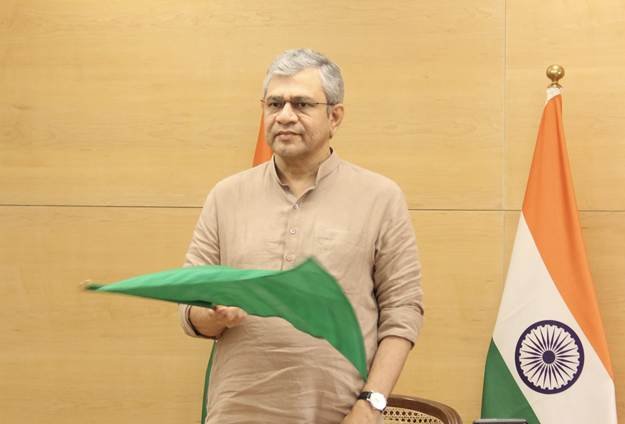
A new railway service connecting Rajasthan, Uttar Pradesh, Bihar, Jharkhand and West Bengal has been launched with the flag-off of the Jaipur (Khatipura)–Tatanagar–Santragachi Express. Union Railway Minister Ashwini Vaishnaw and West Bengal Chief Minister Suvendu Adhikari flagged off the train on October 26, 2026, with the Railway Minister joining the programme through video conferencing.
The new service is expected to improve passenger connectivity between Jaipur, Jamshedpur and Kolkata, offering an additional travel option for migrant workers, business communities, students and passengers travelling across these states. The service also strengthens rail links between important commercial and industrial centres in eastern and western India.
Key Highlights
- Five-state connectivity: New rail service linking Rajasthan, Uttar Pradesh, Bihar, Jharkhand and West Bengal.
- Key destinations: Connects Jaipur (Khatipura) with Tatanagar and Santragachi.
- Business and employment: Expected to benefit migrant workers, traders, industrial communities and working professionals.
- Jharkhand railway investment: Projects worth approximately ₹75,000 crore are underway in the state.
- Station redevelopment: 57 stations in Jharkhand are being redeveloped under the Amrit Bharat Station Scheme.
- West Bengal infrastructure: Santragachi, Jalpaiguri Road, Joychandi Pahar, Haldia and Kamakhyaguri are among the stations undergoing redevelopment.
- Railway expansion: Four-line expansion work is underway on the Howrah-Kharagpur-Chakulia-Tatanagar corridor.
New Express Service to Improve Connectivity Between Major Commercial Centres
The Jaipur (Khatipura)–Tatanagar–Santragachi Express is intended to strengthen long-distance connectivity between western and eastern India.
According to the Railway Minister, the service will provide improved travel options for migrant workers residing in Rajasthan, business communities, students and other passengers travelling between the connected regions.
The route is particularly relevant for passenger movement between Jaipur, the industrial city of Jamshedpur and Kolkata. Improved connectivity between these centres can support business travel, workforce mobility and commercial exchanges.
Jharkhand Railway Infrastructure Receives Major Investment
Highlighting railway development in Jharkhand, Ashwini Vaishnaw stated that the state’s railway budget allocation has increased from ₹450 crore to ₹7,500 crore, approximately 16 times the earlier allocation.
Railway projects worth around ₹75,000 crore are currently underway in the state. Additionally, 57 railway stations are being redeveloped under the Amrit Bharat Station Scheme.
Redevelopment work has been completed at several stations, including Godda, Govindpur Road, Lohardaga, Madhupur and Muri.
The Railway Minister also highlighted the redevelopment of more than 1,300 railway stations across the country. In West Bengal, stations such as Santragachi, Jalpaiguri Road, Joychandi Pahar, Haldia and Kamakhyaguri are included in the programme.
Four-Line Expansion and Kolkata Metro Connectivity
Railway infrastructure expansion is also underway along the Howrah-Kharagpur-Chakulia-Tatanagar corridor, where work to expand the existing railway line to four lines is in progress.
The Railway Minister further stated that a 4.5-km section connected to the Beleghata-IT Centre stretch of Kolkata Metro has been completed, with trial runs commenced. The section is expected to provide connectivity with the Metro’s Green Line.
These infrastructure developments are aimed at improving passenger movement, strengthening railway capacity and supporting growing transport requirements across the region.
Impact on Hospitality, Travel and Tourism
The introduction of the Jaipur-Tatanagar-Santragachi Express has implications beyond everyday passenger transportation. By strengthening connectivity between Rajasthan, Jharkhand and West Bengal, the service could support travel demand across several business and tourism markets.
1. Improved access to tourism destinations: Better rail connectivity can encourage travel between Jaipur’s heritage attractions, Jharkhand’s nature and cultural destinations, and Kolkata’s heritage, culinary and cultural tourism offerings.
2. Potential growth in hotel demand: Greater movement of business travellers, migrant workers and tourists could generate additional accommodation demand in Jaipur, Jamshedpur and Kolkata.
3. Business travel opportunities: Improved connectivity between industrial and commercial centres can support corporate travel, meetings, trade visits and business-related hotel stays.
4. Regional food and culinary tourism: Better inter-state connectivity could encourage travellers to explore the diverse food cultures of Rajasthan, Bihar, Jharkhand and West Bengal, benefiting restaurants and local food businesses.
5. Opportunities for tour operators: Travel companies could explore multi-state itineraries combining Rajasthan’s heritage tourism, Jharkhand’s nature-based experiences and West Bengal’s cultural attractions.
6. Workforce mobility: The new service is expected to benefit migrant workers and working professionals, supporting movement between employment centres and their home regions.
Industry Takeaway
The Jaipur–Tatanagar–Santragachi Express adds another passenger connectivity link between India’s western and eastern regions. For the hospitality and travel industry, improved rail access can support business travel, domestic tourism and inter-state visitor movement. The connected cities also present opportunities for hotels, restaurants, tour operators and local businesses to cater to a wider travelling population.