India Maps 652 Community Seed Banks as DIVERSIFARM-India Releases Capacity-Building Manual
Project identifies at least 1,000 community seed banks nationwide, develops six institutional typologies and proposes a 10-point roadmap to strengthen farmer-led seed conservation New Delhi | 18 November 2026 India has at least 1,000 Community Seed Banks
Project identifies at least 1,000 community seed banks nationwide, develops six institutional typologies and proposes a 10-point roadmap to strengthen farmer-led seed conservation
New Delhi | 18 November 2026
India has at least 1,000 Community Seed Banks (CSBs), with 652 already mapped through a digital atlas developed under the DIVERSIFARM-India project. The initiative aims to strengthen community-led seed systems, conserve agricultural biodiversity and improve food, nutrition and livelihood security for small farmers.
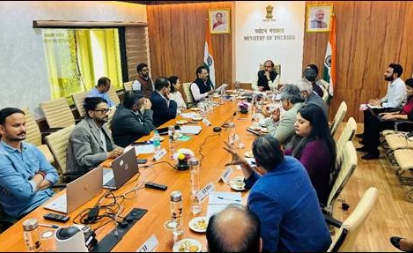
The project’s findings and resources were presented at the National Seminar for the Advancement of Community Seed Banks, held on 17–18 November 2026 at the National Agricultural Science Complex (NASC), New Delhi.
The key outputs include a GIS-based digital atlas profiling community seed banks, a policy brief identifying six CSB typologies, a 10-point roadmap for strengthening CSBs in Odisha and a new capacity-building manual offering practical guidance on establishing and sustaining these institutions.
DIVERSIFARM-India is led by the Fridtjof Nansen Institute (FNI), Norway, and the M S Swaminathan Research Foundation (MSSRF), India. The three-year collaboration focuses on improving food, nutrition and livelihoods for small farmers by strengthening community-based seed systems.
Digital atlas maps 652 community seed banks
The digital atlas brings together information on community seed banks operating across India, providing a platform to understand their geographical spread, institutional structures and collective contributions.
Dr Regine Andersen, Research Professor at FNI, presented the project’s outputs and highlighted the role of the platform in connecting community seed banks and increasing awareness of their work.
MSSRF Executive Director Dr Rengalakshmi R described CSBs as more than seed-storage facilities, emphasising their role as living institutions for in-situ conservation and strengthening farmers’ resilience.
The project also received support from the Royal Norwegian Embassy in New Delhi. Ambassador May-Elin Stener described the mapping and capacity-building work as an important component of the India–Norway partnership.
Six CSB typologies identified to guide policy support
The project’s study identified six types of community seed banks based on their management structures. The classification is intended to help policymakers understand the institutional differences among CSBs and develop more targeted support mechanisms.
A separate policy brief proposes a 10-point roadmap for community seed banks in Odisha, recommending the establishment of a dedicated secretariat under the state’s Department of Agriculture and Farmers’ Empowerment.
Odisha served as the pilot state for the project’s case studies and capacity-building work.
New manual provides guidance for establishing and managing CSBs
A capacity-building manual has been developed using detailed case studies from Odisha. It combines technical guidance, organisational approaches and policy considerations to help communities establish, manage and sustain seed banks.
The manual was released by Dr Trilochan Mohapatra, Chairperson of the Protection of Plant Varieties and Farmers’ Rights Authority (PPVFRA), at NASC, New Delhi.
Dr Mohapatra acknowledged the growing government support for community seed banks and expressed confidence that the institutions could expand with continued institutional backing.
PPVFR and Biodiversity laws seen as important policy foundations
The DIVERSIFARM-India project also examined India’s legal and policy framework to identify opportunities and bottlenecks affecting community seed banks.
The Protection of Plant Varieties and Farmers’ Rights Act and the National Biodiversity Act were identified as two important legal frameworks with potential to strengthen CSBs.
Padma Shri Dr P. L. Gautam, former Chairperson of PPVFRA and the National Biodiversity Authority, highlighted the need to create synergy between the two laws to deliver greater benefits to farmers.
Dr Devendra Kumar Yadava, Director of ICAR-National Bureau of Plant Genetic Resources and Deputy Director General (Crop Science), ICAR, emphasised the scope for collaboration between community gene banks and national gene banks. Dr Gautam also underlined the importance of sustained funding and capacity building.
Key Highlights
- At least 1,000 CSBs: DIVERSIFARM-India estimates that India has at least 1,000 community seed banks.
- 652 mapped: The project’s digital atlas has mapped 652 community seed banks.
- Six institutional typologies: CSBs classified according to their management structures to guide targeted policy support.
- Odisha roadmap: A 10-point action plan recommends a dedicated secretariat under the state’s Department of Agriculture and Farmers’ Empowerment.
- New capacity-building manual: Practical guidance developed from case studies in Odisha to establish, manage and sustain CSBs.
- Legal framework: PPVFR Act and National Biodiversity Act identified as important instruments for strengthening community seed banks.
- Research collaboration: FNI and MSSRF lead the three-year DIVERSIFARM-India initiative.
Impact on Hospitality, Food & Beverage and Travel & Tourism
1. Greater potential for regional food diversity
Community seed banks help conserve locally adapted crop varieties and agricultural biodiversity. Strengthening these institutions could support the continued availability of traditional grains, pulses, vegetables and other region-specific ingredients. This has relevance for hotels and restaurants developing menus around regional cuisines and indigenous food traditions.
2. Opportunities for farm-to-table sourcing
A stronger community seed system could contribute to more resilient local agricultural production over time. Hospitality businesses interested in sourcing regional ingredients may find opportunities to build relationships with farmer groups and community-based agricultural institutions.
3. Support for traditional food experiences
The conservation of indigenous crop varieties can help preserve culinary traditions associated with particular regions and communities. This could add depth to food-focused tourism, local cuisine experiences and destination-led culinary storytelling.
4. Food security and sustainable sourcing
By strengthening seed access, crop diversity and farmer resilience, community seed banks can contribute to the broader sustainability of food systems. These developments are relevant to hospitality businesses seeking more diverse and resilient agricultural supply networks.
Industry Takeaway
The mapping of 652 community seed banks and the identification of at least 1,000 across India provide a clearer picture of the country’s community-led seed conservation network. The new manual, institutional typologies and Odisha roadmap offer practical and policy-oriented tools to strengthen these institutions.
For the hospitality and food service industry, the longer-term significance lies in conserving agricultural diversity that supports regional food identities. Stronger community seed systems could help sustain traditional ingredients, expand local sourcing opportunities and reinforce the connection between agriculture, cuisine and food tourism.