India’s Fisheries and Aquaculture Sector Explores AI, Genome Editing and Precision Farming at 14th IFAF
ICAR-CIFA hosts three-day international forum in Bhubaneswar, bringing together over 1,000 delegates from India and six countries to discuss sustainable fisheries, technology adoption and stronger industry value chains Bhubaneswar | 19 November 2026 India's fisheries and aquaculture
ICAR-CIFA hosts three-day international forum in Bhubaneswar, bringing together over 1,000 delegates from India and six countries to discuss sustainable fisheries, technology adoption and stronger industry value chains
Bhubaneswar | 19 November 2026
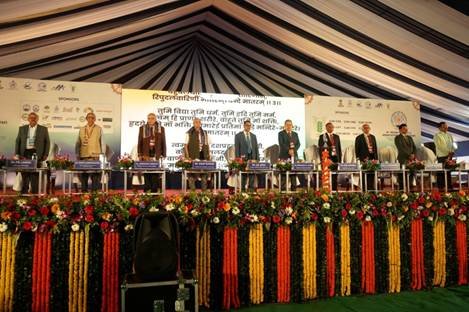
India’s fisheries and aquaculture sector is placing greater emphasis on advanced technologies, sustainable production and stronger value chains, with the 14th Indian Fisheries and Aquaculture Forum (14IFAF) bringing together more than 1,000 delegates from India and six other countries in Bhubaneswar, Odisha.
The three-day international scientific conference, being held from 18 to 20 November 2026 at the ICAR–Central Institute of Freshwater Aquaculture (ICAR-CIFA), is being organised under the theme “Transforming Aquaculture and Fisheries: Bridging Science and Society”.
The forum is jointly organised by the Asian Fisheries Society, Indian Branch (AFSIB), ICAR-CIFA, Department of Fisheries, Government of India, National Fisheries Development Board (NFDB), Fisheries and Animal Resources Development Department, Government of Odisha, and the Association of Aquaculturists.
The discussions focus on translating scientific research into practical applications, encouraging technology adoption and strengthening collaboration among researchers, policymakers, industry stakeholders and farming communities.
AI, genome editing and precision aquaculture among key focus areas
The conference is examining emerging technologies and research priorities that could influence the future of fisheries and aquaculture. Key areas include artificial intelligence (AI), genome editing, precision aquaculture, advanced breeding technologies, feed development, aquatic animal health and genetic improvement.
Sustainable fisheries management and aquatic ecosystem conservation are also central to the discussions, reflecting the need to balance production growth with the long-term health of aquatic resources.
The forum was inaugurated by Dr Eduardo Leano, Director General of the Network of Aquaculture Centres in Asia-Pacific (NACA), Bangkok. He highlighted the need to accelerate innovation and technology adoption to transform the aquaculture sector.
Dr J. K. Jena, Deputy Director General (Fisheries Science), ICAR, emphasised greater investment in frontier research and the development of robust value chains.
Stronger value chains and fish quality gain industry attention
The conference also highlighted the importance of improving the commercial and institutional framework supporting fisheries.
Dr B. K. Behera, Chief Executive of NFDB, stressed the need to strengthen fisheries cooperatives to improve the livelihoods of fishers.
Dr C. Vasudevappa, former Vice-Chancellor of NIFTEM, Kundli, underlined the importance of maintaining fish quality and enhancing consumer acceptance.
Earlier, Dr P. K. Sahoo, Director of ICAR-CIFA and conference convener, called for stronger science–industry–farmer linkages, greater international cooperation and the translation of research findings into practical solutions for farming communities.
Exhibition brings together 20 agencies
A concurrent exhibition featuring 20 agencies is showcasing technologies, innovations, products and services across fisheries and aquaculture.
The exhibition provides a platform for farmers, researchers and industry representatives to interact, explore technological solutions and identify opportunities for collaboration and partnerships.
The inaugural programme also featured the release of scientific publications and the presentation of Fellow Awards by the Association of Aquaculturists to recognise the contributions of eminent fisheries scientists.
Key Highlights
- 14th Indian Fisheries and Aquaculture Forum: Held from 18–20 November 2026 at ICAR-CIFA, Bhubaneswar.
- Participation: Over 1,000 delegates from India and six other countries.
- Theme: “Transforming Aquaculture and Fisheries: Bridging Science and Society”.
- Technology focus: AI, genome editing, precision aquaculture and advanced breeding technologies.
- Research priorities: Feed development, aquatic animal health, genetic improvement and ecosystem conservation.
- Industry exhibition: 20 agencies showcasing technologies, products, innovations and services.
- Value-chain focus: Greater investment in research, stronger fisheries cooperatives and improved fish quality.
Impact on Hospitality, Food & Beverage and Travel & Tourism
1. Potential for stronger seafood supply chains
The focus on scientific innovation, advanced breeding, aquatic animal health and sustainable fisheries management could support improvements in aquaculture production over time. For hotels, restaurants, resorts and catering businesses, stronger production systems may help improve the long-term reliability of seafood sourcing.
2. Greater attention to fish quality and consumer confidence
The emphasis on fish quality and consumer acceptance is particularly relevant to hospitality businesses where seafood is a key menu category. Better quality-management practices across the supply chain can support food safety, consistency and customer confidence.
3. Opportunities for seafood processing and value addition
The forum’s focus on robust value chains and industry collaboration creates scope for stronger connections between fish farmers, processors, distributors and food service businesses. This could support the development of value-added seafood products and more efficient supply networks.
4. Odisha’s potential as a fisheries and food-sector business destination
Hosting an international conference with more than 1,000 participants gives Bhubaneswar a platform for scientific exchange and industry networking. The event also brings business visitors, researchers and institutional representatives to Odisha, contributing to the state’s meetings and business-event ecosystem.
Industry Takeaway
The 14th Indian Fisheries and Aquaculture Forum highlights how research, technology and stronger value chains are becoming central to the future of India’s seafood industry. Its focus on AI, genome editing, precision aquaculture, fish quality and aquatic animal health has relevance for producers as well as downstream businesses.
For hotels, restaurants, seafood processors and institutional caterers, the long-term opportunity lies in a more technology-driven and quality-focused aquaculture ecosystem. The success of these developments will depend on how effectively research outcomes are adopted by farmers and translated into commercially viable supply-chain improvements.