ICAR’s Pigeonpea Genome Breakthrough Could Accelerate Better Tur Dal Varieties
India’s first fully annotated telomere-to-telomere pigeonpea genome could support climate-resilient, high-yielding and more nutritious pulses, strengthening domestic food security Key Highlights ICAR has developed India’s first fully annotated telomere-to-telomere (T2T) reference genome of pigeonpea. The genome covers all
India’s first fully annotated telomere-to-telomere pigeonpea genome could support climate-resilient, high-yielding and more nutritious pulses, strengthening domestic food security
Key Highlights
- ICAR has developed India’s first fully annotated telomere-to-telomere (T2T) reference genome of pigeonpea.
- The genome covers all 11 chromosomes, including 11 centromeres and 22 telomeres.
- The genetic blueprint contains 752.65 million base pairs and identifies 36,557 genes.
- The resource could accelerate breeding of climate-resilient, high-yielding and nutritionally enhanced tur dal varieties.
- The development supports India’s Mission for Aatmanirbharta in Pulses, which targets around 35 million tonnes of pulse production by 2030–31.
- For food and hospitality, stronger domestic pulse production could improve long-term supply resilience for a staple protein ingredient.
India has achieved a major milestone in pigeonpea genomics, with the Indian Council of Agricultural Research (ICAR) developing the country’s first fully annotated telomere-to-telomere (T2T) reference genome of pigeonpea, commonly known as arhar or tur dal.
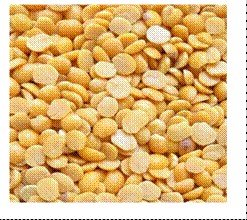
The genome of pigeonpea variety ‘Asha’ (Cajanus cajan L. Millsp.) provides researchers with a highly detailed genetic blueprint that could accelerate the development of higher-yielding, climate-resilient and nutritionally improved pulse varieties.
The breakthrough is significant for India’s food system because pigeonpea is one of the country’s major pulse crops and an important source of dietary protein.
From world’s first pulse draft genome to complete T2T sequence
The latest achievement builds on work by ICAR–National Institute for Plant Biotechnology (ICAR-NIPB), New Delhi.
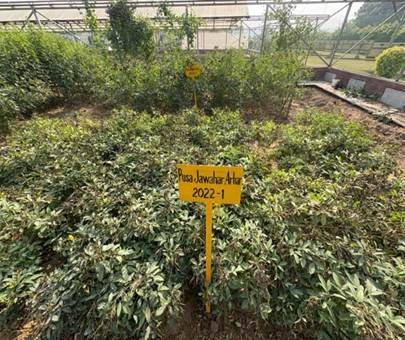
In 2011, ICAR-NIPB published the world’s first draft genome of a pulse crop, using pigeonpea variety Asha. It was also the first crop genome to be sequenced entirely in India.
An improved version was published in 2017. The latest T2T sequence now provides a substantially more complete representation of the crop’s genetic architecture.
The genome assembly, designated NIPB_CcT2T_4, contains 752.65 million base pairs of DNA assembled into 92 contigs.
It represents all 11 pigeonpea chromosomes, including all 11 centromeres and 22 telomeres, demonstrating chromosome-level completeness.
36,557 genes identified
The comprehensive annotation of the genome identified 36,557 genes, generating 48,008 mRNAs or coding sequences.
Transcriptome mapping recorded more than 99.9% read alignment, providing evidence of the high accuracy and completeness of the genome.
The assembly was deposited in the global NCBI database and released on 20 April 2026.
The reference genome will provide researchers with a foundation for advanced gene discovery, pangenome analysis, molecular breeding and genome-editing applications.
What the breakthrough could mean for tur dal production
A high-quality reference genome can help scientists identify genes linked to traits such as yield, climate resilience, pest resistance and nutritional quality.
For pigeonpea, this could shorten the development pathway for improved varieties capable of performing under changing climatic and agricultural conditions.
The technology could ultimately help breeders develop tur dal varieties that deliver improved productivity while maintaining or enhancing nutritional characteristics.
For farmers, higher-yielding and climate-resilient varieties could potentially improve productivity and strengthen farm-level resilience.
Supporting India’s pulse self-reliance
The development comes as India seeks to reduce its dependence on imported pulses.
The Government of India has launched the Mission for Aatmanirbharta in Pulses for 2025–26 to 2030–31, targeting self-sufficiency in pulse production through improved seeds, area expansion, technology adoption, assured procurement and stronger post-harvest infrastructure.
The mission aims to raise India’s pulse production to approximately 35 million tonnes by 2030–31.
The new pigeonpea genome could support this objective by strengthening the scientific foundation for improved pulse varieties and accelerating the country’s breeding and research pipeline.
Why it matters to food and hospitality
For the food and hospitality industry, the development has a longer-term supply-chain significance.
Tur dal is a staple ingredient across Indian cuisine, from everyday household meals to restaurant menus, institutional kitchens and regional food businesses. A more productive and climate-resilient domestic pigeonpea crop could contribute to greater resilience in the supply of pulses over time.
For hotels and restaurants, a stronger domestic pulse ecosystem could support:
- more stable availability of a key protein ingredient;
- greater resilience against climate-related crop disruptions;
- opportunities for increased sourcing of Indian-grown pulses;
- continued development of regional Indian cuisines built around dal and pulse-based foods; and
- a broader shift towards affordable, plant-based protein in foodservice.
The impact will not be immediate, as genomic research must translate into breeding, field trials, seed multiplication and farmer adoption before new varieties reach commercial scale. However, the reference genome provides an important scientific foundation for that process.
A boost for India’s plant biotechnology ecosystem
ICAR continues to support pulse improvement through development of high-yielding, pest-resistant and climate-resilient varieties, breeder seed production, multi-location trials and technology demonstrations through its institutes and Krishi Vigyan Kendras.
The pigeonpea T2T genome adds another layer to this ecosystem by giving scientists and breeders a detailed genetic resource for future crop improvement.
For India’s food economy, the broader significance lies in connecting genomics and agricultural innovation with pulse self-reliance, farmer productivity and long-term food security.
As India works towards greater domestic availability of pulses, breakthroughs such as the Asha pigeonpea reference genome could play a critical role in building a more productive and climate-resilient food supply chain.