Munsiyari Trout Farming Gets a Boost as Fisheries Secretary Reviews Uttarakhand’s Coldwater Fisheries Cluster
PMMSY investments of over ₹2,299 crore support coldwater fisheries across Himalayan regions; trout farming opens new opportunities for hospitality, eco-tourism and seafood exports Key Highlights Munsiyari identified as a coldwater fisheries hub: Pithoragarh’s cluster is supporting rainbow
PMMSY investments of over ₹2,299 crore support coldwater fisheries across Himalayan regions; trout farming opens new opportunities for hospitality, eco-tourism and seafood exports
Key Highlights
- Munsiyari identified as a coldwater fisheries hub: Pithoragarh’s cluster is supporting rainbow trout farming and livelihood diversification.
- ₹2,299 crore investment under PMMSY: Funding supports raceways, hatcheries, feed mills, cold storage and post-harvest infrastructure across coldwater regions.
- Trout production reaches nearly 5,000 MT annually: Production across six Himalayan states and Union Territories has increased six-fold over the past decade.
- Uttarakhand expands market access: The state has exported trout to Nepal and supplies fish to the Indo-Tibetan Border Police (ITBP) under an MoU.
- Hospitality and tourism potential: Locally sourced trout can strengthen regional cuisine, destination dining and food-led eco-tourism experiences.
Fisheries Secretary Reviews Trout Farming Development in Munsiyari
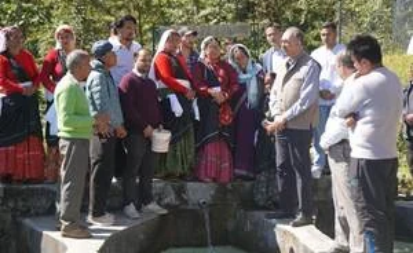
Dr. Abhilaksh Likhi, Union Secretary, Department of Fisheries, Ministry of Fisheries, Animal Husbandry and Dairying, visited Munsiyari in Uttarakhand’s Pithoragarh district on 18 October 2026 to review the development of coldwater aquaculture in the Himalayan region.
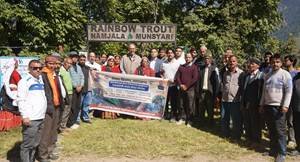
During the visit, Dr. Likhi interacted with trout farmers at Johar Matsya Swayatt Sehkarita and Namjala Trout Farm, appreciating the role of local cooperatives in developing rainbow trout farming as a sustainable livelihood. The region’s glacial streams, particularly the Gori Ganga, and favourable water temperatures provide suitable conditions for trout cultivation.
The visit highlighted how scientific fish farming and cooperative-led initiatives are helping transform traditional livelihoods into semi-commercial enterprises, with potential to expand local markets and strengthen rural economies.
PMMSY Supports Coldwater Fisheries Infrastructure
The Government of India has notified 34 fisheries clusters across the country, including Pithoragarh as a Cold Water Fisheries Cluster under the Pradhan Mantri Matsya Sampada Yojana (PMMSY).
According to the Department of Fisheries, more than ₹2,299 crore has been invested in coldwater regions under PMMSY to support infrastructure such as raceways, hatcheries, feed mills, cold storage and post-harvest facilities.
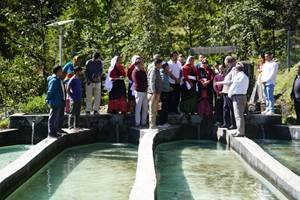
Coldwater fisheries are concentrated in Uttarakhand, Himachal Pradesh, Jammu and Kashmir, Ladakh, Sikkim and Arunachal Pradesh. These regions offer favourable natural conditions for rainbow trout and other high-value coldwater fish species.
Across these states and Union Territories, more than 5,600 raceways, 54 hatcheries, 293 cold storages and 260 feed mills have been sanctioned. Trout production has increased six-fold over the past decade, reaching nearly 5,000 metric tonnes annually.
Uttarakhand Expands Trout Production and Market Linkages
Uttarakhand has sanctioned fisheries projects worth ₹317 crore, covering facilities such as modern fish markets, landing centres and an integrated aquapark at Sitarganj.
The state has also introduced the Trout Protsahan Yojna, with an outlay of ₹170 crore. The programme aims to establish 1,500 raceways, 100 mini hatcheries and 600 cold-storage facilities by 2028–29.
The state’s first international trout export to Nepal in June 2026 marked a significant step towards expanding market access for Himalayan aquaculture. Trout is also supplied to the Indo-Tibetan Border Police under an agreement between the Uttarakhand government and ITBP.
Dr. Likhi acknowledged the contribution of the ICAR-Central Institute of Coldwater Fisheries Research (DCFR), Bhimtal, in introducing rainbow trout farming to Munsiyari and supporting farmers through scientific guidance on seed production, disease management and training.
Impact on Hospitality, Hotels and Food Tourism
The expansion of trout farming in Uttarakhand could create new opportunities for the hospitality and tourism sectors, particularly in Himalayan destinations where local food and nature-based experiences are important visitor attractions.
1. Farm-to-table opportunities for hotels and restaurants
An improved local supply of rainbow trout could help hotels, resorts, restaurants and cafés in Uttarakhand source fresh fish from regional producers. Trout-based menus can strengthen destination dining and offer visitors a distinctive Himalayan culinary experience.
2. Growth of culinary and eco-tourism
Trout farms and fisheries clusters could complement existing nature-based tourism activities through educational farm visits, local food experiences and opportunities to understand sustainable aquaculture. Such initiatives could help diversify visitor experiences in and around Munsiyari.
3. Benefits for homestays and local enterprises
Stronger links between fish farmers, homestays, local restaurants and tourism operators could help retain more tourism expenditure within mountain communities. Cooperative-led supply chains may also create opportunities for small food businesses and local entrepreneurs.
4. Better cold-chain infrastructure and supply reliability
Investment in cold storage and post-harvest facilities could improve the handling and distribution of trout, supporting more reliable supplies for hospitality businesses and access to markets beyond the production region.
These benefits will depend on the development of dependable supply chains, food-safety practices, transport infrastructure and partnerships between fisheries cooperatives and hospitality operators.
Supporting Livelihoods and Sustainable Himalayan Tourism
The Department of Fisheries has highlighted the wider importance of coldwater aquaculture for livelihood diversification, nutritional security and export potential in India’s hill states.
In Munsiyari and other border villages, trout farming can complement agriculture and tourism-related livelihoods while creating opportunities for local enterprise. The sector also has potential to support conservation awareness, including efforts concerning endangered native species such as Mahseer, provided aquaculture and conservation activities are managed responsibly.
The review reinforces the role of fisheries development in connecting rural livelihoods with emerging markets. For Uttarakhand’s hospitality and travel industry, the growth of trout farming presents an opportunity to strengthen regional food identity, encourage locally sourced dining and develop additional experiences around the Himalayan landscape.
As production capacity and market access improve, closer collaboration between fish farmers, tourism operators and hospitality businesses could help position Himalayan trout as both a regional food product and a contributor to sustainable destination development.