Madhya Pradesh Unveils Fisheries Investment and Export Guidelines 2026 to Boost Inland Fish Exports
New reservoir development projects worth ₹88.25 crore, integrated cage culture and stronger cold-chain infrastructure aim to connect fish farmers with processors, investors and international markets. Madhya Pradesh is stepping up efforts to transform its inland fisheries
New reservoir development projects worth ₹88.25 crore, integrated cage culture and stronger cold-chain infrastructure aim to connect fish farmers with processors, investors and international markets.
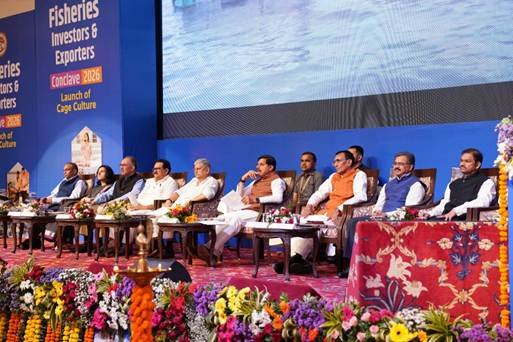
Madhya Pradesh is stepping up efforts to transform its inland fisheries sector into an investment-driven industry, with a focus on fish processing, value addition, cold-chain infrastructure and exports. At the Fisheries Investors & Exporters Conclave 2026, held in Bhopal on October 23, the State Government released its Fisheries Investment and Export Guidelines 2026, while the Department of Fisheries, Government of India, issued Standard Operating Procedures (SOPs) to help inland states tap export opportunities.
Organised by the Madhya Pradesh Fisheries Department in association with the Union Department of Fisheries and the National Fisheries Development Board (NFDB), the conclave brought together investors, exporters, fish farmers, processors, financial institutions, cooperatives and entrepreneurs from across the fisheries value chain. More than 1,000 fish farmers from Madhya Pradesh participated.
The event highlighted the need to move beyond fish production and build an integrated ecosystem connecting aquaculture with processing, packaging, quality certification, logistics and domestic and international markets.
Key Highlights
- New investment guidelines: Madhya Pradesh released its Fisheries Investment and Export Guidelines 2026 to encourage investment across the fisheries value chain.
- ₹88.25 crore reservoir development: Projects covering 49 reservoirs and five Amrit Sarovars have been approved under the 2026–27 Budget announcement.
- National export SOPs: The Centre issued operational guidance to help inland states develop export-oriented fisheries value chains.
- Fish production target: Madhya Pradesh aims to increase annual fish production from approximately 4.5 lakh tonnes to 10–11 lakh tonnes over the next two to three years.
- India’s production base: The country produced 197.75 lakh metric tonnes of fish in 2024–25, including 151.60 lakh tonnes from inland fisheries.
- Export opportunity: India’s seafood exports were valued at ₹73,890 crore in 2025–26, while inland states currently contribute only around 2% of fisheries exports, according to the Union Fisheries Minister.
- Integrated cage culture: Cage culture units were inaugurated virtually to support reservoir-based fish production.
Madhya Pradesh Targets Investment Across the Fisheries Value Chain
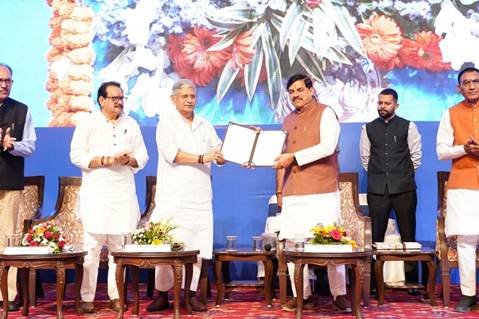
Chief Minister Mohan Yadav and Union Fisheries Minister Rajiv Ranjan Singh released the State’s Fisheries Investment and Export Guidelines 2026 and the Standard Operating Procedures for inland-state export potential.
The guidelines are intended to facilitate investment in hatcheries, fish seed and feed, reservoir fisheries, cage culture, aquatic animal health, processing facilities, cold-chain infrastructure, logistics, value addition and market development. Madhya Pradesh has also been notified by the Central Government as a Reservoir Fisheries Cluster.
The State Government highlighted three key priorities: integrating fisheries with the food-processing industry, supporting fisheries enterprises under the MSME framework, and introducing a fisheries policy to facilitate investment through land allocation and other business-related facilities.
The broader objective is to connect fish production with processing, packaging, branding and distribution, helping enterprises move towards higher-value products and more organised market access.
₹88.25 Crore Approved for Reservoirs and Amrit Sarovars
Under the Pradhan Mantri Matsya Sampada Yojana (PMMSY) and the Union Budget announcement for 2026–27, administrative approval was handed over for the integrated development of 49 reservoirs at a project cost of ₹87.556 crore and five Amrit Sarovars at ₹69 lakh.
Together, the approved projects represent an investment of approximately ₹88.25 crore. They are intended to improve reservoir utilisation, increase fish production and productivity, strengthen infrastructure and generate livelihood opportunities for fishers and fish farmers.
Integrated cage culture is another part of the State’s strategy to expand production in suitable water bodies. Madhya Pradesh has already established 316 cages in Halali Reservoir, which has been notified as a Reservoir Fisheries Cluster.
The State has also received PMMSY approvals totalling ₹910.81 crore, including a Central share of ₹305.50 crore. According to the release, fish production in Madhya Pradesh rose from 2 lakh metric tonnes in 2019–20 to 4.45 lakh tonnes in 2024–25, an increase of approximately 123%.
Inland Fisheries: A Major Opportunity for India’s Seafood Exports
India’s inland fisheries produced 151.60 lakh metric tonnes in 2024–25, accounting for nearly three-fourths of the country’s total fish production. However, the Union Fisheries Minister noted that inland states contribute only around 2% of total fisheries exports, highlighting a significant opportunity to strengthen export-oriented infrastructure and market connections.
The Centre is encouraging inland states to develop scientific cage and pen culture, improve productivity and establish stronger partnerships among fish farmers, cooperatives, investors, processors and exporters.
The National Framework for Aquaculture Traceability 2025 and the National Fisheries Digital Platform were also highlighted as tools to support digital documentation and traceability across the aquaculture value chain. The Marine Products Export Development Authority (MPEDA) is expected to assist inland-state exporters with market intelligence.
The national SOPs emphasise identifying export-suitable freshwater species and target markets, establishing fish collection centres and processing hubs, improving quality certification and traceability, and maintaining engagement with international buyers.
Freshwater species such as Pangasius and Tilapia have been identified as growth opportunities. The Department of Fisheries has outlined a target of increasing their share of seafood exports from approximately 2% to 10% over the next five years.
Production Expansion and Employment Potential
Madhya Pradesh Chief Secretary Ashok Barnwal outlined a target to increase the State’s fish production to 10–11 lakh tonnes over the next two to three years through modern fisheries technologies and better use of water resources.
The State estimates that this expansion could generate an additional ₹5,000 crore in annual income for the fisheries sector and benefit at least 50,000 people. These figures represent stated targets and projections rather than achieved outcomes.
The conclave also recognised the importance of financial access and enterprise development. Certificates were distributed to beneficiaries under fisheries-related initiatives, including Kisan Credit Card facilities, fisheries cooperatives, start-ups and performance grants under the Pradhan Mantri Matsya Kisan Samridhi Sah-Yojana (PM-MKSSY).
Impact on Hospitality, Food Processing, Travel and Tourism
Food processing and seafood businesses: Greater investment in processing, packaging, cold storage and quality assurance could create opportunities for seafood processors, distributors and suppliers serving hotels, restaurants, institutional kitchens and organised food-service businesses. The commercial impact will depend on implementation, supply consistency and market access.
Hotels and restaurants: A stronger inland fish supply chain could expand sourcing options for hospitality operators, particularly for freshwater fish such as Rohu, Catla, Tilapia and Pangasius. Reliable cold-chain logistics and food-safety standards will be important to translate higher production into dependable kitchen supplies.
Exports and value-added products: Improved processing and traceability could support the development of export-oriented and value-added products, including ready-to-cook formats. These developments may also benefit businesses supplying processed seafood to hospitality and retail channels.
Travel and tourism: The conclave does not announce a specific fisheries-tourism programme. However, investment in reservoir fisheries and associated local enterprise could complement broader rural and destination-based economic development where suitable tourism infrastructure and visitor activities are developed.
Industry Takeaway
The Fisheries Investors & Exporters Conclave 2026 signals a policy push to connect inland fish production with investment, processing, traceability and export markets. For hospitality and food-service businesses, the most relevant developments will be the availability of consistent-quality freshwater fish, stronger cold-chain networks and the emergence of organised suppliers capable of meeting institutional procurement requirements.
The success of this transition will depend on implementation of the new guidelines, infrastructure development, export certification, logistics and sustained collaboration between fish farmers, processors, investors and buyers.