BRICS Tourism Working Group Meets in Jaipur to Advance Sustainable, Seamless and Skilled Travel
India’s BRICS Chairship puts AI, responsible tourism, skilling and seamless travel at the centre of tourism cooperation Key Highlights India hosted the 2nd BRICS 2026 Tourism Working Group Meeting in Jaipur on August 19. Discussions focused on AI
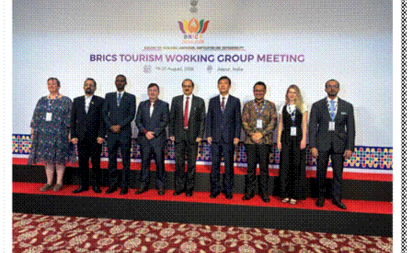
India’s BRICS Chairship puts AI, responsible tourism, skilling and seamless travel at the centre of tourism cooperation
Key Highlights
- India hosted the 2nd BRICS 2026 Tourism Working Group Meeting in Jaipur on August 19.
- Discussions focused on AI and tourism, sustainability, tourism skilling and seamless travel.
- The meeting was held under the theme “Building for Resilience, Innovation, Cooperation and Sustainability.”
- Delegates will visit Hawa Mahal, City Palace and Amer Palace as part of the Jaipur programme.
- Outcomes from the meeting will feed into the BRICS Tourism Ministers’ Meeting on August 21.
India has placed sustainability, artificial intelligence, tourism skilling and seamless travel at the centre of its BRICS tourism agenda as delegates from BRICS member states met in Jaipur for the 2nd BRICS 2026 Tourism Working Group (TWG) Meeting on August 19.
Hosted by the Ministry of Tourism under India’s BRICS Chairship, the meeting was chaired by Bhuvnesh Kumar, Secretary, Ministry of Tourism.
The meeting followed the first BRICS 2026 Tourism Working Group meeting, held virtually on May 25, and focused on strengthening cooperation among member countries as the global tourism sector adapts to technological change, evolving traveller expectations and growing sustainability requirements.
Four priorities drive India’s BRICS tourism agenda
The discussions continued around four thematic priorities identified under India’s BRICS Chairship:
- Artificial Intelligence and Tourism
- Sustainability and Responsible Tourism
- Tourism Skilling and Capacity Building
- Tourism Exchanges and Seamless Travel Facilitation
The Working Group identified opportunities for greater cooperation in the responsible use of emerging technologies, community-centred tourism, sustainable destination development, human capital development and improved connectivity.
AI and smart tourism gain prominence
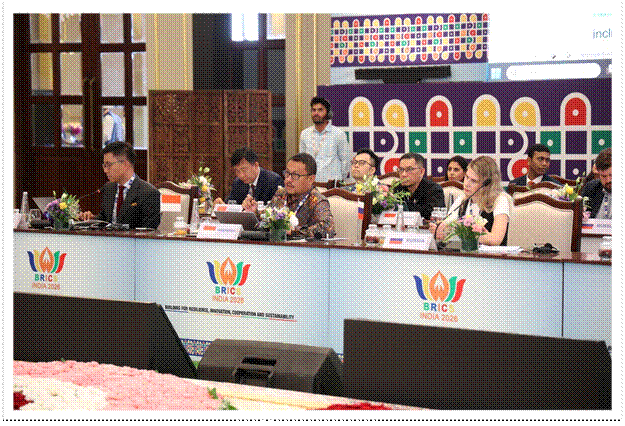
Artificial intelligence has emerged as one of the key areas of discussion as tourism businesses worldwide increasingly respond to changing traveller expectations and technology-led transformation.
For destinations and tourism companies, responsible adoption of emerging technologies could support smarter visitor services while improving the way destinations engage with travellers.
The BRICS discussions place this technology agenda alongside sustainability, ensuring that digital transformation remains connected with responsible tourism development.
Skilling becomes a priority for tourism workforce
Tourism skilling and capacity building also featured prominently in the Working Group’s agenda.
With tourism identified as an important driver of economic growth, employment and sustainable development, cooperation on human capital could become increasingly important as hospitality and tourism businesses adapt to changing traveller needs.
For hotels, restaurants, travel companies and destination operators, stronger tourism skills can translate into improved service quality and a more capable workforce.
Seamless travel and stronger tourism exchanges
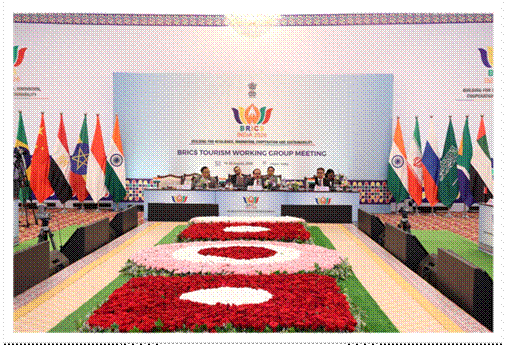
The meeting also focused on tourism exchanges and seamless travel facilitation, pointing towards stronger cooperation in making travel between BRICS destinations more accessible.
Improved connectivity and smoother travel processes can benefit tourism businesses by supporting international visitor flows, multi-country travel and greater destination exposure.
Jaipur heritage visit showcases India’s cultural tourism
As part of the programme, BRICS delegates are scheduled to undertake a technical visit on August 20, 2026, to key Jaipur tourism and heritage attractions, including Hawa Mahal, City Palace and Amer Palace.
The visit provides an opportunity to showcase Rajasthan’s architectural and cultural heritage to international tourism stakeholders while demonstrating India’s destination-based tourism offerings.
Tourism Ministers’ meeting to follow
The deliberations of the Tourism Working Group are expected to provide an important basis for the BRICS Tourism Ministers’ Meeting on August 21.
The broader agenda reflects India’s attempt to position tourism cooperation within BRICS around resilience, innovation, sustainability and human capital development.
Impact on hospitality, travel and tourism
For the hospitality industry, the BRICS tourism agenda could have implications across several areas:
Hotels and resorts: Greater international tourism exchanges and seamless travel could support demand from BRICS markets and encourage hotels to develop products suited to international travellers.
Travel companies: Stronger tourism exchanges and connectivity can create opportunities for new inbound packages, multi-destination itineraries and cross-border tourism products.
Food and beverage: International visitor growth can increase demand for destination dining, regional cuisine and culturally distinctive food experiences, particularly in heritage destinations.
Tourism workforce: Greater emphasis on skilling could help hotels, restaurants, travel operators and destination businesses improve service capabilities and international visitor readiness.
Sustainable tourism: The focus on responsible and community-centred tourism reinforces the industry’s shift towards sustainable accommodation, local experiences and destination management.
Technology: The inclusion of AI as a dedicated priority signals growing importance of technology in areas such as visitor engagement, destination services and smart tourism.
Bottom line
The 2nd BRICS 2026 Tourism Working Group Meeting in Jaipur signals a broader shift towards technology-enabled, sustainable and skills-driven tourism cooperation among BRICS members. With the Tourism Ministers’ Meeting following the Working Group discussions, the outcomes could shape future cooperation in international travel, hospitality, connectivity and responsible destination development.