World Bank Report: 49.6 Crore People Lifted Out of Poverty in India Between 2011 and 2023
Poverty rate declines from 57.7% to 16.1%, according to the October 2026 World Bank report; Centre plans a new roadmap to strengthen rural livelihoods, agricultural incomes and poverty alleviation Key Highlights: Approximately 49.6 crore people in India
Poverty rate declines from 57.7% to 16.1%, according to the October 2026 World Bank report; Centre plans a new roadmap to strengthen rural livelihoods, agricultural incomes and poverty alleviation
Key Highlights:
- Approximately 49.6 crore people in India moved out of poverty between 2011 and 2023, according to the World Bank’s October 2026 report.
- India’s poverty rate declined from 57.70% to 16.10% during the period.
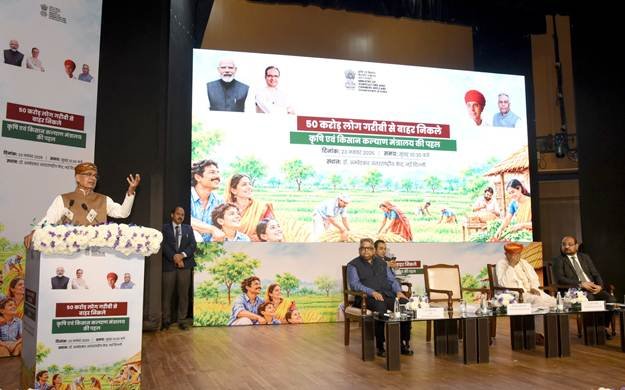
- Union Agriculture and Rural Development Minister Shivraj Singh Chouhan will chair a one-day brainstorming workshop in New Delhi on November 23, 2026.
- The workshop will focus on improving agricultural incomes, strengthening rural livelihoods and accelerating poverty reduction.
- The Ministries of Agriculture and Rural Development will jointly develop a roadmap to improve the implementation of welfare schemes.
India Focuses on Rural Development and Poverty Reduction
India has made significant progress in poverty alleviation, with approximately 49.6 crore people moving out of poverty between 2011 and 2023, according to the latest World Bank report released in October 2026. The country’s poverty rate declined from 57.70% to 16.10% during this period.
According to the Ministry of Agriculture and Farmers Welfare, government welfare initiatives, along with programmes implemented by the Ministries of Agriculture and Rural Development, have contributed to this progress.
Building on these achievements, Union Minister for Agriculture and Farmers Welfare and Rural Development Shivraj Singh Chouhan will chair a one-day workshop titled ‘Role and Contribution of Agriculture and Rural Development in Poverty Reduction in India’ on November 23, 2026, at the Ambedkar International Centre in New Delhi.
The workshop will be jointly organised by the Ministries of Agriculture and Farmers Welfare and Rural Development. Ministers of State Ramnath Thakur, Bhagirath Choudhary, Chandrashekhar Pemmasani and Kamlesh Paswan, along with senior officials and the four departmental Secretaries, are expected to participate.
Workshop to Focus on Agricultural Income and Rural Livelihoods
The primary objective of the workshop is to assess the contribution of agricultural and rural development programmes to poverty reduction and develop strategies to reach families that continue to live below the poverty line.
Discussions will focus on strengthening the implementation of government schemes at the grassroots level, increasing farmers’ incomes, improving rural livelihood opportunities and raising living standards among economically vulnerable communities.
The Union Minister will also recognise the efforts of officials and employees involved in implementing poverty alleviation initiatives and encourage them to work towards the next phase of development.
The proposed roadmap is expected to focus on improving coordination between the two ministries and ensuring that welfare programmes deliver more effective outcomes for rural households.
Impact on Hospitality, Food and Travel & Tourism
The government’s continued focus on agricultural development and rural poverty reduction has important long-term implications for India’s hospitality, food and tourism sectors.
- Food and beverage industry: Higher agricultural incomes and stronger rural livelihoods can improve farmers’ purchasing power and strengthen agricultural supply chains, benefiting food processing companies, restaurants, hotels and beverage manufacturers.
- Rural tourism: Improved rural infrastructure and household incomes can create opportunities for village tourism, farm stays, homestays and agritourism businesses.
- Hospitality employment: Stronger rural economic activity can support local entrepreneurship and employment opportunities in food services, accommodation, transport and tourism-related businesses.
- Local food experiences: Better agricultural livelihoods can help preserve regional food traditions and encourage culinary tourism built around local produce and traditional cuisines.
Industry Perspective: While the workshop primarily focuses on poverty alleviation and rural development, its proposed emphasis on agricultural income and livelihood generation could support the broader rural tourism and hospitality ecosystem. Stronger rural economies can create new destinations, local food experiences and business opportunities, provided they are accompanied by tourism infrastructure, market access and hospitality skills development.