India Conducts National VAJRA-SAT Exercise to Strengthen Preparedness for Foot-and-Mouth Disease SAT-1
Two-day tabletop exercise in Bengaluru brings together 83 participants from 25 States and three Union Territories to strengthen early detection, laboratory diagnosis, surveillance and coordinated outbreak response Key Highlights National Tabletop Exercise VAJRA-SAT conducted on November 4–5,
Two-day tabletop exercise in Bengaluru brings together 83 participants from 25 States and three Union Territories to strengthen early detection, laboratory diagnosis, surveillance and coordinated outbreak response
Key Highlights
- National Tabletop Exercise VAJRA-SAT conducted on November 4–5, 2026, in Bengaluru.
- Organised by the Department of Animal Husbandry and Dairying (DAHD) in coordination with ICAR-NIVEDI.
- 83 participants from 25 States and three Union Territories take part in the exercise.
- Focus on preparedness for Foot-and-Mouth Disease (FMD) serotype SAT-1, which has not been reported in India.
- Simulated outbreak scenarios cover surveillance, laboratory confirmation, animal movement control, emergency vaccination and risk communication.
- Separate technical meeting discusses FMD-free compartmentalisation of semen production centres and semen banks.
VAJRA-SAT Exercise Strengthens India’s Preparedness Against FMD SAT-1
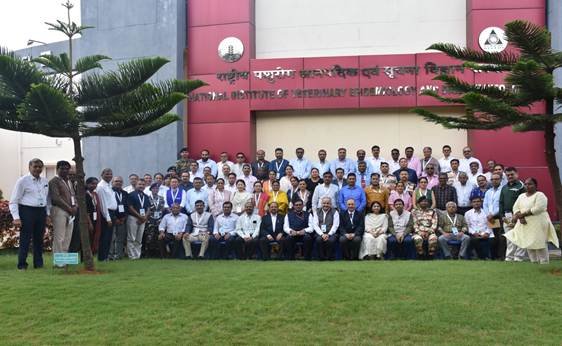
Bengaluru, November 6, 2026: India has strengthened its preparedness framework for potential Foot-and-Mouth Disease (FMD) serotype SAT-1 outbreaks following the conclusion of the two-day National Tabletop Exercise ‘VAJRA-SAT’ in Bengaluru. Organised on November 4–5 by the Department of Animal Husbandry and Dairying (DAHD), Government of India, in coordination with ICAR-National Institute of Veterinary Epidemiology and Disease Informatics (ICAR-NIVEDI), the exercise focused on improving early disease detection, rapid diagnosis and coordinated response to transboundary animal diseases.
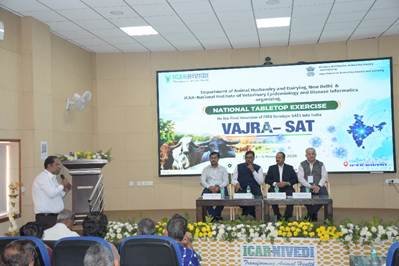
Held under the theme “Detect Early, Confirm Fast, Contain Together,” the exercise brought together 83 participants from 25 States, three Union Territories and key national institutions. Participants included representatives from State Animal Husbandry Departments, ICAR institutions, veterinary diagnostic laboratories, veterinary universities, vaccine manufacturers, and defence and border guarding agencies.
The exercise was organised as a proactive preparedness measure to safeguard livestock health, farmers’ livelihoods and the livestock economy.
FMD SAT-1 Not Reported in India; Exercise Focuses on Early Preparedness
The Department highlighted that FMD serotype SAT-1 has not been reported in India. However, its geographical spread beyond Africa to parts of West Asia has underscored the importance of strengthening preparedness and surveillance systems.
Through simulated outbreak scenarios, participants examined the steps required to respond effectively to a possible introduction of the disease. Discussions covered:
- Early detection and disease surveillance.
- Laboratory confirmation and rapid diagnosis.
- Epidemiological investigation and intelligence.
- Animal movement control and containment measures.
- Emergency vaccination preparedness.
- Risk communication and public awareness.
- Coordination between Central and State agencies.
The tabletop format enabled participating institutions to assess response mechanisms, identify preparedness gaps and discuss coordinated action in the event of an outbreak.
Veterinary and National Agencies Highlight Surveillance and Laboratory Readiness
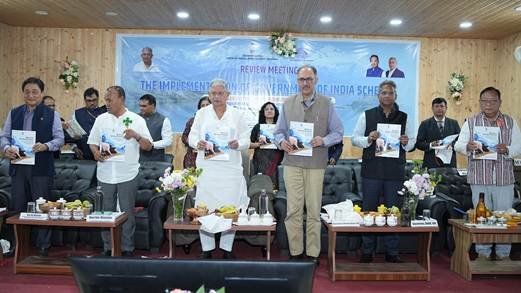
The exercise was inaugurated on November 4 by Dr. Naveena B.M., Animal Husbandry Commissioner, DAHD, who emphasised advance preparedness, early disease detection, timely response and effective coordination between Central and State agencies.
Dr. Baldev R. Gulati, Director, ICAR-NIVEDI, highlighted the evolving epidemiological situation of FMD SAT-1 and the importance of risk-based surveillance, epidemiological intelligence and early warning systems.
Dr. J.K. Mohapatra, Director, ICAR-National Institute of Foot-and-Mouth Disease (ICAR-NIFMD), stressed the need for laboratory preparedness, rapid diagnosis and vaccine readiness.
Brigadier M.M. Ramachandra, Director, National Security Council Secretariat, underlined the importance of inter-agency coordination and border vigilance to prevent the spread of transboundary animal diseases.
Focus on Regional Diagnostic Laboratories and Inter-State Coordination
The concluding session on November 5 was chaired by Shri Rama Shankar Sinha, Additional Secretary (Livestock Health), DAHD.
He emphasised strengthening preparedness at both national and State levels, along with improving laboratory diagnostic capacity. This includes regional FMD laboratories and Regional Disease Diagnostic Laboratories (RDDLs), with technical support from ICAR-NIFMD.
Participants identified timely reporting, rapid laboratory confirmation, continuous surveillance, movement control, vaccine preparedness and inter-State coordination as essential components of an effective response.
The observations and recommendations emerging from VAJRA-SAT are expected to support the development of appropriate preparedness and response strategies for FMD SAT-1.
Separate Meeting Discusses FMD-Free Compartmentalisation
Alongside the national exercise, a technical meeting on FMD-free compartmentalisation was held on November 5, 2026. It was co-chaired by the Additional Secretary (Livestock Health) and the Animal Husbandry Commissioner, with participation from State representatives.
The discussions focused on establishing FMD-free compartmentalisation for semen production centres and semen banks. The initiative aims to strengthen disease prevention, protect valuable livestock genetic resources and facilitate safe livestock trade.
What FMD Preparedness Means for the Food and Hospitality Sector
Foot-and-Mouth Disease preparedness has implications beyond animal health, particularly for the dairy, meat, food-processing and hospitality value chains. Livestock disease outbreaks can disrupt animal production, affect farmer incomes and create challenges for the availability and movement of animal-derived products.
For hotels, restaurants, catering businesses, dairy processors and meat suppliers, stronger surveillance and rapid response systems could help reduce the risk of wider supply-chain disruption. Improved laboratory capacity, animal movement controls and disease prevention measures are also important for maintaining confidence in livestock production and related food businesses.
The focus on protecting semen production centres and genetic resources is particularly relevant to the long-term sustainability of livestock breeding programmes. While VAJRA-SAT is a preparedness exercise rather than a response to a confirmed domestic outbreak, it reinforces the importance of coordinated animal-health systems for safeguarding India’s livestock economy and the businesses that depend on it.