Sikkim Records 79% Growth in Milk Production; Centre Announces Siri Cattle Centre of Excellence and Dairy Plant Modernisation
Union Minister Rajiv Ranjan Singh inaugurates Sikkim Milk Union's microbiology laboratory, launches Churpi cheese traceability initiative and Fodder Plus products to strengthen dairy quality, farmer incomes and food value chains Key Highlights: Sikkim's milk production increased by
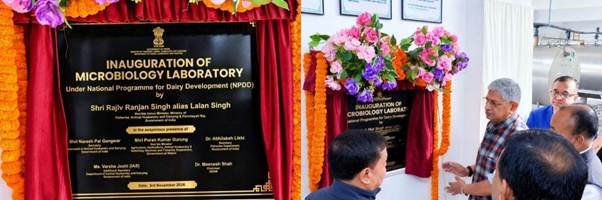
Union Minister Rajiv Ranjan Singh inaugurates Sikkim Milk Union’s microbiology laboratory, launches Churpi cheese traceability initiative and Fodder Plus products to strengthen dairy quality, farmer incomes and food value chains
Key Highlights:
- Sikkim’s milk production increased by 79%, from 1.37 lakh litres to 2.45 lakh litres per day over the last decade.
- Dairy Cooperative Societies (DCSs) increased by 88%, from 389 in 2014–15 to 733 in 2025–26.
- Daily milk supply to consumers doubled from 28,000 litres to 56,000 litres.
- Microbiology Laboratory of Sikkim Milk Union inaugurated under the National Programme for Dairy Development (NPDD).
- Churpi Traceability initiative launched to strengthen the identity and marketability of Sikkim’s traditional cheese.
- Fodder Plus products developed by Farmer Producer Organisations (FPOs) introduced.
- Centre announces support for a Centre of Excellence for indigenous Siri cattle conservation and development.
- NDDB to finance and undertake modernisation of the existing Mangan dairy processing plant.
Sikkim Strengthens Dairy Infrastructure as Milk Production Rises 79%
Sikkim is accelerating its dairy sector development through investments in quality testing infrastructure, cooperative expansion, traditional dairy product traceability and indigenous cattle conservation. The state has recorded a 79% increase in milk production over the last decade, reflecting the expansion of its organised dairy network.
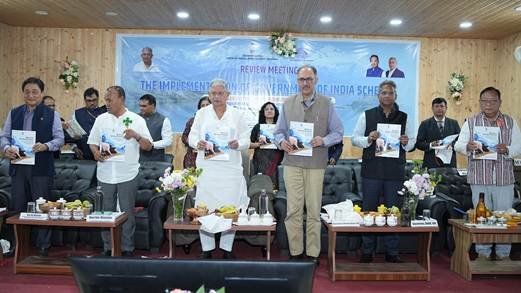
The developments were highlighted during a programme organised by the Sikkim Milk Union (SMU) in Gangtok on November 3, 2026, attended by Union Minister for Fisheries, Animal Husbandry and Dairying, Shri Rajiv Ranjan Singh (Lalan Singh).
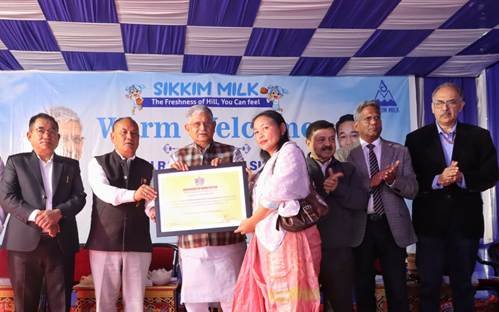
During the programme, the Minister inaugurated the Sikkim Milk Union’s Microbiology Laboratory under the National Programme for Dairy Development (NPDD), launched the Churpi Traceability initiative and witnessed the introduction of Fodder Plus products developed by Farmer Producer Organisations.
The programme also included the distribution of registration certificates to five newly established Dairy Cooperative Societies (DCSs), marking another step towards expanding organised milk procurement and strengthening farmer participation.
Milk Production Increases to 2.45 Lakh Litres Per Day
Addressing the gathering, the Union Minister highlighted the progress made by Sikkim’s dairy sector over the past decade.
According to the figures shared during the programme:
- Milk production increased by 79%, from 1.37 lakh litres to 2.45 lakh litres per day.
- Dairy Cooperative Societies increased by 88%, from 389 in 2014–15 to 733 in 2025–26.
- Daily milk supply to consumers doubled from 28,000 litres to 56,000 litres.
The Minister called upon the National Dairy Development Board (NDDB) to intensify its efforts and deploy additional human resources to help Sikkim achieve greater self-reliance in milk production and procurement.
He also emphasised the role of dairy cooperatives in maintaining milk quality, preventing adulteration and ensuring fair returns for dairy farmers.
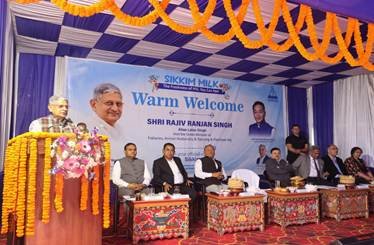
Highlighting NDDB’s intervention in Varanasi, he cited an increase in daily milk collection from 14,000 litres in 2022 to approximately 2.5 lakh litres. The price received by farmers reportedly increased from ₹28–30 to ₹42 per litre. He also highlighted additional income opportunities through cow dung utilisation in biogas plants under the GOBARdhan initiative.
Microbiology Laboratory to Strengthen Dairy Quality and Food Safety
The inauguration of the Sikkim Milk Union’s Microbiology Laboratory at Karfectar is an important step towards improving dairy quality assessment and food safety.
Established under NPDD, the facility will strengthen microbiological testing and quality assurance within the dairy processing system.
Improved testing capabilities are particularly important for organised dairy procurement and processing, where quality monitoring is essential for maintaining product standards and consumer confidence.
For dairy businesses and food service operators, stronger quality assurance infrastructure can support more reliable sourcing of milk and dairy products.
Churpi Traceability to Improve Traditional Dairy Product Marketability
Another important initiative launched during the programme was the Churpi Traceability initiative.
Churpi, a traditional dairy product associated with Sikkim and the Himalayan region, is an important part of the state’s regional food identity. The traceability initiative aims to strengthen product identification and marketability by improving the ability to track the product through its value chain.
Better traceability can support quality assurance, product credibility and stronger market positioning for traditional dairy products.
The initiative could also create opportunities to promote Churpi through specialty food retailers, regional food brands, hospitality establishments and tourism-oriented food outlets.
Fodder Plus Products and FPOs to Support Livestock Value Addition
The Minister also witnessed the launch of Fodder Plus products developed by Farmer Producer Organisations.
The initiative highlights the importance of strengthening fodder availability and farmer collectives while creating diversified income opportunities within the livestock sector.
Fodder-based FPO activities can contribute to better livestock nutrition and support organised agricultural and dairy value chains.
The distribution of registration certificates to five newly established Dairy Cooperative Societies further supports the expansion of grassroots dairy institutions and collective milk marketing.
Centre of Excellence for Indigenous Siri Cattle; Mangan Dairy Plant to Be Modernised
The Union Minister announced that the Central Government would sanction funds for establishing a Centre of Excellence for the conservation and development of indigenous Siri cattle.
The proposed centre will focus on improving the genetic potential and milk productivity of the breed through advanced breeding technologies, including In Vitro Fertilisation (IVF). The Minister invited the Sikkim Government to submit a formal proposal for consideration.
He also announced that NDDB would finance and undertake comprehensive modernisation of the existing dairy processing plant in Mangan district, following the model implemented in Mizoram.
The proposed modernisation is expected to strengthen dairy processing capacity and support the expansion of the state’s milk procurement and distribution network.
Impact on Hospitality, Food Processing and Travel & Tourism
Sikkim’s expanding dairy production, improved quality testing infrastructure and traditional food product traceability could create new opportunities for the hospitality and tourism industries.
1. Hotels, Resorts and Restaurants
The increase in milk production and consumer supply could support the availability of locally sourced milk and dairy products for hotels, resorts, cafés and restaurants. A stronger cooperative procurement network may also improve supply reliability.
2. Churpi Cheese and Culinary Tourism
The Churpi Traceability initiative could help strengthen the identity of this traditional regional product. Better product recognition and traceability could create opportunities for its inclusion in specialty restaurant menus, local food experiences, souvenir shops and regional food festivals.
3. Food Processing and Specialty Dairy Products
The microbiology laboratory and proposed modernisation of the Mangan dairy plant could support improvements in dairy quality assessment and processing capabilities. These developments may create opportunities for value-added products such as cheese, yoghurt, butter and other dairy-based foods.
4. Local Sourcing and Farm-to-Table Experiences
A stronger dairy cooperative network could encourage hospitality businesses to source more ingredients locally. This could support farm-to-table concepts and strengthen connections between rural dairy producers and tourism establishments.
5. Rural Entrepreneurship and Livelihoods
Fodder Plus products and FPO-led activities could strengthen the livestock supply chain and encourage local entrepreneurship. Improved farmer incomes may also support economic activity in rural and tourism-linked communities.
6. Sikkim’s Regional Food Identity
The promotion of Churpi, indigenous Siri cattle and locally produced dairy products could strengthen Sikkim’s food identity. These products offer opportunities to integrate agriculture, traditional food culture and tourism-based experiences.
Dairy Growth Opens New Opportunities for Sikkim’s Food and Hospitality Sector
Sikkim’s reported 79% growth in milk production and 88% increase in dairy cooperative societies highlight the expansion of its organised dairy ecosystem.
The latest initiatives, including the microbiology laboratory, Churpi traceability, Fodder Plus products, Siri cattle conservation and Mangan dairy plant modernisation, aim to strengthen the sector from production and quality assurance to processing and marketing.
For the hospitality and tourism industry, the developments offer opportunities to expand local sourcing, promote traditional dairy products and create stronger links between farmers, food processors, hotels and restaurants. The proposed integrated development of Sikkim’s dairy value chain could further strengthen the state’s regional food economy and tourism-linked culinary offerings.