Sikkim to Get ₹3.75 Crore Fisheries Projects Under PMMSY; Union Minister Rajiv Ranjan Singh to Review Organic Fish Farming Initiatives
Minister’s November 2–3 visit to Gangtok and Mangan to focus on sustainable aquaculture, organic fish farming, fish farmers’ credit support and stronger market linkages Key Highlights: Fisheries projects worth ₹375 lakh (₹3.75 crore) to be inaugurated under
Minister’s November 2–3 visit to Gangtok and Mangan to focus on sustainable aquaculture, organic fish farming, fish farmers’ credit support and stronger market linkages
Key Highlights:
- Fisheries projects worth ₹375 lakh (₹3.75 crore) to be inaugurated under the Pradhan Mantri Matsya Sampada Yojana (PMMSY).
- Union Minister Rajiv Ranjan Singh to launch the Standard Operating Procedure (SOP) for organic fish farming.
- Kisan Credit Cards to be distributed among fish farmers, along with financial assistance under the Mukhya Mantri Matsya Uthpadhan Yojana (MMMUY).
- Minister to review fisheries infrastructure, marketing facilities and cooperative activities in Gangtok and Mangan.
- Sikkim’s organic fisheries clusters to receive further attention for certification, traceability, processing and premium market access.
Fisheries Development and Organic Aquaculture in Focus During Sikkim Visit
Sikkim is set to receive fresh impetus to its fisheries and aquaculture sector, with Union Minister for Fisheries, Animal Husbandry and Dairying, Shri Rajiv Ranjan Singh (Lalan Singh), scheduled to visit Gangtok and Mangan districts on November 2–3, 2026. The visit will focus on reviewing fisheries development initiatives, promoting organic fish farming and strengthening infrastructure and market opportunities for fish farmers.
During the two-day visit, the Minister will inaugurate fisheries projects worth ₹375 lakh (₹3.75 crore) under the Pradhan Mantri Matsya Sampada Yojana (PMMSY) and launch the Standard Operating Procedure (SOP) for organic fish farming. He will also interact with fish farmers and distribute Kisan Credit Cards to beneficiaries, along with cheques under the state government’s Mukhya Mantri Matsya Uthpadhan Yojana (MMMUY).
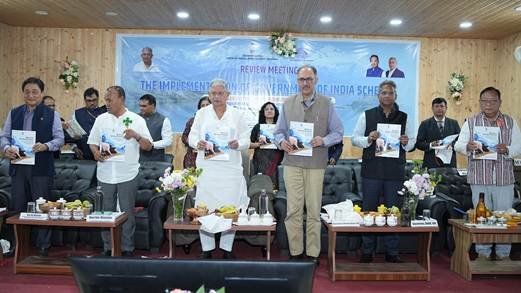
The visit is part of the Centre’s structured mechanism for periodic visits by Union Ministers to the Northeastern Region, aimed at reviewing the implementation of development programmes and gathering direct feedback from stakeholders.
Focus on Fish Marketing, Cooperatives and Farmers’ Credit
An important part of the Minister’s programme will be a visit to the Live Fish Vending Centre at Mangshila, where he will interact with members of the Fish Farmers’ Cooperative Society. The discussions will focus on practical challenges in fish marketing, cooperative activities and requirements for improving market access.
The Minister will also review fisheries development initiatives and PMMSY interventions at the District Administrative Centre (DAC), Mangan. Feedback from fisheries stakeholders will help identify implementation gaps and development requirements, particularly in remote and geographically challenging areas of Sikkim.
Participation from senior officials of the Government of Sikkim, district administration, the Department of Fisheries, ICAR fisheries institutes, fish farmers, cooperative societies and Fisheries Farmer Producer Organisations (FFPOs) is also expected.
PMMSY’s Cluster-Based Approach to Strengthen the Fisheries Value Chain
The Centre is promoting an integrated, cluster-based approach to fisheries development, connecting production with processing, value addition and marketing within identified geographical areas.
Under PMMSY, 34 fisheries production and processing clusters have been notified across the country, including organic fisheries clusters in Sikkim and Meghalaya. These clusters are intended to improve aggregation, infrastructure, processing capabilities and market linkages while enabling fish farmers to obtain better returns.
The Northeastern Region has considerable potential for sustainable fisheries and aquaculture because of its freshwater resources, diverse aquatic ecosystems and rich biodiversity. The development of certified organic and premium fishery products, supported by reliable traceability systems and quality standards, could help the region access high-value domestic and international markets.
The emphasis on certification, processing, value addition and export readiness is expected to strengthen the commercial potential of Sikkim’s fisheries sector and create additional livelihood opportunities across the value chain.
Impact on Hospitality, Food and Travel & Tourism
The development of organic fisheries and improved fish marketing infrastructure in Sikkim could create opportunities beyond the fisheries sector, particularly for the state’s hospitality and tourism industries.
- Hotels and restaurants: Improved availability of locally produced, traceable and potentially certified organic fish could help hotels, resorts and restaurants expand their regional food offerings and promote locally sourced cuisine.
- Local food experiences: Organic fish farming could strengthen Sikkim’s culinary identity, creating opportunities for local food festivals, regional seafood menus and farm-to-table dining experiences.
- Tourism and rural livelihoods: Stronger fisheries cooperatives and farmer incomes could support rural entrepreneurship and diversify livelihood opportunities in tourism-linked communities.
- Food processing and supply chains: Investment in processing, cold-chain facilities and value addition could improve the movement of fish products from production centres to hotels, restaurants and retail markets.
- Premium market positioning: Certified and traceable fishery products could help position Sikkim as a destination for sustainable food production, supporting its broader eco-tourism and responsible tourism appeal.
Strengthening Sikkim’s Position in Sustainable Fisheries
The Union Minister’s visit is expected to provide further momentum to Sikkim’s fisheries development through infrastructure investment, organic aquaculture, institutional support and stronger market connections.
For the hospitality and tourism sector, the developments are particularly relevant because a stronger local fisheries value chain can improve regional food sourcing, encourage culinary innovation and create closer connections between farmers, food businesses and tourism enterprises. The long-term opportunity lies in integrating sustainable fish production with processing, hospitality procurement and premium food experiences across the Northeastern Region.