ICAR’s New Soybean Varieties Show Promise of Doubling Yields, Offering Potential Benefits for India’s Food Supply Chain
NRC 268 and NRC 270 record preliminary yields of around 20 quintals per hectare despite adverse weather conditions, compared with India’s average soybean productivity of 10–11 quintals per hectare Key Highlights Improved soybean varieties: ICAR–National Soybean Research
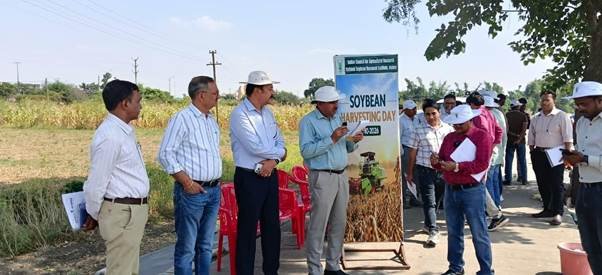
NRC 268 and NRC 270 record preliminary yields of around 20 quintals per hectare despite adverse weather conditions, compared with India’s average soybean productivity of 10–11 quintals per hectare
Key Highlights
- Improved soybean varieties: ICAR–National Soybean Research Institute, Indore, assessed NRC 268 and NRC 270 during its Soybean Harvest Day on 9 October 2026.
- Promising preliminary results: Harvest data from one acre under each variety indicated yields of approximately 20 quintals per hectare.
- Higher productivity potential: India’s average soybean productivity currently stands at around 10–11 quintals per hectare.
- Potential for further gains: ICAR research indicates that yields of 15–20 quintals per hectare may be achievable with improved varieties and appropriate production technologies, with 22–25 quintals possible under favourable conditions.
- Further scientific assessment: Researchers will analyse yield data across years, regions, varieties and production conditions to evaluate productivity potential.
- Relevance for food businesses: Higher and more resilient soybean production could support the supply of edible oil, soy-based ingredients and animal feed, with indirect implications for foodservice and hospitality procurement.
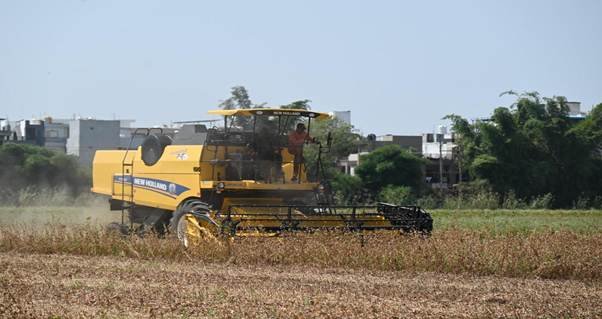
ICAR Soybean Varieties NRC 268 and NRC 270 Record Promising Preliminary Yields
The Indian Council of Agricultural Research (ICAR) has reported encouraging preliminary yield results from two improved soybean varieties, NRC 268 and NRC 270, developed by the ICAR–National Soybean Research Institute in Indore, Madhya Pradesh.
The institute assessed the varieties during a Soybean Harvest Day held on 9 October 2026. Initial data from harvesting one acre under each variety indicated yields of approximately 20 quintals per hectare, despite adverse weather conditions during the growing season.
According to the Department of Agricultural Research and Education (DARE), the findings are significant against the backdrop of India’s average soybean productivity of approximately 10–11 quintals per hectare. However, the results remain preliminary, and further scientific analysis will be required to establish how consistently the varieties can deliver these yields under different growing conditions.
The assessment is intended to help researchers understand varietal performance and identify opportunities to improve soybean productivity through improved seeds and scientific crop-management practices.
ICAR Emphasises Scientific Validation and Long-Term Yield Data
Dr M. L. Jat, Secretary of DARE and Director General of ICAR, welcomed the preliminary findings, highlighting the role of improved varieties and scientific production technologies in raising soybean productivity.
He emphasised that systematic analysis of the harvest data would help guide future research strategies and support efforts to improve yields.
The institute has also highlighted the importance of collecting and analysing productivity data over several years. Such assessments can help researchers understand differences in performance across regions, varieties and production environments, while evaluating the effectiveness of agricultural research and technology dissemination.
ICAR research and trials conducted through the institute and the All India Coordinated Research Project on Soybean indicate that productivity of 15–20 quintals per hectare may be achievable through improved varieties and appropriate production technologies. Under favourable conditions, yields could potentially reach 22–25 quintals per hectare.
These figures represent broader research-based yield potential, rather than guaranteed results for every farm or season.
What Higher Soybean Productivity Could Mean for India’s Food Economy
Soybean is an important agricultural commodity because it supplies raw material for edible oil production, soymeal and animal feed, as well as a range of processed food ingredients. Improvements in productivity could therefore have implications beyond the farm sector.
If NRC 268 and NRC 270 demonstrate consistent performance through further trials and wider cultivation, they could contribute to higher output from existing farmland. Actual benefits would depend on seed availability, regional suitability, weather conditions, input costs and farmers’ adoption of recommended cultivation practices.
Impact on Hospitality, Food Processing and Tourism
1. Potential implications for edible oil procurement
Soybean productivity influences the availability of raw material for soybean oil production. More consistent domestic output could support the edible-oil processing sector, although its effect on prices and imports would depend on overall production, demand, processing capacity and international market conditions.
For hotels, restaurants, caterers and institutional kitchens, edible-oil availability and pricing are important components of food procurement costs. The preliminary varietal results are therefore worth monitoring, but they do not yet indicate an immediate reduction in cooking-oil prices.
2. Opportunities for soy-based food products
A stronger soybean supply could support manufacturers of soy flour, textured soy protein and other soy-based ingredients used in packaged foods and foodservice applications. These ingredients can be relevant to vegetarian menus, protein-rich dishes and specialised food products offered by hotels, restaurants and catering businesses.
3. Implications for animal feed and the wider food supply chain
Soymeal is widely used in animal feed. Improvements in soybean output could support the availability of feed ingredients for poultry and livestock production, depending on processing yields and market conditions. Any resulting benefits for hospitality procurement would be indirect and would depend on how feed costs influence the prices of poultry, eggs, meat and dairy products.
4. Agricultural resilience and sustainable sourcing
The reported performance under adverse weather conditions highlights the importance of evaluating crop varieties for resilience as well as yield. If further trials confirm reliable performance across different environments, improved varieties could help strengthen agricultural supply chains and support more predictable sourcing for food businesses.
5. Potential for agricultural learning and rural experiences
As soybean research and improved cultivation practices expand, agricultural institutions and farming communities may have opportunities to showcase demonstration plots, farm visits and educational programmes. Such initiatives could complement agritourism and agricultural learning experiences, although the PIB announcement does not identify a specific tourism programme linked to these varieties.
Industry Takeaway
The preliminary performance of ICAR’s NRC 268 and NRC 270 soybean varieties points to an opportunity to improve productivity in an important oilseed crop. For India’s food economy, higher yields could eventually support the availability of edible oil, soy-based ingredients and animal-feed raw materials.
For the hospitality industry, the immediate development to watch is not a change in procurement prices, but whether further trials establish reliable yields and the varieties become suitable and accessible for wider cultivation.
Long-term validation, farmer adoption and efficient processing and distribution will determine whether these promising research results translate into meaningful benefits for food manufacturers, hotels, restaurants and the wider agricultural supply chain.