India Scales Up Air Cargo Transshipment Reform, Adds London and Copenhagen
Delhi Airport-led initiative cuts cargo transit time from 60 hours to 20 hours; network expands to Bengaluru, Ahmedabad, Mumbai and HyderabadKey HighlightsIndia expands its domestic-to-international air cargo transshipment network after a successful Proof of Concept.London
Delhi Airport-led initiative cuts cargo transit time from 60 hours to 20 hours; network expands to Bengaluru, Ahmedabad, Mumbai and Hyderabad
Key Highlights
- India expands its domestic-to-international air cargo transshipment network after a successful Proof of Concept.
- London and Copenhagen added as new international destinations.
- Bengaluru, Ahmedabad, Mumbai and Hyderabad added as domestic origin stations.
- Chennai–Delhi–Frankfurt pilot has handled 280 MT of cargo.
- Average end-to-end transit time reduced from 60 hours to 20 hours.
- Air India’s monthly cargo carriage on the expanded lanes is projected to rise by nearly 80%, from 1,763 MT to 3,183 MT.
India is scaling up its air cargo transshipment reform as the government seeks to reduce cargo handling time, improve airport efficiency and strengthen the country’s position as a global aviation and logistics hub.
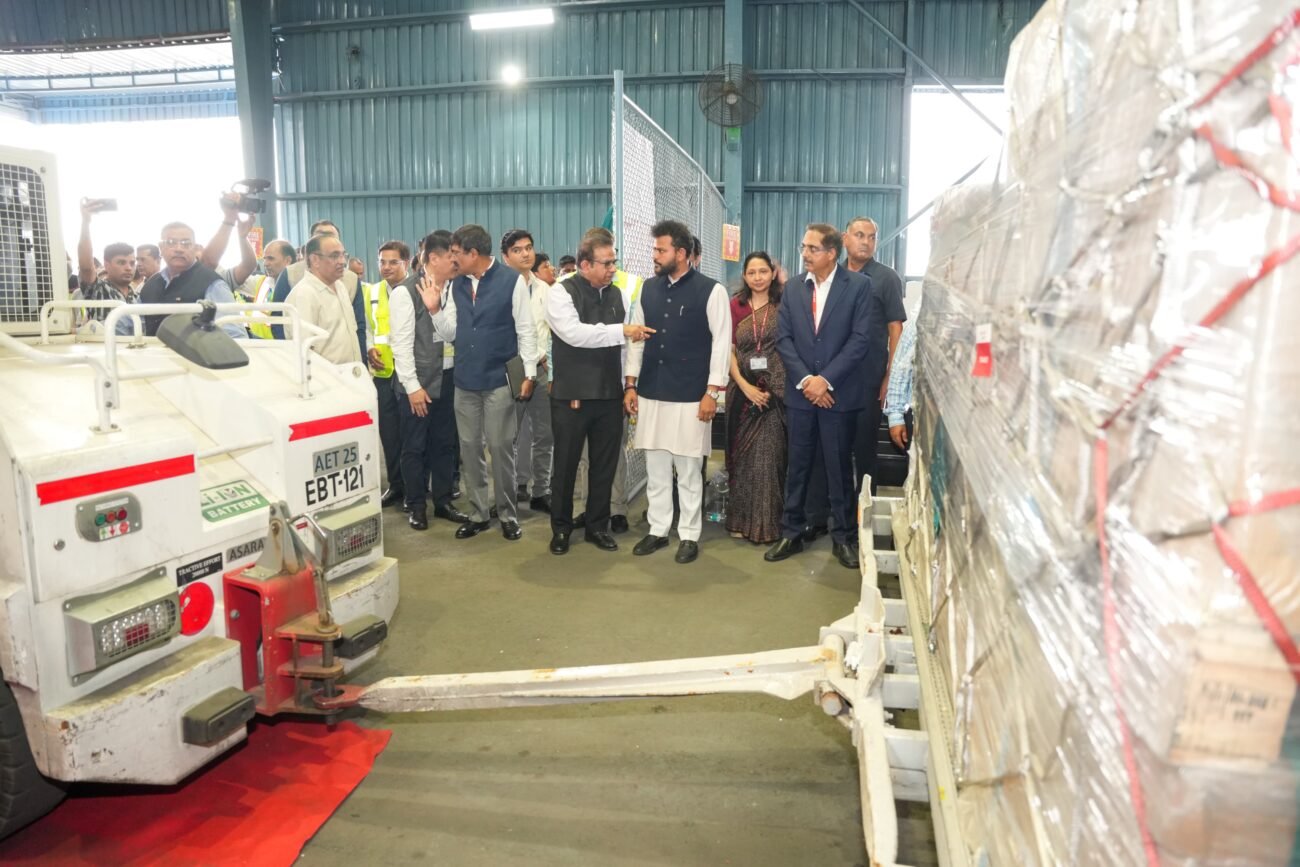
Union Civil Aviation Minister Ram Mohan Naidu flagged off the expanded phase of the transshipment cargo initiative at Delhi International Airport Limited’s (DIAL) Transshipment Excellence Centre (TEC) at Terminal 2 of Indira Gandhi International Airport.
Chennai–Delhi–Frankfurt Pilot Delivers Faster Cargo Movement
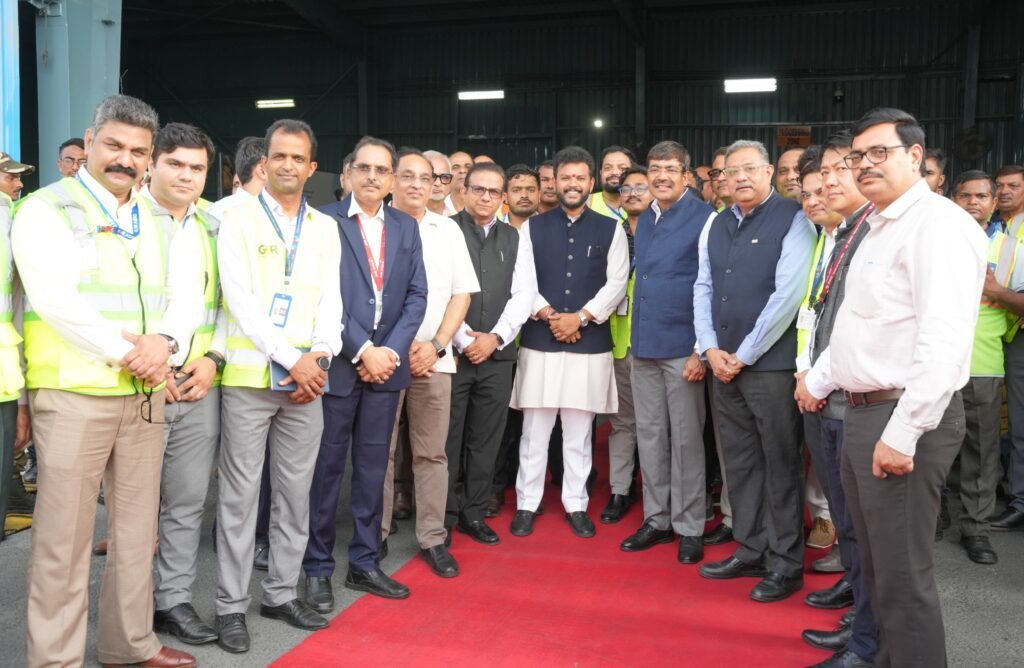
The domestic-to-international transshipment Proof of Concept began on June 20, 2026, on the Chennai–Delhi–Frankfurt sector, using DIAL’s TEC and with Air India operating the service end-to-end.
Since its launch, the pilot has transshipped 280 MT of cargo. Aircraft capacity utilisation increased from around 75% to nearly 100%.
The most significant outcome has been a reduction in average end-to-end cargo transit time from 60 hours to just 20 hours.
The government said eliminating mandatory re-screening of eligible transshipment cargo can help reduce turnaround time, cargo handling costs and congestion at airport terminals.
Six New Connections Added to the Network
Following the success of the pilot, the framework has now been expanded to four additional domestic origin stations:
- Bengaluru
- Ahmedabad
- Mumbai
- Hyderabad
Two new international destinations have also been added:
- London
- Copenhagen
With the expanded network, Air India’s monthly cargo carriage on these lanes is projected to increase from 1,763 MT to 3,183 MT, representing growth of nearly 80%.
India Targets Global Air Cargo Hub Status
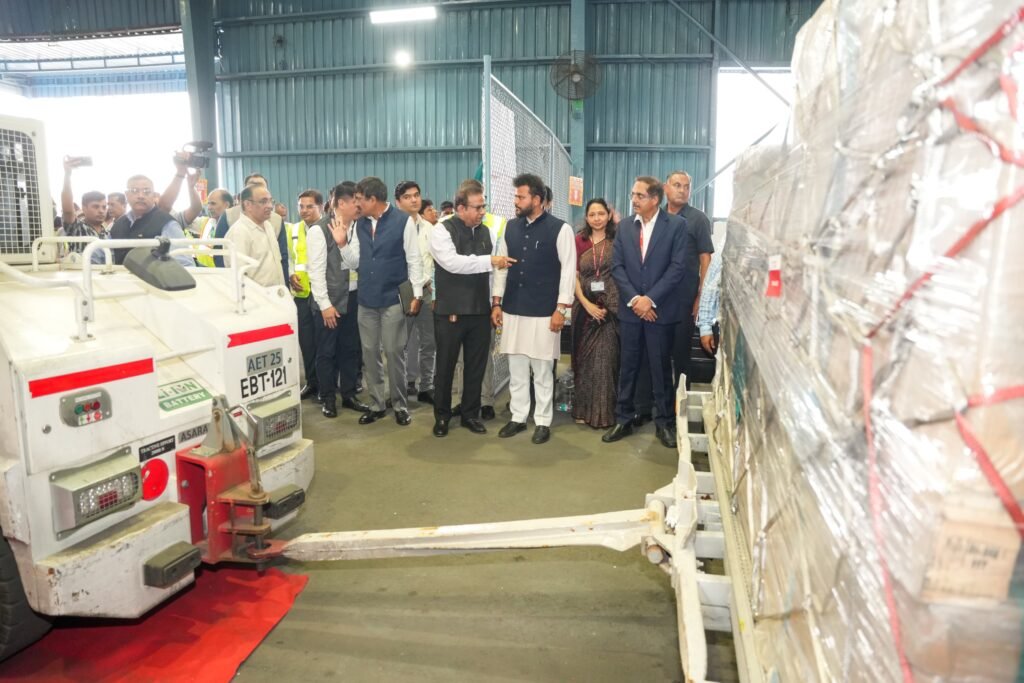
The government is positioning the reform as part of its broader strategy to develop major Indian airports into global transit hubs.
The immediate focus remains domestic-to-international transshipment, but the framework is expected to be expanded subsequently to cover international-to-international and international-to-domestic cargo movements.
India’s strategic location between markets in the East and West is also being leveraged to build its role as an international cargo transshipment hub.
The initiative follows efforts to strengthen passenger hub-and-spoke operations, with similar infrastructure and policy measures now being directed towards India’s air cargo network.
Secured Cargo Can Move Without Re-screening
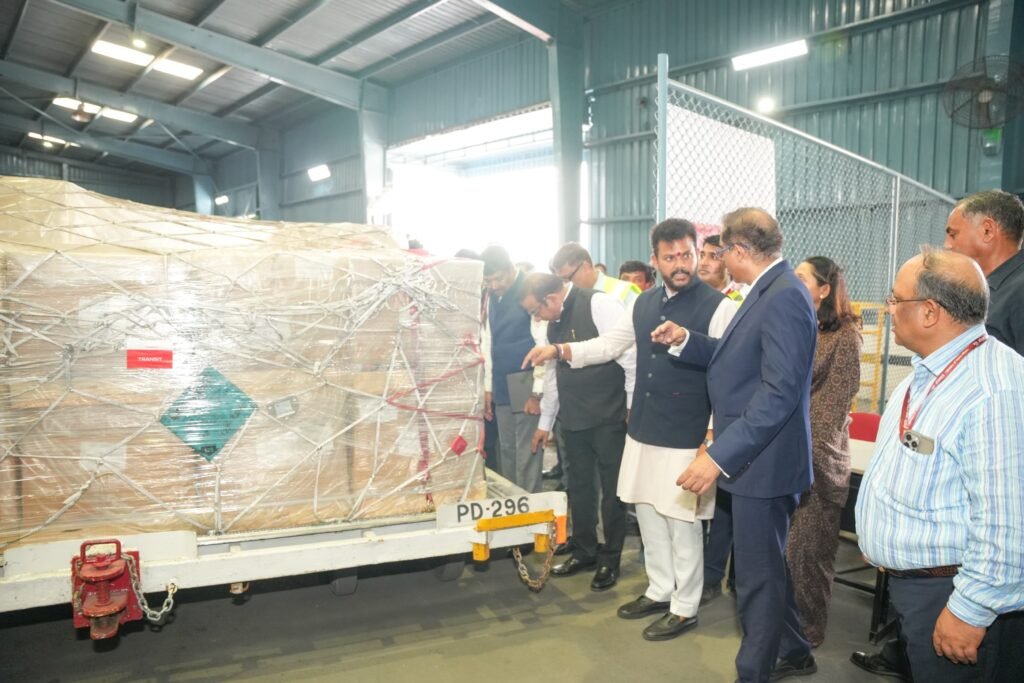
The reform is supported by a revised security framework notified through Addendum-II to AVSEC Circular No. 6/2024 by the Bureau of Civil Aviation Security (BCAS) on July 21, 2025.
Under the framework, secured transshipment cargo can be moved through dedicated Transfer Cargo Security Hold Areas (TCSHAs) without re-screening, subject to prescribed security safeguards.
The government has credited coordination between DIAL, BCAS, CISF, Customs, airlines and other stakeholders for helping address a key bottleneck in India’s air cargo ecosystem.
Additional domestic origin stations and international destinations are expected to be brought under the framework in the coming months.
Impact on Hospitality, Food and Tourism
The expansion of India’s air cargo network could have a direct and indirect impact on the hospitality and tourism ecosystem.
Food and beverage: Faster movement of cargo can benefit hotels, restaurants, caterers and food businesses that depend on imported or time-sensitive ingredients, premium products, seafood, flowers and speciality beverages.
Hotels: Improved cargo connectivity can make it easier for luxury and international hotel brands to manage global supply chains for food, equipment, furnishings and other hospitality supplies.
Tourism: Stronger international aviation hubs can improve India’s overall connectivity and reinforce major airports as gateways for international travellers.
MICE and destination events: Faster cargo movement can support international conferences, exhibitions, weddings and large-scale events requiring the movement of equipment, décor, food products and other materials.
India’s global positioning: The government’s planned expansion of the transshipment framework could help Indian airports handle a larger share of international cargo flows, strengthening the country’s wider aviation, logistics, travel and tourism ecosystem.
What Comes Next
The expansion marks a significant step in India’s effort to develop an integrated passenger and cargo hub network. With additional routes expected to be added, faster transshipment could become an important competitive advantage for Indian airports and the businesses that depend on efficient international logistics.