Next Phase of UDAN Gets ₹28,840 Crore Push as Aviation Panel Reviews Regional Connectivity and Pilot Training
Civil Aviation Consultative Committee Meets in Mysuru; FTO Network Expands to 41 Organisations and 63 Flying BasesKey Highlights₹28,840 crore awarded under the Next Phase of the UDAN regional connectivity programme.Civil Aviation Consultative Committee discusses regional
Civil Aviation Consultative Committee Meets in Mysuru; FTO Network Expands to 41 Organisations and 63 Flying Bases
Key Highlights
- ₹28,840 crore awarded under the Next Phase of the UDAN regional connectivity programme.
- Civil Aviation Consultative Committee discusses regional air connectivity, pilot training reforms and IGRUA’s transformation.
- Flying Training Organisations (FTOs) increased from 32 in 2020 to 41 in 2026.
- Flying bases expanded from 32 to 63 during the same period.
- IGRUA now averages 1,765 flying hours per aircraft annually, above the global benchmark of around 1,500 hours.
- IGRUA has reported a budget surplus for the first time in more than two decades.
- Government aims to develop India’s aviation workforce domestically to support the country’s rapidly expanding aircraft fleet.
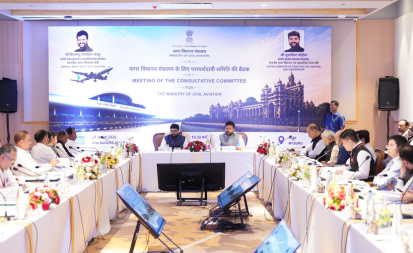
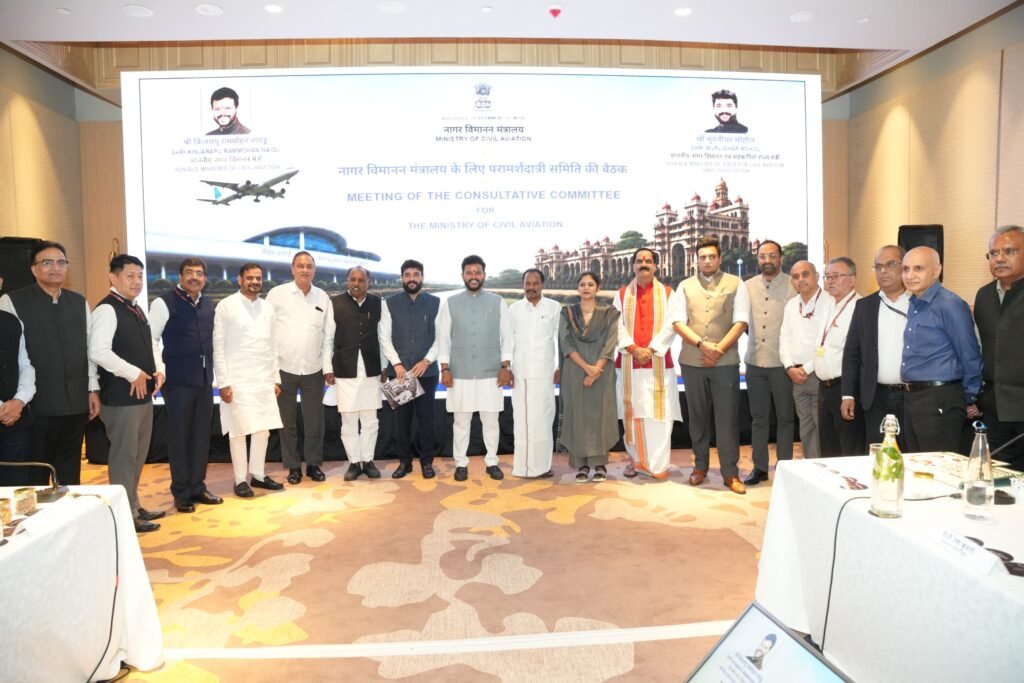
The Parliamentary Consultative Committee of the Ministry of Civil Aviation met in Mysuru, Karnataka, on August 21 to review the next phase of India’s regional air connectivity programme and reforms aimed at strengthening the country’s pilot-training ecosystem.
The meeting was chaired by Union Civil Aviation Minister Kinjarapu Rammohan Naidu, in the presence of Minister of State for Civil Aviation and Cooperation Murlidhar Mohol.
It was the first time since 2017 that the Parliamentary Consultative Committee of the Civil Aviation Ministry met outside Delhi, reflecting the government’s approach of taking policy discussions closer to regional stakeholders and destinations.
₹28,840 Crore for Next Phase of UDAN
A major focus of the meeting was the Next Phase of UDAN (Ude Desh ka Aam Nagrik) and its role in expanding regional air connectivity.
Naidu said around ₹10,000 crore had been invested over the past decade in airport development and airline viability gap funding under the regional connectivity programme.
The government is now scaling up the initiative, with ₹28,840 crore awarded under the Next Phase of UDAN.
The programme is increasingly being positioned not only as an airport development initiative but also as a tool for regional economic growth and inclusive connectivity.
Aviation Connectivity Moves Beyond Major Cities
The government highlighted the expanding role of regional aviation in connecting smaller cities and communities with India’s wider economic network.
Improved connectivity is expected to benefit sectors including agriculture, exports, businesses and local communities, while helping smaller destinations integrate with larger commercial and tourism centres.
For India’s tourism industry, this can be particularly important because air connectivity can determine whether emerging destinations are able to attract visitors at scale.
Pilot Training Ecosystem Expands
The Committee also reviewed reforms in the Flying Training Organisation (FTO) ecosystem, aimed at increasing the availability of trained pilots while maintaining aviation safety and training standards.
The number of FTOs has increased from 32 in 2020 to 41 in 2026, while the number of flying bases has almost doubled from 32 to 63.
A new FTO ranking framework has also been introduced to improve transparency and accountability, enabling aspiring pilots to make more informed decisions when selecting training organisations.
India Looks to Train Its Own Aviation Workforce
The government highlighted the growing demand for aviation professionals as Indian airlines expand their fleets.
With Indian carriers placing aircraft orders on an unprecedented scale, the Ministry said that aircraft acquisition must be accompanied by the development of a skilled and safety-conscious workforce within India.
The focus is therefore shifting towards developing domestic pilot-training capacity rather than relying on imported aviation manpower.
IGRUA Reports Higher Aircraft Utilisation
The Committee also discussed the transformation of the Indira Gandhi Rashtriya Uran Akademi (IGRUA).
The institution has increased aircraft utilisation to an average of 1,765 flying hours per aircraft annually, compared with a global benchmark of around 1,500 hours.
IGRUA has also achieved a budget surplus for the first time after more than two decades of recurring deficits, indicating an improvement in operational and financial performance.
Wider Aviation Reforms
The meeting also touched on India’s broader aviation growth, including emerging technologies such as drones and eVTOL aircraft, along with reforms in maintenance, repair and overhaul (MRO) and air cargo.
Senior officials from the Ministry of Civil Aviation, DGCA, Airports Authority of India and BCAS briefed members of the Parliamentary Consultative Committee.
Impact on Travel, Tourism and Hospitality
The expansion of regional aviation under UDAN could have a direct impact on India’s domestic tourism and hospitality markets.
New or strengthened air links can reduce travel time to emerging destinations, making them more attractive for weekend tourism, pilgrimage, leisure travel, business trips and MICE activity.
For hotels, resorts, restaurants, tour operators and destination-management companies, improved regional connectivity can expand the potential visitor base and encourage investment in destinations that previously depended heavily on road or rail access.
The development of India’s pilot-training ecosystem is equally important for the long-term travel industry. A larger domestic pool of trained aviation professionals will be critical to supporting the country’s growing airline fleet and ensuring that increased air connectivity can be sustained safely.
Overall, the policy discussions in Mysuru signal a broader shift in India’s aviation strategy — from building airports and routes alone towards creating an integrated ecosystem covering regional connectivity, skilled manpower, air cargo, MRO and next-generation aviation technologies.