Southern States Agriculture Conference Highlights Horticulture, Farmer Income and Global Market Opportunities
Hyderabad Conference Focuses on Region-Specific Farm Planning, Rabi Season Preparedness, Coconut and Cashew Growth, and International Market Access Hyderabad, September 18, 2026: The Regional Agriculture Conference for the Southern States, held in Hyderabad, brought together the
Hyderabad Conference Focuses on Region-Specific Farm Planning, Rabi Season Preparedness, Coconut and Cashew Growth, and International Market Access
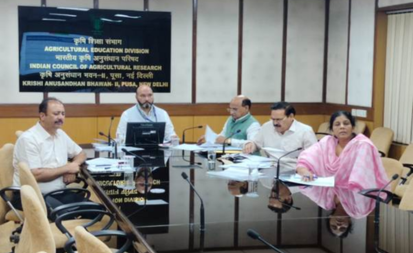
Hyderabad, September 18, 2026: The Regional Agriculture Conference for the Southern States, held in Hyderabad, brought together the Centre, southern states and Union Territories, agricultural experts, ICAR institutions, farmers and other stakeholders to discuss farmer incomes, food and nutrition security, crop diversification and region-specific agricultural growth.
Union Minister for Agriculture and Farmers’ Welfare and Rural Development Shivraj Singh Chouhan said the conference was aimed at translating discussions into measures that can improve farmers’ livelihoods, strengthen food security, generate employment and support economic growth through agriculture.
Key discussions included the potential impact of El Niño, preparations for the upcoming Rabi season, crop diversification and the expansion of horticulture and agricultural exports.
Key Highlights
- Southern states to focus on region-specific agricultural planning based on agro-climatic conditions, water availability and soil characteristics.
- Agriculture policy highlighted around food security, farmers’ livelihoods and nutritional security.
- Southern India identified as having significant potential in spices, coffee, coconut, cashew, cocoa and sandalwood.
- India’s coconut exports increased from ₹4,349 crore to ₹7,038 crore in one year, a reported 62% increase.
- States urged to prepare for new promotional schemes covering coconut, cashew and cocoa.
- Strategy proposed for the phased rejuvenation of 60–70-year-old coconut plantations.
- States encouraged to align agricultural production with international quality standards and global market demand.
- Telangana is set to receive support for construction of 2 lakh houses under PMAY-G.
- Best agricultural practices from different states will be shared for adaptation across regions.
Southern India’s Horticulture Potential Comes Into Focus
A major theme of the conference was the potential of horticulture in southern India, particularly crops and commodities with domestic consumption, export and value-addition opportunities.
The region has established production strengths in coconut, spices, coffee, cashew and cocoa, among other crops. The conference highlighted the need to maximise economic benefits for farmers by improving production, quality and market access.
The coconut sector received particular attention. According to the figures presented at the conference, India’s coconut exports rose from ₹4,349 crore to ₹7,038 crore within one year, representing 62% growth.
States were encouraged to prepare for a new coconut promotion scheme announced in the Union Budget and to consider strategies for replacing ageing plantations in phases.
Coconut, Cashew and Cocoa Could Strengthen Food and Beverage Supply Chains
For India’s food and beverage industry, greater productivity and value addition in southern India’s plantation and horticulture sectors could have implications across the supply chain.
Coconut is already widely used across Indian cuisine, bakery, confectionery, beverages and packaged food, while cashew and cocoa have applications ranging from premium culinary products to desserts and beverage programmes.
Improving farm-level productivity, quality and market linkages could therefore create opportunities for processors, food manufacturers, chefs, restaurants and hospitality businesses sourcing regional ingredients.
Region-Specific Agriculture Planning
The conference emphasised that agricultural planning needs to account for India’s varied geography and agro-climatic conditions.
Rather than applying a uniform approach to the entire country, regional conferences allow individual states to present their specific challenges and priorities. Discussions covered factors including climate conditions, water availability, soil characteristics, crop diversification and Rabi-season preparedness.
Best practices from different states are also expected to be shared so that successful agricultural interventions can potentially be adapted elsewhere.
Global Market Access and Agricultural Exports
Another focus was the potential created by India’s international trade agreements for agricultural producers.
States and agricultural stakeholders were urged to study international market requirements and identify products with demand in overseas markets. Farmers could then be encouraged to produce commodities that meet required quality and international standards.
For the food industry, this approach could strengthen India’s position as a supplier of agricultural ingredients and processed food products to global markets.
It also places greater emphasis on quality consistency, traceability, post-harvest handling and value addition across the agricultural supply chain.
Technology Cannot Replace the Agricultural Base
The conference also highlighted the continuing importance of agriculture even as technologies such as artificial intelligence, machine learning and robotics transform different sectors.
The central message was that technological tools can improve agricultural productivity and processing, but the fundamental production of crops remains dependent on farming and farmers.
This has particular relevance for