South Zonal Agriculture Conference to Focus on Horticulture, Food Processing and Climate-Resilient Agriculture
Hyderabad Meeting to Bring Southern States Together on Digital Agriculture, High-Value Crops, Food Security and Stronger Farm-to-Market Infrastructure Hyderabad, September 17, 2026: The Department of Agriculture and Farmers Welfare, Government of India, will organise the Zonal
Hyderabad Meeting to Bring Southern States Together on Digital Agriculture, High-Value Crops, Food Security and Stronger Farm-to-Market Infrastructure
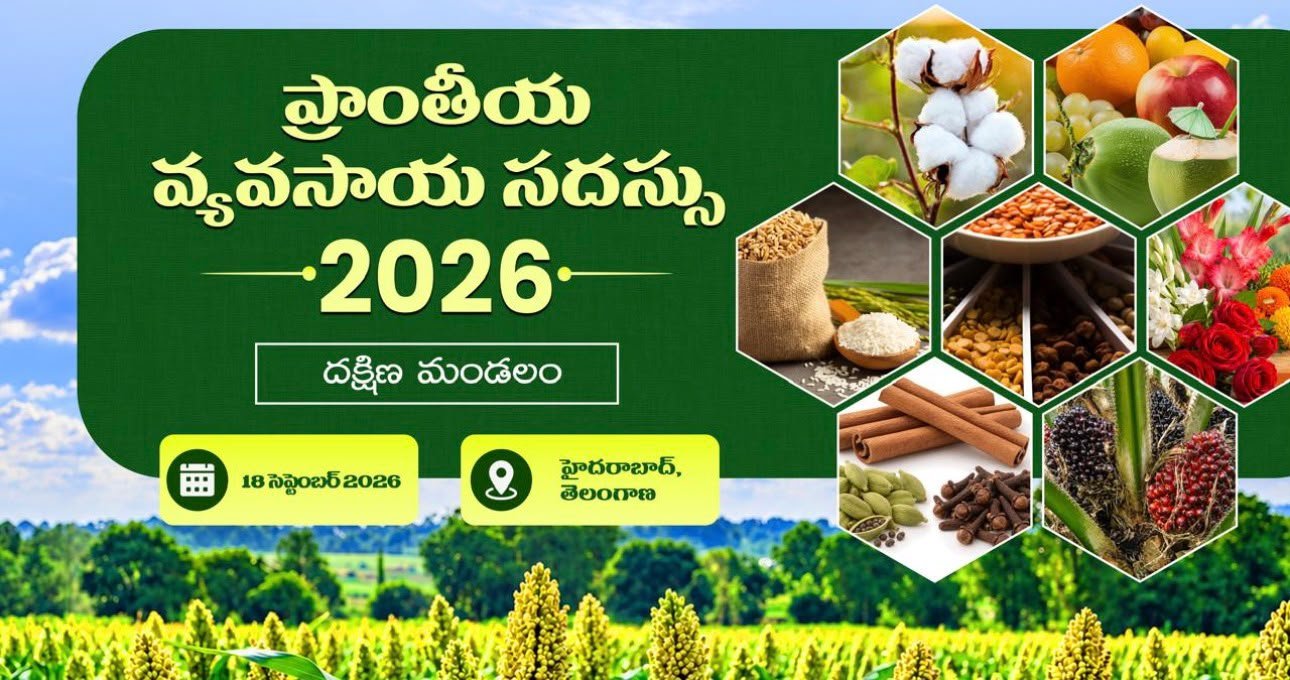
Hyderabad, September 17, 2026: The Department of Agriculture and Farmers Welfare, Government of India, will organise the Zonal Agriculture Conference – South Zone in Hyderabad on September 18, bringing together the Centre, southern states and Union Territories, agricultural experts, ICAR institutions, progressive farmers and other stakeholders.
The conference will focus on strengthening sustainable and resilient agriculture, with discussions spanning digital agriculture, high-value horticulture, food processing, edible oils and pulses, natural farming and agricultural infrastructure.
Participating states and Union Territories include Telangana, Andhra Pradesh, Karnataka, Kerala, Tamil Nadu, Andaman & Nicobar Islands, Puducherry and Lakshadweep.
Key Highlights
- South Zonal Agriculture Conference scheduled in Hyderabad on September 18, 2026.
- Focus on Digital Agriculture and Farmer Registry.
- High-value horticulture and value addition to be discussed.
- Push for greater self-reliance in edible oils and pulses.
- Natural farming and integrated farming systems on the agenda.
- Balanced fertiliser management and action against spurious pesticides and fertilisers to be examined.
- States to showcase agricultural innovations and best practices.
- Discussions to cover stronger storage, processing, value addition and marketing infrastructure.
- Focus on climate-resilient agriculture and stronger Centre-State coordination.
High-Value Horticulture and Value Addition on the Agenda
High-value horticulture will be one of the key areas of discussion at the conference, reflecting the importance of fruits, vegetables, plantation crops and other higher-value agricultural commodities to the southern economy.
The agenda also places emphasis on value addition, linking farm production with processing, storage, marketing and potentially higher-value consumer markets.
For the food industry, stronger value-addition infrastructure can help reduce post-harvest losses while creating opportunities for processed, packaged and ready-to-use agricultural products.
Strengthening the Farm-to-Market Chain
The conference will also examine infrastructure required for storage, processing, value addition and marketing.
These elements are important beyond primary agriculture because the movement from farm to consumer increasingly depends on cold chains, storage facilities, processing units, organised markets and efficient distribution networks.
A stronger farm-to-market ecosystem can benefit food manufacturers and institutional buyers while supporting more consistent sourcing for hotels, restaurants and catering businesses.
Digital Agriculture and Farmer Registry
Digital Agriculture and Farmer Registry will form another important part of the discussions.
Digital agricultural systems can help improve farmer-level data, service delivery and planning, while also supporting more targeted agricultural interventions.
The conference will examine how participating states can strengthen digital systems alongside physical agricultural infrastructure.
Food Security Through Edible Oils and Pulses
The conference will also deliberate on measures to strengthen India’s self-reliance in edible oils and pulses.
These commodities are central to Indian food consumption and have direct relevance to restaurants, institutional kitchens, food manufacturers and hospitality businesses.
Improved domestic production and supply-chain infrastructure could help strengthen the availability of these essential food commodities over the longer term.
States to Showcase Agricultural Innovations
The South Zone conference will provide a platform for states to present initiatives that could potentially be adapted elsewhere.
Examples highlighted by the Department include:
- Telangana: Rythunestham
- Andhra Pradesh: Initiatives addressing weather variability
- Karnataka: Improved pulse production practices
- Kerala: Procurement and marketplace initiatives
- Tamil Nadu: Precision farming and high-tech agriculture
The exchange of such practices is intended to facilitate wider adoption of approaches suited to different agricultural conditions.
Natural Farming and Climate Resilience
Natural farming and integrated farming systems will also feature in the discussions, alongside strategies for climate-resilient agriculture.
With changing weather patterns affecting crop production and agricultural planning, the conference is expected to examine approaches that can improve farm resilience while maintaining productivity.
Balanced fertiliser management and measures to prevent the circulation of spurious pesticides and fertilisers are also part of the agenda.
Impact on Hospitality, Food, Travel & Tourism
The conference has a primarily agricultural focus, but several agenda items have clear downstream relevance for the hospitality and food sectors.
Food & Beverage Supply Chains: Greater focus on horticulture, pulses and edible oils can influence the availability and sourcing of key ingredients used across hotels, restaurants and foodservice operations.
Food Processing: Investment in processing and value addition can expand the range of regional agricultural products available to food manufacturers and hospitality suppliers.
Farm-to-Table Opportunities: High-value horticulture and stronger farm-to-market connections can support local sourcing models and destination-based culinary experiences.
Rural and Agri-Tourism: Agricultural innovation, precision farming and integrated farming systems can create opportunities for farm visits, rural experiences and culinary tourism where supporting infrastructure and tourism development are in place.
Climate-Resilient Tourism Supply Chains: More resilient agricultural systems can help reduce disruptions to food supply chains that ultimately support hotels, restaurants and tourism businesses.
Industry Takeaway
The South Zonal Agriculture Conference places horticulture, value addition, food security, digital agriculture and climate resilience at the centre of the southern region’s agricultural agenda.
For hospitality and food businesses, the most significant area to watch is the proposed strengthening of the farm-to-market ecosystem—from production and storage to processing, value addition and marketing. This could shape future sourcing opportunities for regional ingredients while supporting the broader food economy underpinning hospitality and culinary tourism.