India Targets ₹1 Lakh Crore Seafood Exports as National Workshop Charts Roadmap for Value Addition and Global Competitiveness
Government, industry and exporters come together in Visakhapatnam to strengthen seafood value chains, cold chain infrastructure and sustainable exports Key Highlights A National Workshop on Seafood Exports was held in Visakhapatnam to develop strategies for enhancing India's
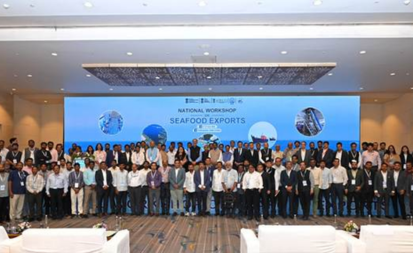
Government, industry and exporters come together in Visakhapatnam to strengthen seafood value chains, cold chain infrastructure and sustainable exports
Key Highlights
- A National Workshop on Seafood Exports was held in Visakhapatnam to develop strategies for enhancing India’s global seafood competitiveness.
- The government aims to increase seafood exports beyond ₹1 lakh crore through value addition and market diversification.
- Discussions focused on traceability, certification, sustainability, cold chain infrastructure and logistics.
- Greater emphasis was placed on ready-to-eat seafood products, deep-sea resources and export diversification.
- Policymakers, exporters, processors, startups and research institutions participated in the workshop.
- The outcomes could significantly benefit India’s hospitality, food processing and culinary tourism sectors.
India Eyes Higher-Value Seafood Exports Through Integrated Strategy
India is looking to transform its seafood export sector from a volume-driven business into a high-value global industry, with policymakers and industry leaders outlining a comprehensive roadmap during the National Workshop on Seafood Exports held in Visakhapatnam, Andhra Pradesh.
Organised by the Department of Fisheries in collaboration with the Ministry of Commerce & Industry, the workshop brought together government agencies, exporters, processors, startups, financial institutions and industry associations to strengthen India’s seafood value chain and improve its competitiveness in international markets.
The discussions align with the government’s broader objective of achieving seafood exports exceeding ₹1 lakh crore.

Focus Shifts from Volume to Value Addition
A major takeaway from the workshop was the need to move beyond exporting raw products and instead promote value-added seafood with higher international demand.
Participants emphasized:
- Development of ready-to-eat and processed seafood products
- Expansion into premium and niche international markets
- Adoption of advanced processing technologies
- Better branding of Indian seafood globally
The strategy aims to improve export earnings while creating greater value across the fisheries ecosystem.
Cold Chain and Logistics Identified as Critical Priorities
Industry stakeholders highlighted the importance of strengthening infrastructure to support export growth.
Key areas discussed included:
- Cold chain expansion
- Air cargo connectivity
- Modern processing facilities
- Quarantine infrastructure
- Multimodal logistics networks
Improved infrastructure is expected to reduce post-harvest losses while ensuring international quality standards are maintained throughout the supply chain.
Traceability and Sustainability Take Centre Stage
Global seafood markets increasingly require stringent compliance with traceability and sustainability standards.
Technical sessions focused on:
- Digital traceability systems
- Catch certification mechanisms
- Sustainable aquaculture practices
- International quality assurance standards
- Regulatory compliance for export markets
Participants agreed that stronger certification systems would enhance India’s credibility as a trusted supplier of high-quality seafood.
New Opportunities in High-Value Fisheries
The workshop also explored opportunities beyond traditional marine exports.
Discussions highlighted the potential of:
- Deep-sea resources such as tuna
- Seaweed cultivation
- Pearl culture
- Ornamental fisheries
- Cold-water fisheries
- Inland fisheries and reservoir-based aquaculture
Startups and MSMEs were identified as key drivers of innovation, value addition and export diversification.
Challenges Facing the Sector
Stakeholders identified several issues requiring policy attention, including:
- Disease management
- Rising input costs
- Limited access to quality seed
- Infrastructure gaps
- Antibiotic compliance
- Certification requirements
- Logistics bottlenecks
- Low export contribution from inland fisheries
The workshop recommended coordinated interventions involving government, industry and research institutions to address these challenges.
Impact on Hospitality, Food & Tourism
The initiatives discussed have significant implications for India’s hospitality and tourism industry.
Hotels and Restaurants
A stronger seafood supply chain can improve access to premium-quality seafood for hotels, luxury resorts and fine-dining restaurants while supporting menu innovation.
Food Processing Industry
Greater value addition and improved processing infrastructure benefit manufacturers of frozen, ready-to-cook and ready-to-eat seafood products, segments witnessing increasing domestic and international demand.
Coastal and Culinary Tourism
States with strong seafood traditions can leverage improved quality standards and branding to strengthen coastal tourism and destination-based culinary experiences.
MICE and Hospitality Infrastructure
Hosting national industry events such as this workshop generates demand for hotels, convention facilities, local transport and food services while positioning destinations like Visakhapatnam as important venues for business tourism.
Industry Takeaway
The National Workshop on Seafood Exports signals a strategic shift toward building a modern, technology-driven and value-added seafood ecosystem. For the hospitality and tourism industry, improved seafood quality, stronger cold chain infrastructure and diversified product offerings can enhance dining experiences while supporting India’s growing reputation as a global culinary destination.