India Prepares for Kharif 2026 with Surplus Seed Stocks, Farmer ID Expansion and State-Specific Agriculture Plans
Centre unveils implementation roadmap focused on quality inputs, crop insurance, natural farming and agricultural resilience as Kharif season approaches India has stepped up preparations for the Kharif 2026 season with a comprehensive strategy centred on seed
Centre unveils implementation roadmap focused on quality inputs, crop insurance, natural farming and agricultural resilience as Kharif season approaches
India has stepped up preparations for the Kharif 2026 season with a comprehensive strategy centred on seed availability, farmer identification, agricultural credit, crop insurance reforms and region-specific planning, signalling a stronger push towards food security and farm sector resilience.
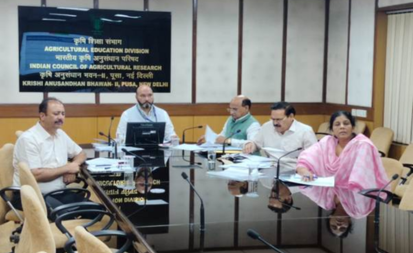
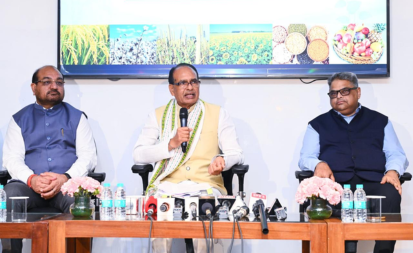
Addressing the media during the National Kharif Agriculture Conference in New Delhi, Union Agriculture Minister Shri Shivraj Singh Chouhan said the country is fully prepared for the upcoming sowing season, with adequate seed stocks, enhanced farmer databases and coordinated planning between the Centre and state governments.
The announcements form part of a broader effort to strengthen agricultural productivity while improving delivery mechanisms, quality control and farmer access to government support systems.
Key Highlights
- India has arranged 192 lakh quintals of seeds against a requirement of 173 lakh quintals
- Seed availability stands nearly 11% above projected demand
- National seed reserve of 1.74 lakh quintals created for emergency situations
- More than 9.76 crore Farmer IDs generated across the country
- State-specific agricultural roadmaps to be developed based on agro-climatic conditions
- Khet Bachao Abhiyan to run nationwide from June 1–30
- Focus on crop insurance reforms and faster claim settlements
- Campaign against fake seeds and substandard pesticides to be intensified
- Natural farming adoption expands to nearly 8 lakh hectares
- Greater emphasis on agricultural credit access and tenant farmer inclusion
Seed Preparedness Takes Priority
Ensuring timely access to quality seeds emerged as one of the government’s key priorities ahead of the Kharif season.
According to the Agriculture Ministry, the country requires approximately 173 lakh quintals of seeds for Kharif 2026, while nearly 192 lakh quintals are already available. The surplus availability is expected to provide greater flexibility in meeting regional requirements and managing weather-related uncertainties.
To strengthen preparedness further, the Centre has created a national seed reserve of 1.74 lakh quintals that can be deployed in areas affected by delayed monsoons, prolonged dry spells or resowing requirements.
Officials believe the initiative will improve resilience and reduce risks associated with increasingly unpredictable weather patterns.
Farmer ID Programme Gains Momentum
Digital agriculture continues to gain importance in policy planning.
The Ministry announced that more than 9.76 crore Farmer IDs have already been created, making it one of the largest farmer database initiatives undertaken in the country.
The Farmer ID system is expected to streamline benefit delivery, reduce paperwork and improve transparency in the distribution of subsidies, fertilisers, insurance support and other agricultural services.
For policymakers, the initiative represents an important step towards building a more targeted and technology-enabled agricultural ecosystem.
Crop Insurance and Agricultural Credit Under Review
The conference also highlighted the government’s efforts to strengthen financial support systems for farmers.
Officials acknowledged regional disparities in agricultural credit availability and indicated that discussions with banking institutions would be intensified, particularly in states where farm lending remains below national averages.
The Ministry also announced measures to improve crop insurance implementation through better crop assessment technologies, including remote sensing and enhanced crop-cutting experiments.
A notable proposal under discussion is the enforcement of interest penalties on delayed compensation payments, aimed at ensuring farmers receive timely financial support following crop losses.
State-Specific Agricultural Roadmaps Planned
Recognising the diversity of India’s farming systems, the Centre has decided to develop customised agricultural roadmaps for individual states.
The proposed plans will incorporate factors such as climate conditions, soil health, nutrient availability, suitable crop varieties and regional production patterns.
Officials believe such localised planning can improve productivity, optimise resource utilisation and enable more effective implementation of government programmes.
The initiative also aligns with the broader policy shift towards agro-climatic planning and region-specific agricultural development strategies.
Quality Control and Input Regulation Strengthened
The conference identified counterfeit agricultural inputs as a major concern.
States have been asked to increase inspections, strengthen laboratory infrastructure and expand NABL-certified testing facilities to curb the circulation of fake pesticides and poor-quality agricultural products.
A nationwide campaign against counterfeit agricultural inputs is expected to be launched, with authorities seeking stronger enforcement mechanisms to protect farmers and maintain crop productivity.
Natural Farming and Integrated Agriculture Gain Attention
Sustainable agriculture remained a major focus area during the discussions.
According to the Ministry, nearly 20 lakh farmers have registered under natural farming initiatives, covering close to 8 lakh hectares of land.
Officials also highlighted integrated farming systems as a practical solution for small and marginal farmers seeking diversified income streams and greater resilience against market and climate-related risks.
The growing policy emphasis on natural farming reflects increasing interest in reducing input costs, improving soil health and promoting environmentally sustainable agricultural practices.
Khet Bachao Abhiyan to Reach Villages Nationwide
As part of its outreach strategy, the government will launch the Khet Bachao Abhiyan from June 1 to June 30.
The campaign aims to take agricultural awareness directly to villages through interactions with farmers on balanced fertiliser use, soil health management, natural farming practices, crop planning and government support schemes.
Officials will also facilitate access to Kisan Credit Cards, mechanisation programmes and Soil Health Cards wherever feasible.
The initiative is designed to bridge the gap between policy formulation and field-level implementation.
Why It Matters to Hospitality, Foodservice and Tourism
The measures announced during the National Kharif Agriculture Conference extend beyond agriculture and have significant implications for India’s food economy.
Enhanced seed availability and stronger crop planning are expected to support stable production of cereals, pulses, fruits and vegetables that form the backbone of supply chains serving hotels, restaurants, catering companies and food manufacturers.
The government’s emphasis on horticulture, quality control and sustainable farming practices also aligns with growing demand from hospitality operators for traceable, high-quality and locally sourced ingredients.
Meanwhile, increasing focus on natural farming and region-specific agricultural development could create opportunities for farm-to-table experiences, culinary tourism, agri-tourism destinations and rural tourism initiatives. As travellers increasingly seek authentic local food experiences, stronger agricultural ecosystems can become an important driver of destination development.
Industry Outlook
The latest announcements from the National Kharif Agriculture Conference suggest that India’s agricultural strategy is evolving beyond production targets towards a more integrated model focused on quality, resilience, technology and farmer empowerment.
With surplus seed stocks, expanded digital farmer databases, stronger quality controls and state-specific planning frameworks, the government is attempting to build a more responsive agricultural ecosystem capable of supporting not only farmers but also industries linked to food, hospitality, tourism and rural development.
For the hospitality and foodservice sectors, a more stable and efficient agricultural supply chain could play a critical role in improving sourcing reliability, supporting local food ecosystems and strengthening India’s growing culinary tourism landscape.