ICAR and RIS Sign MoU to Expand Agricultural Technology Sharing Across Global South, Strengthening Food Systems and International Cooperation
Partnership through DAKSHIN – Global South Centre of Excellence to facilitate agricultural technology transfer, research collaboration, capacity-building and knowledge exchange among developing countries New Delhi, November 17, 2026: The Indian Council of Agricultural Research (ICAR) and
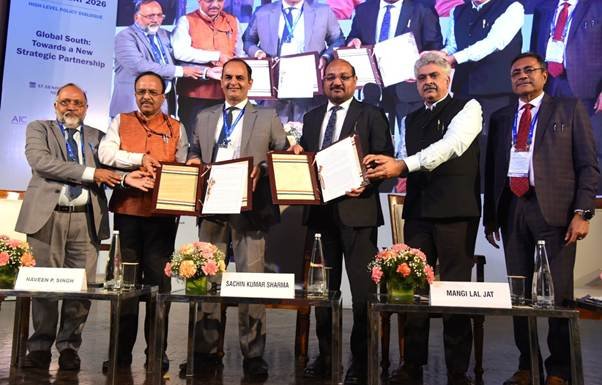
Partnership through DAKSHIN – Global South Centre of Excellence to facilitate agricultural technology transfer, research collaboration, capacity-building and knowledge exchange among developing countries
New Delhi, November 17, 2026: The Indian Council of Agricultural Research (ICAR) and the Research and Information System for Developing Countries (RIS) have signed a Memorandum of Understanding (MoU) to strengthen agricultural cooperation and knowledge exchange among countries of the Global South, opening opportunities for wider collaboration in agricultural technology, sustainable farming and food systems.
The MoU was signed in New Delhi on November 17, 2026, by Dr. M. L. Jat, Secretary, Department of Agricultural Research and Education (DARE) and Director General, ICAR, and Prof. Sachin Kumar Sharma, Director General, RIS.
Facilitated through DAKSHIN – Global South Centre of Excellence, the partnership will focus on sharing agricultural technologies, documenting successful farming practices, promoting research-based knowledge exchange and strengthening institutional capacity across developing countries.
The collaboration is aimed at facilitating the adoption of agricultural solutions suited to different agro-climatic conditions while encouraging mutual learning between India and its international partners.
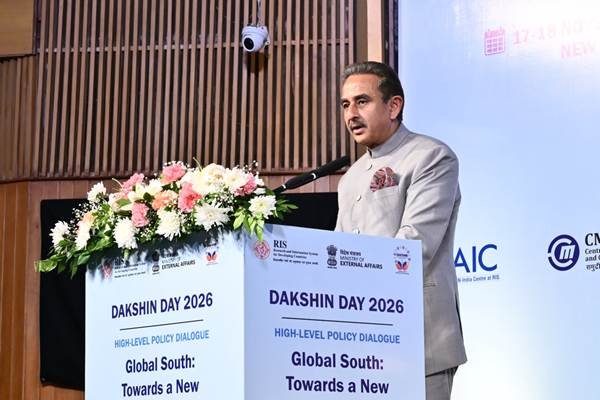
ICAR to Share Agricultural Research and Technologies with Partner Countries
ICAR brings an extensive agricultural research and extension network to the partnership. The organisation operates 114 research institutions, 152 regional research centres and 731 Krishi Vigyan Kendras (KVKs), while coordinating with nearly 80 agricultural universities.
Dr. M. L. Jat highlighted that ICAR has signed 74 MoUs with different countries and institutions, with nearly 60% involving institutions from the Global South.
He said the collaboration with RIS and DAKSHIN would strengthen South–South cooperation by facilitating the exchange and practical application of agricultural technologies, farming systems, research methods and tools.
He also emphasised the importance of identifying suitable agro-climatic conditions and research domains to connect countries where agricultural technologies and practices can be effectively adapted.
A proposed Science and Partnership Week in mid-April 2027 is expected to bring together participants from the Global South and North in India to explore demand-driven research and development partnerships.
India–Africa Cooperation and Agricultural Knowledge Exchange in Focus
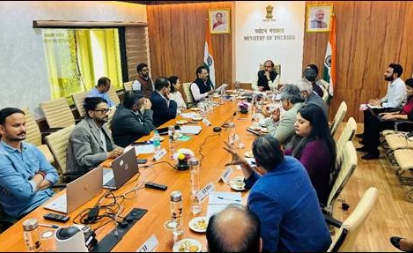
The MoU signing took place during the two-day High-Level Policy Dialogue on Global South: Towards a New Strategic Partnership, organised by RIS–DAKSHIN in partnership with the Ministry of External Affairs on November 17–18, 2026, at the India Habitat Centre, New Delhi.
Speaking at the inaugural session, Minister of State for External Affairs Shri Kirti Vardhan Singh emphasised the need for developing countries to strengthen their collective role in global decision-making, economic resilience and access to emerging technologies, including Artificial Intelligence.
He highlighted the importance of stronger India–Africa partnerships, institutional collaboration and greater participation of young researchers and policymakers.
The discussions also focused on moving beyond conventional development assistance towards co-development, shared solutions and locally relevant technologies.
RIS to Facilitate International Networks and Mutual Learning
Prof. Sachin Kumar Sharma highlighted the importance of agricultural cooperation in addressing shared challenges across developing countries.
He noted that while ICAR brings extensive agricultural research, technologies and best practices, RIS offers a strong institutional network across the Global South.
The partnership is expected to facilitate the sharing of Indian agricultural technologies with countries having similar agro-climatic conditions, while also allowing India to learn from agricultural innovations and experiences in partner nations.
Other participants, including representatives from South Africa, Eritrea and the Gates Foundation, highlighted opportunities in agriculture, food systems, digital public infrastructure, health security, institutional development and India–Africa cooperation.
Dr. Rajan Sudesh Ratna, Coordinator of DAKSHIN, reiterated the centre’s commitment to translating policy discussions into practical partnerships through country-led priorities, institutional cooperation and capacity-building.
Key Highlights
- Organisations: Indian Council of Agricultural Research (ICAR) and Research and Information System for Developing Countries (RIS).
- MoU date: November 17, 2026.
- Location: New Delhi.
- Collaboration platform: DAKSHIN – Global South Centre of Excellence.
- Primary focus: Agricultural technology sharing, knowledge exchange, research collaboration and capacity-building.
- ICAR network: 114 research institutions, 152 regional research centres and 731 KVKs.
- International cooperation: ICAR has 74 existing MoUs, nearly 60% involving Global South institutions.
- Upcoming initiative: Proposed Science and Partnership Week in mid-April 2027.
- Strategic focus: Strengthening South–South cooperation, particularly India–Africa agricultural partnerships.
Impact on Hospitality, Food & Beverage and Travel & Tourism
Although the MoU primarily focuses on agricultural research and international cooperation, its longer-term implications could extend to food production, processing, hospitality procurement and destination-based culinary experiences.
1. Potential for stronger agricultural supply chains
The exchange of agricultural technologies and best practices could help participating countries improve crop productivity, farming efficiency and the quality of agricultural produce. For hotels, restaurants and institutional kitchens, stronger agricultural systems could support more reliable long-term sourcing of fruits, vegetables, grains and other food ingredients.
2. Opportunities for food processing and manufacturing
Knowledge exchange in agricultural technologies could create opportunities for food processors and manufacturers to explore improved raw material production, post-harvest management and value addition.
This is particularly relevant to businesses involved in packaged foods, beverages, spices, processed fruits and vegetables, and other agricultural products.
3. New possibilities for regional cuisine and culinary diversity
Greater agricultural cooperation between India and other developing countries could encourage the exchange of crop varieties, food ingredients and traditional agricultural practices.
Over time, this could create opportunities for restaurants and hotels to explore international ingredients and culinary influences, particularly from African and Asia-Pacific countries.
4. Support for sustainable food procurement
The partnership’s emphasis on sharing locally relevant agricultural practices could contribute to more sustainable food production systems.
For hospitality businesses, this is relevant to responsible sourcing, farm-to-table initiatives, agricultural traceability and long-term procurement planning.
5. Opportunities for international business and knowledge tourism
The collaboration also strengthens India’s position as a platform for international agricultural research and institutional cooperation.
Future conferences, research exchanges, training programmes and the proposed Science and Partnership Week in April 2027 could generate opportunities for business travel, academic exchanges and MICE-related hospitality demand.
Industry Takeaway
The ICAR–RIS MoU represents an expansion of India’s agricultural knowledge-sharing and international cooperation efforts, with DAKSHIN providing a platform to connect research institutions, policymakers and developing countries.
For the hospitality and foodservice industry, the immediate impact is indirect. However, improved agricultural technologies, stronger production systems and better knowledge exchange could contribute to more resilient food supply chains over time.
The partnership also creates a broader opportunity to connect agriculture with food processing, international culinary exchange and business tourism, particularly through India’s growing engagement with African and other Global South countries.