Dryland Agriculture Gets New Push as India Calls for Science, Markets and Climate-Resilient Farming
Dryland Congress 2026 in New Delhi brings together 800+ delegates from 25 countries to focus on resilient crops, nutrition, sustainable landscapes and farmer livelihoods New Delhi, September 10, 2026: India has called for a science-, policy-
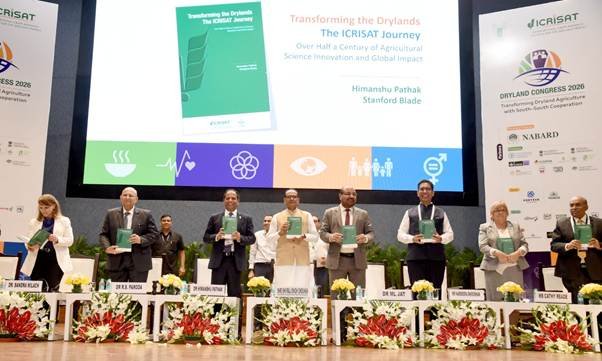
Dryland Congress 2026 in New Delhi brings together 800+ delegates from 25 countries to focus on resilient crops, nutrition, sustainable landscapes and farmer livelihoods
New Delhi, September 10, 2026: India has called for a science-, policy- and market-led transformation of dryland agriculture, positioning dryland regions as an opportunity for stronger food security, nutrition and rural livelihoods rather than a constraint on agricultural growth.
Addressing the opening session of Dryland Congress 2026 at the National Agricultural Science Complex in New Delhi, Union Agriculture and Farmers’ Welfare and Rural Development Minister Shivraj Singh Chouhan said drylands could become a major strength for India and other regions facing similar agricultural challenges if supported by appropriate technology, policy interventions and market access.
The three-day Congress, being held from September 10, has brought together more than 800 delegates from over 25 countries, including scientists, policymakers, farmers, industry representatives, development partners, academicians and civil society organisations.
Key Highlights
- 800+ delegates from 25+ countries participating in Dryland Congress 2026.
- Focus on crop resilience, climate adaptation, nutrition, markets and sustainable dryland landscapes.
- Government calls for science, policy and market support to make drylands more productive and profitable.
- Genetic improvement and climate-resilient crops identified as key priorities.
- Greater emphasis on water management and deriving higher economic and nutritional value from every drop.
- Experts call for a whole-of-system, whole-of-society and whole-of-government approach.
- South–South cooperation highlighted for sharing and scaling agricultural solutions.
- Focus extends beyond production to farmer prosperity, livelihoods and reducing rural out-migration.
From Dryland Challenges to Agricultural Opportunity
Shri Shivraj Singh Chouhan stressed that the success of agricultural transformation should not be measured only by increased production, but also by improved farmer incomes, nutrition and community prosperity.
The Congress is examining how science and innovation can help dryland regions cope with climate variability while creating more viable agricultural systems.
The discussions are particularly relevant to regions where water scarcity, extreme weather and fragile landscapes constrain conventional farming.
Climate-Resilient Crops and Sustainable Landscapes
The first day of the Congress featured three major technical sessions:
- Breeding for Tomorrow: Accelerating Genetic Gains
- Climate-Resilient Dryland Landscapes
- Better Diets and Nutrition through Markets & Policies
Discussions covered accelerated crop improvement, climate resilience, sustainable landscape management, nutrition and market-linked livelihood opportunities.
The focus on crop breeding and genetic gains could help improve the resilience and productivity of crops suited to challenging agro-climatic conditions, while sustainable landscape management is expected to play a central role in protecting natural resources.
Water Efficiency at the Centre of Dryland Farming
Water management emerged as another important priority.
Experts highlighted the need to increase the economic and nutritional value generated from every drop of water, particularly in regions where irrigation resources are limited.
The approach could encourage greater adoption of farming systems that combine water efficiency with crop diversification, resilience and better market returns.
Agriculture Transformation Needs a Wider Ecosystem
Dr M. L. Jat, Secretary, Department of Agricultural Research and Education (DARE) and Director General, ICAR, said transforming drylands would require interventions beyond agriculture.
The Congress called for closer integration between agriculture, land resources, technology, markets, communities and government systems, rather than addressing dryland challenges through isolated interventions.
Digital public infrastructure and community-led land-resource management were also highlighted as potential enablers of more integrated dryland development.
Nutrition and Markets Link Farmers to Food Systems
The Congress is also placing nutrition and markets alongside agricultural productivity.
Improving the nutritional value of crops while connecting dryland farmers with reliable markets could create stronger economic incentives for diversification. This is particularly relevant for crops that can contribute to healthy diets, local food systems and value-added food products.
The discussions also emphasised the need to make dryland farming profitable, resilient and attractive to younger generations, while creating livelihood opportunities and reducing migration from rural areas.
South–South Cooperation Gains Importance
Speakers highlighted India’s growing role in sharing agricultural technologies and models with other countries in the Global South.
South–South cooperation can enable countries facing similar climate, water and agricultural challenges to exchange knowledge, adapt successful approaches and scale locally relevant solutions.
For India, this also creates opportunities to strengthen its position as a source of agricultural innovation across Asia, Africa and other dryland regions.
Impact on Food, Hospitality & Travel
Food Supply and Culinary Diversity
Greater investment in dryland agriculture can strengthen the long-term supply of crops suited to water-stressed regions. This can support food security, ingredient diversification and regional cuisines, with implications for restaurants, hotels and food businesses.
Millet and Climate-Resilient Foods
The focus on nutrition and resilient crops can further support demand for millets, pulses and other climate-adapted ingredients, creating opportunities for hotels and restaurants to develop sustainable and regionally rooted menus.
Farm-to-Table & Agri-Tourism
More productive and profitable dryland farming systems could support farm-based tourism, rural experiences and farm-to-table initiatives, particularly where agricultural landscapes and traditional food practices are part of the destination offering.
Culinary Tourism
Dryland regions often have distinctive food cultures shaped by local crops, water availability and traditional farming practices. Greater attention to these agricultural systems can help strengthen culinary tourism and destination food identity.
MICE and Business Travel
With more than 800 international and Indian delegates attending the Congress in New Delhi, the event itself demonstrates the potential of agricultural conferences to generate business travel, meetings and knowledge-exchange activity for the hospitality sector.
Industry Takeaway
Dryland agriculture is increasingly being viewed not simply as a climate challenge but as an opportunity for resilient food production, nutrition, rural enterprise and sustainable tourism.
The central message emerging from Dryland Congress 2026 is that science alone will not transform dryland regions. The combination of technology, policy, market access, water efficiency, farmer participation and international cooperation will determine whether these landscapes become more productive, profitable and resilient.