Centre Plans Tougher Seed Law to Crack Down on Fake and Substandard Seeds
Agriculture Minister Shivraj Singh Chouhan to consult farmer organisations on proposed Seed Act before Parliament session New Delhi, September 9, 2026: The Government of India is preparing a new and stringent Seed Act aimed at protecting
Agriculture Minister Shivraj Singh Chouhan to consult farmer organisations on proposed Seed Act before Parliament session
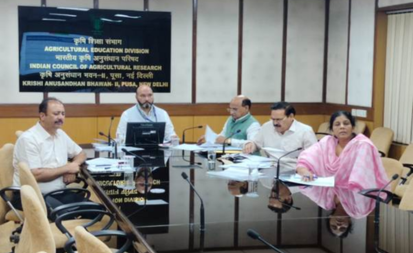
New Delhi, September 9, 2026: The Government of India is preparing a new and stringent Seed Act aimed at protecting farmers from losses caused by fake, adulterated and substandard seeds. Union Agriculture and Farmers’ Welfare Minister Shivraj Singh Chouhan is set to hold a nationwide consultation with farmer leaders on September 10 at Krishi Bhawan, New Delhi, before the proposed legislation is finalised.
The consultation is intended to bring farmers’ ground-level experiences and concerns directly into the draft legislation, with the Government seeking stronger regulation of seed quality, greater traceability and tougher action against those involved in the sale of fraudulent or poor-quality seeds.
Key Highlights
- New Seed Act being prepared with stricter provisions against fake and substandard seeds.
- Agriculture Minister Shivraj Singh Chouhan to consult farmer organisations on September 10.
- Proposed legislation expected to include heavy penalties and imprisonment for violations.
- Government plans an end-to-end seed traceability system.
- Proposed framework aims to protect farmers’ rights over traditional seeds.
- Consultation will include major farmer organisations and representatives from multiple states.
- Government is seeking farmer inputs before finalising the legislation ahead of the upcoming Parliament session.
Farmers to Have Direct Say in Proposed Seed Legislation
The September 10 consultation will bring together senior representatives of farmer organisations from across India, including the Bharatiya Kisan Sangh, various factions of the Bharatiya Kisan Union (BKU), All India Kisan Coordination Committee (AIKCC), Kisan Mahapanchayat, Bharatiya Krishak Samaj, Gaon Kisan Unnayan and the Society for Independent Farmers Association (SIFA).
Farmer representatives from states including Karnataka, Telangana, Maharashtra, Gujarat, Rajasthan, Bihar, Tamil Nadu, Jharkhand and Kerala are also expected to share their experiences and recommendations.
The consultation is particularly focused on ensuring that the proposed law addresses problems faced at the farm level, where poor-quality seeds can result in crop failure, financial losses and wasted agricultural inputs and labour.
Tougher Action and Seed Traceability Proposed
The Government intends to establish a stronger regulatory framework covering the quality and traceability of seeds. Companies and traders found involved in the sale of fake, adulterated or substandard seeds could face stringent legal action, including financial penalties and imprisonment under the proposed framework.
A key focus is the development of an end-to-end traceability mechanism, which could make it easier to track seeds through the supply chain and strengthen accountability among producers, distributors and sellers.
At the same time, the proposed legislation is expected to address the protection of farmers’ interests concerning traditional and indigenous seed varieties.
Impact on Hospitality, Food and Travel & Tourism
While the proposed Seed Act is primarily aimed at protecting farmers, stronger seed-quality regulation could have implications across the food and hospitality supply chain.
Food Supply & Hospitality Procurement
Better seed quality can contribute to more reliable agricultural production over time. For hotels, restaurants, caterers and food processors, this could support greater stability in the availability of key agricultural commodities and ingredients.
Food Prices and Supply Chain Stability
Crop losses caused by poor-quality seeds can affect supply and potentially contribute to price volatility. Stronger regulation and traceability could help reduce risks associated with fraudulent seed supply, although the eventual impact on food prices will depend on crop yields, weather, demand and other market factors.
Regional and Farm-to-Table Food
Protecting traditional seeds could also support regional crop diversity and indigenous food systems. For hospitality businesses increasingly promoting local and regional cuisine, preserving distinctive crop varieties can help maintain the ingredients and culinary traditions associated with different parts of India.
Agri-Tourism and Culinary Tourism
Traditional seeds and indigenous crops can form part of farm tourism, culinary trails and rural food experiences. Stronger recognition and protection of traditional seed systems could indirectly support tourism experiences built around local agriculture, heritage foods and regional cuisines.
Industry Takeaway
The proposed Seed Act signals a stronger regulatory focus on seed quality, farmer protection and supply-chain traceability. For the food and hospitality industry, the longer-term significance lies in how stronger agricultural foundations could influence food availability, regional crop diversity, local sourcing and farm-to-table experiences.
The September 10 farmer consultation will be an important step in determining how these priorities are reflected in the final legislation.