North East Tourism Gains Global Spotlight as 14th International Tourism Mart Opens in Tawang
With 43 international buyers from 22 countries and domestic tourist visits rising 58% since 2019, ITM 2026 aims to turn the region’s tourism potential into business opportunities and sustainable livelihoods The 14th International Tourism Mart (ITM)
With 43 international buyers from 22 countries and domestic tourist visits rising 58% since 2019, ITM 2026 aims to turn the region’s tourism potential into business opportunities and sustainable livelihoods
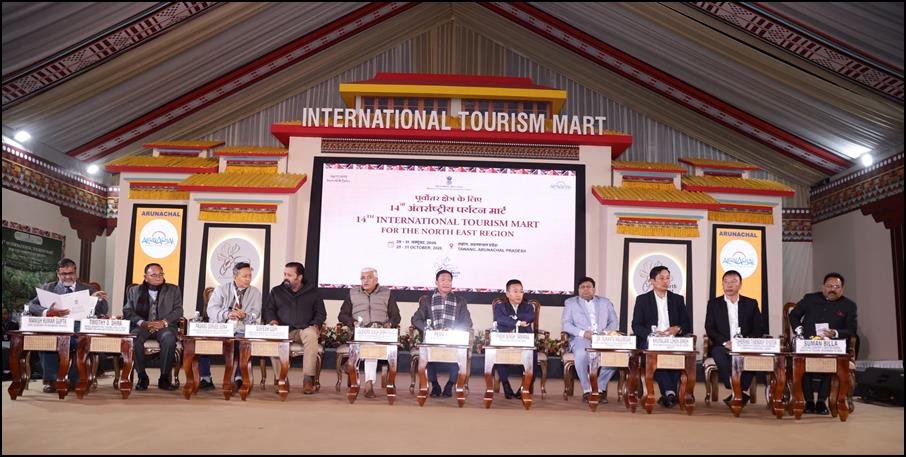
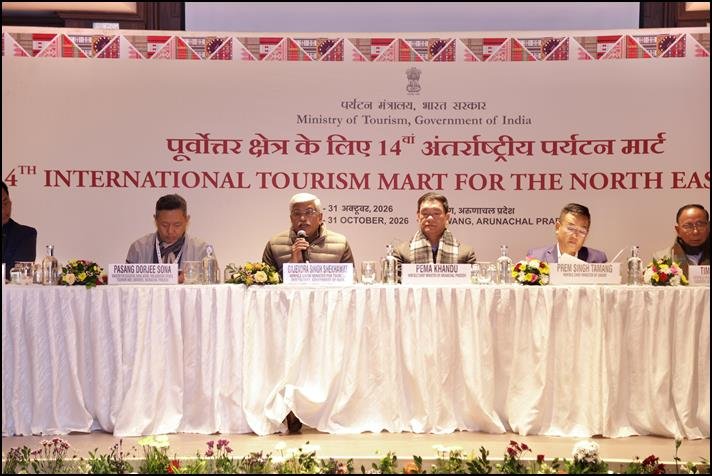
The 14th International Tourism Mart (ITM) commenced in Tawang, Arunachal Pradesh, on 29 October 2026, bringing together international and domestic tourism buyers, sellers, government representatives and industry stakeholders to promote the eight North Eastern States as destinations for sustainable, cultural, adventure and experiential tourism.
Organised by the Ministry of Tourism in association with the Government of Arunachal Pradesh and other North Eastern States, the three-day event will continue until 31 October. Its focus is on strengthening tourism partnerships, improving market access and creating business opportunities for the region’s tourism industry.
Inaugurating the event, Union Minister for Tourism and Culture Gajendra Singh Shekhawat described ITM as a platform for building partnerships, generating business opportunities and creating a shared vision for tourism growth in the North East. He called for translating the region’s natural, cultural and heritage assets into sustainable economic opportunities and livelihoods for local communities.
Key Highlights
- 43 international buyers from 22 countries participating — the highest-ever international buyer participation at ITM.
- 42 domestic buyers from 16 States and Union Territories, along with 81 sellers.
- Domestic tourist visits to the eight North Eastern States increased from 95.65 lakh in 2019 to 1.51 crore in 2025, registering approximately 58% growth.
- Tourism infrastructure projects worth thousands of crores sanctioned under various Central Government schemes.
- Ten tourism routes in the North East supported under the Regional Connectivity Scheme–UDAN.
- Focus on adventure tourism, music festivals, concert tourism, cultural experiences and community-based tourism.
- North East Bazaar showcases regional handicrafts, handlooms and cultural offerings.
North East Records 58% Growth in Domestic Tourist Visits
The increase in domestic tourist visits from 95.65 lakh in 2019 to 1.51 crore in 2025 highlights the growing interest in the North Eastern Region as a travel destination.
The eight states — Arunachal Pradesh, Assam, Manipur, Meghalaya, Mizoram, Nagaland, Sikkim and Tripura — offer diverse tourism experiences, ranging from mountain landscapes and biodiversity to monasteries, indigenous traditions, festivals and adventure activities.
Shekhawat highlighted the potential of nature-based, spiritual, adventure and experiential tourism to attract new visitor segments, encourage longer stays and generate economic activity for local communities.
He also emphasised the need to develop tourism products with appropriate safety standards, community participation and environmental safeguards.
International Buyers and B2B Meetings to Expand Tourism Business
ITM 2026 has brought together 43 international buyers from 22 countries, alongside 42 domestic buyers representing 16 States and Union Territories and 81 sellers.
The participation provides a platform for tourism businesses across the North East to establish industry connections, present destination offerings and explore opportunities in international and domestic markets.
The Mart will feature tourism presentations by all eight North Eastern States and structured business-to-business (B2B) meetings. These engagements are expected to help local tourism stakeholders connect with tour operators, travel agents and other market representatives.
The event also marks the return of ITM to Tawang after 13 years, with the second edition having been held in the town in 2013.
Tourism Infrastructure Investment Across the North East
The Ministry of Tourism highlighted its investments in tourism infrastructure and destination development across the region.
| Government scheme | Projects sanctioned | Investment |
|---|---|---|
| Swadesh Darshan 1.0 | 16 | ₹1,309 crore |
| Swadesh Darshan 2.0 | 17 | ₹564 crore |
| Challenge Based Destination Development | 9 | ₹139 crore |
| SASCI | 9 | ₹790 crore |
| PRASHAD | 9 | ₹258 crore |
Additionally, ten tourism routes in the North Eastern Region have received support under the Regional Connectivity Scheme–UDAN.
The government also highlighted initiatives such as Dekho Apna Desh 2.0 and the National Digital Tourism Stack, aimed at improving the visibility of lesser-known destinations and strengthening digital access for local tourism service providers.
Adventure Tourism, Festivals and Community Experiences in Focus
The Union Tourism Minister identified adventure tourism, music festivals and concert tourism as emerging opportunities for the region.
These segments can help diversify the North East’s tourism offerings beyond conventional sightseeing, while encouraging visitors to explore multiple destinations and extend their stays.
Union Minister of State for Tourism Suresh Gopi also emphasised the scope for developing innovative tourism products around culture, adventure, festivals and community-based experiences.
The North East Bazaar, inaugurated as part of ITM, showcased traditional handicrafts, handlooms and other regional cultural products. A cultural programme highlighted the traditions of the North Eastern States.
A Regional Meeting of Tourism Ministers from the North Eastern States was also scheduled for 30 October to discuss tourism development, regional cooperation, tourist facilitation and emerging opportunities.
Impact on Hospitality, Travel and Tourism
1. Opportunities for hotels and resorts: Greater international buyer engagement and destination promotion could strengthen demand for accommodation across established and emerging destinations in the North East. Hotels, resorts and boutique properties may benefit from increased interest in longer, experience-led itineraries.
2. Growth potential for homestays and community tourism: The emphasis on local participation creates opportunities for homestays, village-based experiences, local guides and community-run tourism enterprises to become part of organised travel products.
3. Expansion of adventure and experiential travel: Destinations offering trekking, nature trails, cultural immersion and outdoor activities could attract specialised tour operators and new visitor segments, provided safety and environmental standards are maintained.
4. Food and cultural tourism opportunities: Regional cuisines, traditional food products, handicrafts and local cultural experiences can become important components of destination-led travel packages, creating opportunities for restaurants, local food businesses and hospitality entrepreneurs.
5. Improved destination connectivity: Support for ten tourism routes under UDAN, alongside wider infrastructure investments, reinforces the importance of air connectivity in making remote destinations more accessible to domestic and international visitors.
6. Stronger international market access: The presence of buyers from 22 countries gives tourism businesses an opportunity to develop trade relationships and position North Eastern destinations within international travel itineraries.
Industry Takeaway
The 14th International Tourism Mart comes at a time when domestic tourist visits to the North East are showing strong growth. Its focus on international buyer engagement, infrastructure development, air connectivity and experience-based tourism reflects a broader effort to position the region as a competitive tourism destination.
For the hospitality industry, the opportunity extends beyond attracting more visitors. Hotels, resorts, homestays, restaurants, tour operators and local experience providers can play a role in developing integrated tourism offerings that connect accommodation, regional food, culture, adventure and community experiences.
The next step will be translating the visibility and business connections generated at ITM into sustained visitor demand, stronger local enterprises and tourism growth that protects the region’s natural and cultural assets.