ICAR Promotes Sustainable Mango and Litchi Cultivation in Bihar, Highlighting Opportunities for Horticulture and Food Supply Chains
Khet Bachao Abhiyan 2026 focuses on soil health, balanced fertilisation, organic nutrient recycling and crop diversification to improve orchard productivity and farmers’ income Key Highlights: ICAR-MGIFRI organised a farmer awareness programme at Kothia Hariram village in East
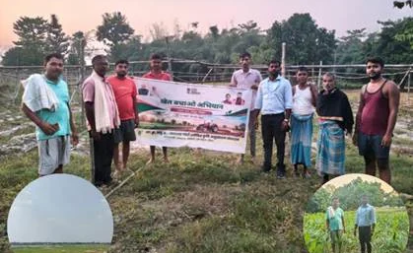
Khet Bachao Abhiyan 2026 focuses on soil health, balanced fertilisation, organic nutrient recycling and crop diversification to improve orchard productivity and farmers’ income
Key Highlights:
- ICAR-MGIFRI organised a farmer awareness programme at Kothia Hariram village in East Champaran, Bihar, on October 27, 2026.
- 29 farmers and participants attended the programme.
- Focus on soil-test-based fertilisation, nutrient recycling and sustainable orchard management.
- Farmers encouraged to use crop residues, fallen leaves, farmyard manure and compost to improve soil health.
- Intercropping and crop diversification highlighted as strategies for supplementary farm income.
- Sustainable mango and litchi cultivation could strengthen horticultural supply chains and support food processing and hospitality businesses.
ICAR-MGIFRI Conducts Farmer Awareness Programme in East Champaran
The Indian Council of Agricultural Research’s Mahatma Gandhi Integrated Farming Research Institute (ICAR-MGIFRI), Motihari, Bihar, has stepped up efforts to promote sustainable horticulture and soil health management under Khet Bachao Abhiyan 2026.
The institute organised a farmer awareness and field interaction programme on October 27 at Kothia Hariram village in Mehsi Block of East Champaran. The programme focused on balanced fertilisation, soil health improvement, nutrient recycling, crop diversification and sustainable management of mango and litchi orchards.
A total of 29 farmers and participants interacted with scientists to understand practical approaches to improving orchard productivity, reducing cultivation costs and making efficient use of available farm resources.
Soil-Test-Based Fertilisation to Improve Orchard Productivity
The programme was led by Dr. Amol K. Jadhav, Scientist at ICAR-MGIFRI, who highlighted the importance of soil-test-based nutrient management and balanced fertilisation for maintaining long-term soil fertility.
He explained that indiscriminate fertiliser application can increase cultivation expenses and create nutrient imbalances. Instead, fertiliser application based on soil-test results, crop requirements and orchard conditions can improve nutrient-use efficiency and support sustainable mango and litchi production.
The approach aims to help farmers improve productivity while maintaining the long-term health of orchard soils.
Organic Nutrient Recycling to Reduce External Input Dependence
Another major focus was the effective utilisation of locally available organic resources, including:
- Crop residues
- Fallen leaves
- Farmyard manure
- Compost
Scientists explained that recycling these materials can improve soil organic matter, strengthen soil structure and enhance nutrient availability.
The programme also highlighted the importance of combining organic resources with balanced mineral fertilisation to maintain soil health and support sustainable fruit cultivation.
Intercropping and Crop Diversification for Additional Farm Income
ICAR-MGIFRI also encouraged farmers to explore intercropping and crop diversification within fruit orchards to improve land-use efficiency and generate supplementary income.
Farmers were advised to select suitable intercrops, particularly legumes and other locally appropriate crops, based on orchard age, canopy coverage, seasonal moisture availability and crop compatibility.
These practices can help farmers make better use of available resources while diversifying their income sources and reducing dependence on a single crop.
Farmer-Scientist Interaction Highlights Practical Challenges
Participating farmers discussed challenges related to fertiliser application, orchard soil health, organic resource management and intercropping.
The interaction provided an opportunity for scientists to share practical and economically viable approaches to improving the productivity and profitability of fruit-based farming systems.
Through Khet Bachao Abhiyan 2026, ICAR-MGIFRI is continuing its efforts to promote sustainable horticulture, balanced nutrient management and efficient natural resource utilisation through direct engagement with farming communities.
Impact on Hospitality, Food Processing and Travel & Tourism
The programme’s emphasis on sustainable mango and litchi cultivation is relevant to India’s wider food and hospitality ecosystem, particularly in fruit-growing regions such as East Champaran.
1. Potential Benefits for Hotels and Restaurants
Improved orchard management and more efficient fruit production could support the availability of mangoes and litchis for hotels, restaurants, catering companies and food service businesses. These fruits are widely used in beverages, desserts, juices and seasonal menus.
2. Opportunities for Beverage and Food Processing Industries
Better horticultural practices could support the long-term development of fruit-based processing activities, including juices, pulp, concentrates, preserves and other value-added products. This could create opportunities for food processors and beverage manufacturers to strengthen regional sourcing networks.
3. Strengthening Farm-to-Market Supply Chains
Nutrient management, crop diversification and improved orchard productivity can contribute to more efficient agricultural production. Better coordination between farmers, aggregators, processors and institutional buyers could help strengthen fresh-fruit supply chains serving hospitality businesses.
4. Potential for Rural and Agricultural Tourism
East Champaran’s mango- and litchi-growing areas offer scope for agricultural experiences and rural tourism. Sustainable orchard management, combined with local food experiences and farm visits, could contribute to the development of regional tourism offerings.
The programme does not announce any direct hospitality or tourism investment, but its focus on sustainable fruit production supports the broader agricultural foundation of the food, beverage and tourism industries.
Promoting Climate-Resilient and Sustainable Horticulture
Through Khet Bachao Abhiyan 2026, ICAR-MGIFRI aims to strengthen farmers’ self-reliance by promoting balanced fertilisation, improved soil health, nutrient recycling and resource-efficient horticultural practices.
The initiative reinforces the importance of sustainable mango and litchi cultivation in East Champaran, while encouraging farming systems that improve productivity, profitability and environmental sustainability.