Kisan Chaupal in Haryana Highlights Balanced Fertiliser Use, Natural Farming and Sustainable Agriculture
Shivraj Singh Chouhan Urges Farmers to Follow Soil Health Cards, Adopt Natural Farming and Use Super Seeder Technology to Manage Crop Residue Key Highlights Union Agriculture Minister Shivraj Singh Chouhan interacted with farmers at a Kisan Chaupal
Shivraj Singh Chouhan Urges Farmers to Follow Soil Health Cards, Adopt Natural Farming and Use Super Seeder Technology to Manage Crop Residue
Key Highlights
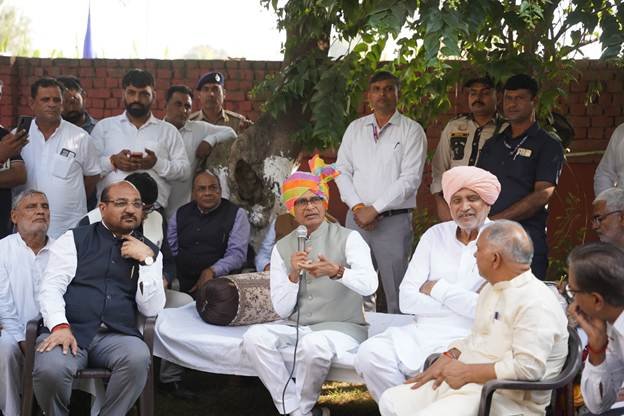
- Union Agriculture Minister Shivraj Singh Chouhan interacted with farmers at a Kisan Chaupal in Taraori, Karnal, Haryana, on October 22, 2026.
- Farmers were urged to apply fertilisers according to Soil Health Cards rather than imitate other farmers’ practices.
- The minister recommended starting natural farming on one acre and following prescribed methods for preparing and applying Jeevamrit, Ghanjeevamrit and Beejamrit.
- Haryana farmers were praised for adopting crop-residue management practices and Super Seeder technology to help reduce stubble burning.
- Discussions covered indigenous cattle breeds, milk marketing and sex-sorted semen technology.
Union Agriculture and Farmers’ Welfare Minister Shivraj Singh Chouhan has called for a stronger focus on balanced fertiliser application, natural farming and sustainable agricultural practices during a Kisan Chaupal held in Taraori, Karnal district, Haryana, on October 22, 2026.
The farmer interaction was organised as part of the nationwide Khet Bachao Abhiyan, launched the same day. The programme brought farmers, agricultural scientists and government representatives together to discuss practical challenges affecting cultivation, soil health and farm incomes.
Chouhan emphasised that protecting farmers’ dignity and improving their livelihoods must go hand in hand with safeguarding agricultural land. He also called for combining modern agricultural practices with traditional knowledge to support long-term soil fertility and more efficient farming.
Soil Health Cards to Guide Fertiliser Application
A key message from the interaction was the need to move away from excessive and imitative fertiliser use. Chouhan urged farmers to assess their soil’s nutrient requirements through Soil Health Cards and apply fertilisers in scientifically appropriate quantities.
The minister clarified that the campaign does not call for indiscriminate rejection of chemical fertilisers. Instead, it promotes balanced nutrient management based on actual soil requirements.
Using more fertiliser than necessary can increase cultivation expenses and contribute to soil degradation. For farmers, following soil-specific recommendations can help avoid unnecessary input costs while supporting soil health over time.
Natural Farming: Start Small and Follow the Right Methods
Chouhan shared his experience of practising natural farming on his own farm, where he cultivates vegetables, fruits and other crops. He encouraged farmers with holdings of three to five acres to begin natural farming on one acre, understand the process and consider expanding only after gaining practical experience.
The minister highlighted the importance of using Jeevamrit, Ghanjeevamrit and Beejamrit in the prescribed proportions and at the appropriate time. He said natural farming could be beneficial when implemented correctly, while encouraging farmers to learn the methods before adopting them on a larger scale.
For the wider agricultural sector, this approach places emphasis on gradual adoption, practical learning and farm-level experience rather than an immediate transition across entire landholdings.
Indigenous Cattle and Breeding Technologies Discussed
The Kisan Chaupal also addressed questions about indigenous cattle breeds, the market value of their milk and the use of sex-sorted semen technology to increase the likelihood of female calves.
According to the PIB release, the discussion covered efforts to validate these technologies more widely and make them accessible to farmers at affordable rates. Participants also discussed improving market prices for milk from indigenous cattle and the use of cow dung and cow urine in natural farming.
These issues connect crop production with livestock management, dairy economics and farm-based resource use.
Super Seeder Technology and Crop-Residue Management
Chouhan praised Haryana farmers for their efforts to manage crop residue and for the reported decline in stubble-burning incidents in the state during the year. He highlighted the adoption of technologies such as Super Seeders as part of efforts to reduce crop-residue burning and its associated air pollution.
The minister described Haryana’s progress as an example for other states, recognising the contribution of farmers, the public and government initiatives.
Improved residue management is also relevant to soil conservation, as avoiding burning helps protect beneficial soil organisms and allows farmers to explore alternative ways of managing agricultural residue.
Kisan Chaupal Seeks Practical Solutions for Farmers
The interaction gave farmers an opportunity to raise day-to-day agricultural concerns directly with the minister and agricultural experts. Chouhan assured participants that the Agriculture Ministry would consider their suggestions and take steps to address their requirements.
The discussions reinforced the wider Khet Bachao Abhiyan agenda: balanced fertiliser use, natural farming, improved animal husbandry and the protection of soil health.
Impact on Hospitality, Food Processing, Travel and Tourism
Food sourcing and farm-to-table operations: Soil health and balanced nutrient management are important to the long-term sustainability of food production. Hotels, restaurants and caterers that source directly from farmers can monitor the adoption of these practices when assessing supplier relationships. The release does not establish any immediate change in food availability, prices or quality.
Sustainable dining and responsible procurement: Natural farming may offer opportunities for hospitality businesses interested in working with farms using alternative cultivation practices. However, sourcing claims should be supported by supplier-level information and appropriate verification rather than inferred from participation in the campaign.
Dairy and food-service supply chains: The discussion around indigenous cattle, milk prices and breeding technology highlights the relationship between livestock management and dairy livelihoods. For hotels, restaurants, bakeries and institutional kitchens, developments in dairy production and marketing may be relevant to long-term procurement planning.
Food processing and agricultural resilience: Crop-residue management, soil conservation and improved farming practices can contribute to broader efforts to sustain agricultural productivity. Their commercial effects will depend on adoption levels, local conditions and measurable farm outcomes.
Rural and agri-tourism: Farms practising natural farming or demonstrating crop-residue management may have opportunities to develop educational farm visits and rural experiences. Such possibilities would depend on individual operators and local visitor infrastructure; the PIB release does not announce a dedicated tourism initiative.
Industry Takeaway
The Kisan Chaupal reinforces the importance of practical farmer education, scientific nutrient management and gradual adoption of sustainable farming methods. For hospitality and food businesses, the relevance lies in understanding how agricultural practices, dairy production and environmental management shape the long-term food supply chain.
The next measure of progress will be the extent to which farmers adopt the recommended practices and whether these translate into demonstrable improvements in soil health, farm economics and residue management.
Source: Press Information Bureau (PIB), Ministry of Agriculture and Farmers’ Welfare, Government of India, October 22, 2026.