ICAR Reviews 28 Action Points to Strengthen Higher Education, Skills and Workforce Development
Nine Committees Assess Recommendations for Human Capital Development Under Viksit Bharat; Focus on Evidence-Based Outcomes, Innovation and Capacity Building The Indian Council of Agricultural Research (ICAR) has reviewed the progress of nine committees working on 28
Nine Committees Assess Recommendations for Human Capital Development Under Viksit Bharat; Focus on Evidence-Based Outcomes, Innovation and Capacity Building
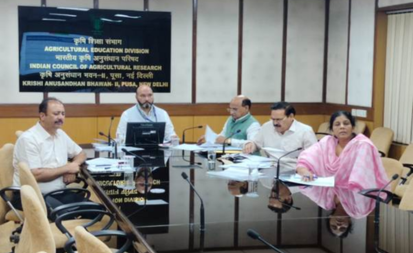
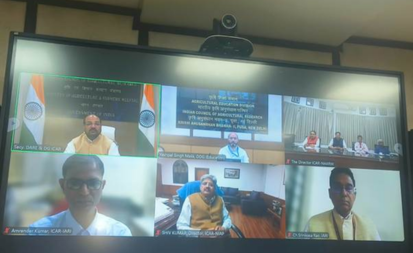
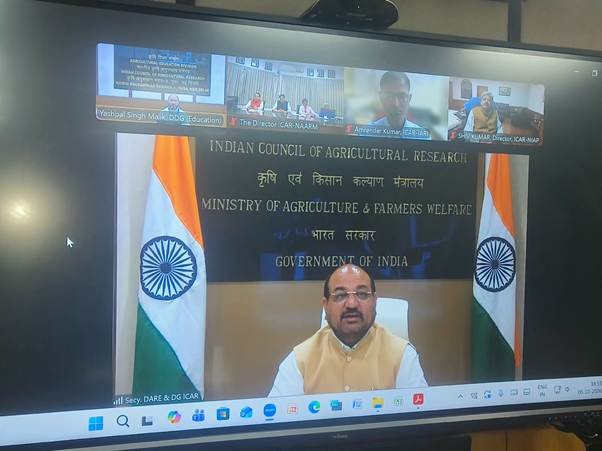
The Indian Council of Agricultural Research (ICAR) has reviewed the progress of nine committees working on 28 action points identified at the 5th National Conference of Chief Secretaries, held in December 2025. The review meeting, chaired by Dr. M. L. Jat, Secretary of the Department of Agricultural Research and Education (DARE) and Director General of ICAR, focused on strengthening human capital through higher education, skills development, innovation and capacity building.
The committees are tasked with developing actionable recommendations to support the Viksit Bharat vision. During the review, officials assessed progress, identified gaps and discussed the need for evidence-based recommendations that can be implemented within stipulated timelines.
For India’s hospitality, foodservice, travel and tourism industries, the discussions are relevant to the broader development of skilled talent, industry-ready professionals and stronger education-to-employment pathways.
Key Highlights
- Nine committees reviewed: ICAR assessed progress on action points emerging from the 5th National Conference of Chief Secretaries.
- 28 action points: Focused on human capital development, higher education, skills, innovation and capacity building.
- Evidence-based recommendations: ICAR called for proposals supported by relevant data, documented evidence and best practices.
- Implementation focus: Committees reviewed achievements, identified gaps and discussed actionable measures.
- Timely submissions: The meeting emphasised completing recommendations within stipulated timelines.
- Viksit Bharat vision: The initiative aims to strengthen India’s human capital and educational capabilities.
ICAR Calls for Measurable Outcomes in Education and Skills
Addressing the meeting, Dr. M. L. Jat emphasised that recommendations should be evidence-based, measurable and practical to implement. He highlighted the importance of supporting proposals with data, documented evidence and proven practices to enable effective implementation and assess outcomes.
Dr. Yashpal Singh Malik, Deputy Director General (Agricultural Education), ICAR, stressed coordinated efforts among the nine committees to address their assigned action points within the prescribed timelines.
Committee member secretaries presented progress updates covering achievements, existing gaps, priority areas and proposed recommendations. Discussions focused on improving the quality of proposals and ensuring that they translate the deliberations of the National Conference into actionable outcomes.
The review concluded with an emphasis on the timely submission of recommendations for further consideration and action.
Impact on Hospitality, Travel and Tourism
1. Potential to Strengthen Hospitality Workforce Development
Hotels, restaurants and tourism businesses rely on trained professionals across hotel operations, culinary arts, food and beverage service, housekeeping, revenue management and guest relations.
A stronger focus on higher education, practical skills and capacity building could support the wider development of India’s workforce. However, the review does not announce any hospitality-specific training programme or new employment initiative.
2. Relevance for Tourism and Travel Skills
Tourism growth requires professionals with capabilities in destination management, travel operations, customer service, digital tools and sustainable tourism practices. Broader improvements in education and skill development could help strengthen the talent pipeline available to these sectors over time.
3. Opportunities for Industry–Academia Collaboration
The emphasis on innovation and implementable recommendations highlights the importance of connecting education with real-world requirements. Hospitality companies, hotel management institutes, tourism organisations and training providers could benefit from closer collaboration to align curricula and professional development with evolving industry needs.
4. Implications for Foodservice and Agricultural Education
ICAR’s involvement brings an agricultural education perspective to the broader human capital agenda. Developments in agricultural skills and innovation may also have indirect relevance for food processing, sourcing, supply chains and institutional foodservice, although the reviewed action points are not limited to these applications.
Industry Takeaway
ICAR’s review of the nine committees is part of a broader effort to strengthen India’s human capital through education, skills, innovation and capacity building under the Viksit Bharat vision.
For hospitality and tourism stakeholders, the key area to watch is whether these broader recommendations translate into stronger vocational education, industry-linked training and workforce readiness. The immediate outcome of the review is a push for timely, evidence-based recommendations; sector-specific measures will depend on subsequent decisions and implementation.